
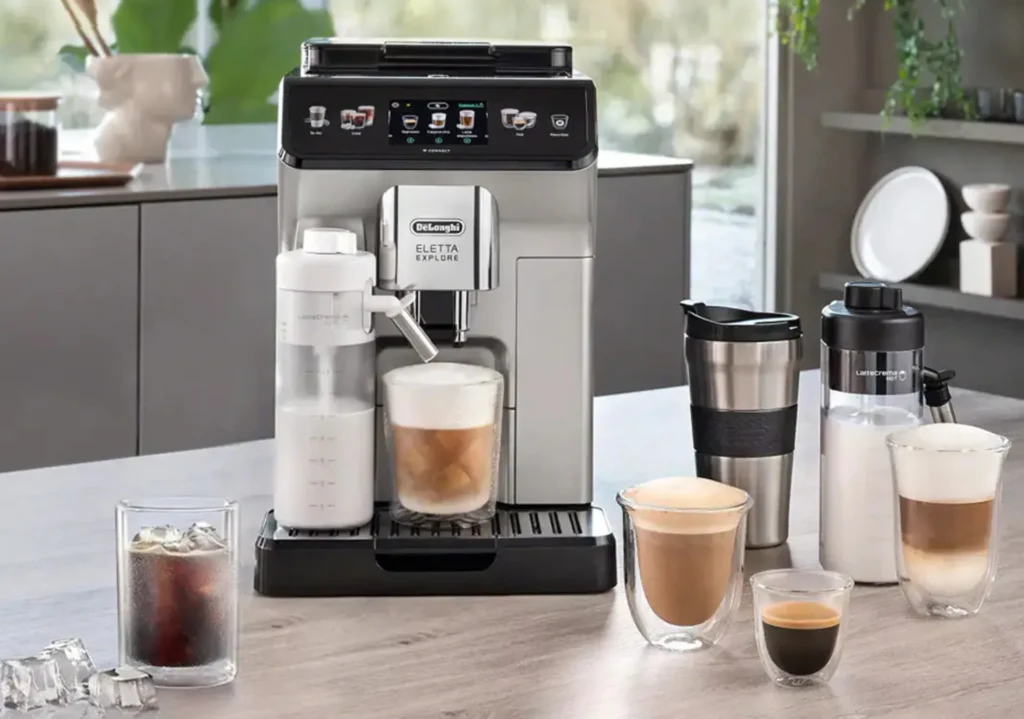
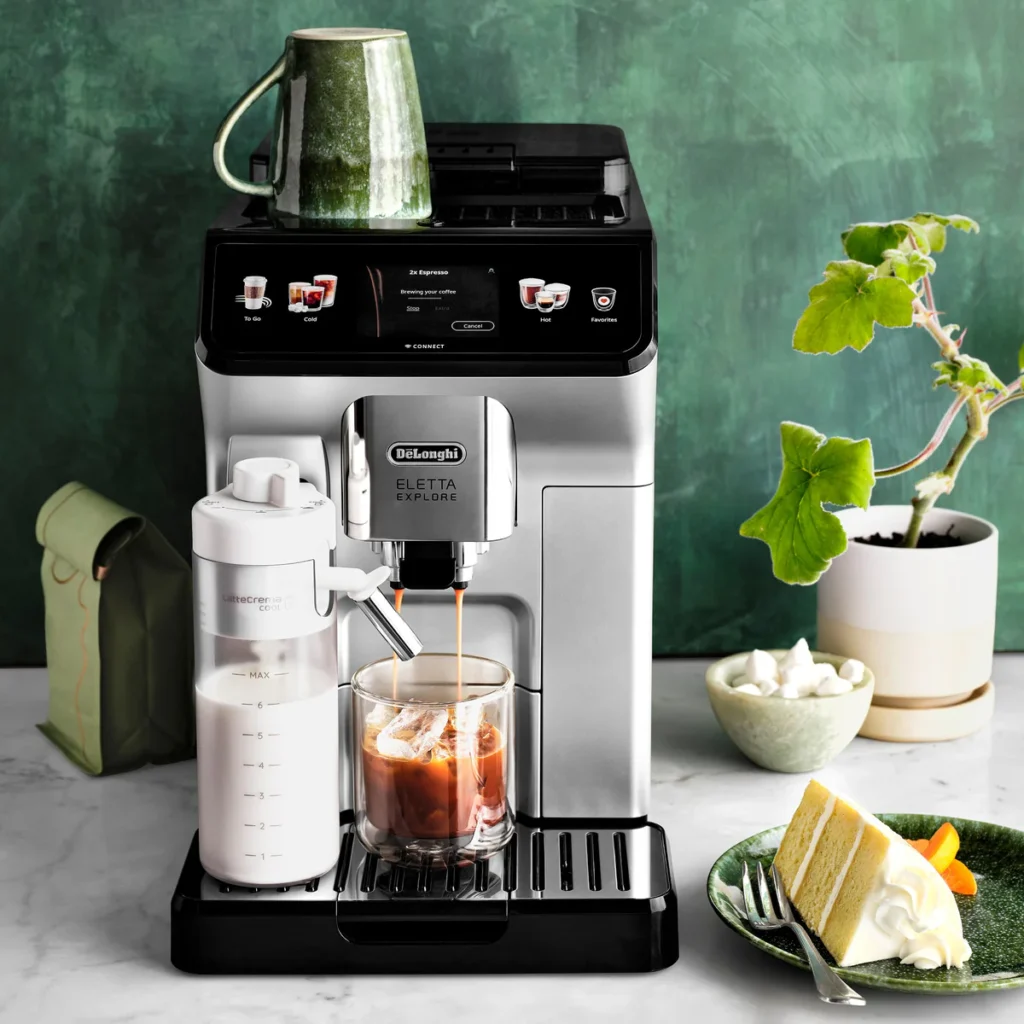
This DeLonghi Eletta Explore review covers everything a serious home barista needs to know before spending over $1,200 on a super-automatic espresso machine. The Eletta Explore sits at the premium end of DeLonghi’s lineup, and it makes a bold promise: café-quality coffee at the push of a button, with cold brew capabilities baked right in. Whether that promise holds up in daily use is exactly what we tested over several weeks. If you’re trying to find the right machine for your setup, start with our Best DeLonghi Espresso Machine: Complete Guide 2026 to see where the Eletta Explore fits in the broader lineup.
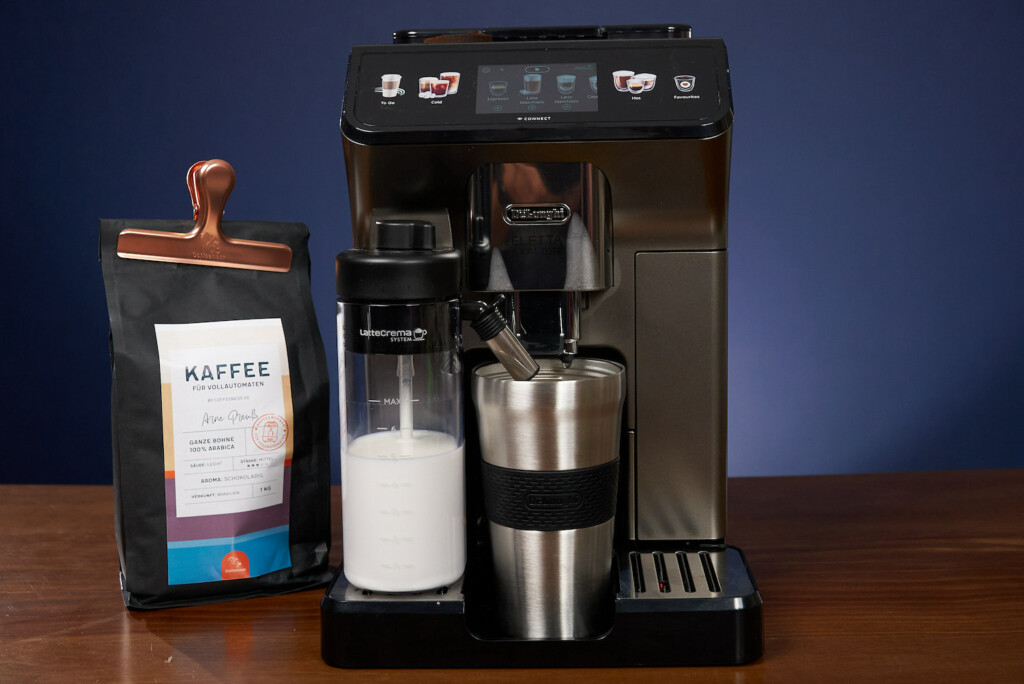
The Eletta Explore launched with considerable buzz, and for good reason. It introduced a dedicated cold extraction mode — a genuine first for DeLonghi’s super-automatic range — alongside a redesigned LatteCrema system and an intuitive 3.5-inch color touch display. But a flashy spec sheet doesn’t always translate into great espresso. This DeLonghi eletta explore review digs into the real-world performance, build quality, and value proposition so you can make an informed call.
What Is the DeLonghi Eletta Explore?
Core Specs and Key Features
The Eletta Explore is a bean-to-cup super-automatic machine with a 19-bar pump, a 13-step adjustable grinder, and a 1.8-liter water tank. It operates at a brewing temperature of around 93°C (199°F) for hot espresso and drops to approximately 15°C (59°F) during cold extraction — a proprietary process DeLonghi calls Cold Brew Extraction. The machine weighs 10.4 kg and measures 357 mm wide, 447 mm deep, and 388 mm tall, making it a substantial countertop presence.
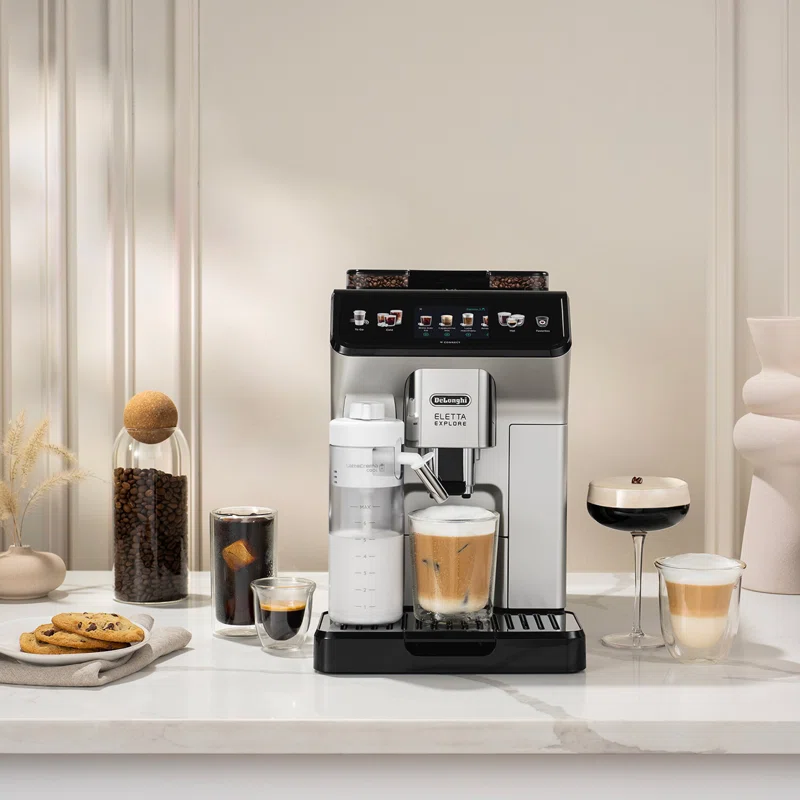
The bean hopper holds 400g of whole beans, and the grinder uses a conical burr system rather than the blade grinders found in budget super-automatics. This matters enormously for extraction consistency. You can also bypass the grinder using a pre-ground coffee bypass doser — useful for decaf or specialty single-origins you don’t want cross-contaminating the hopper.
How the Cold Brew Feature Actually Works
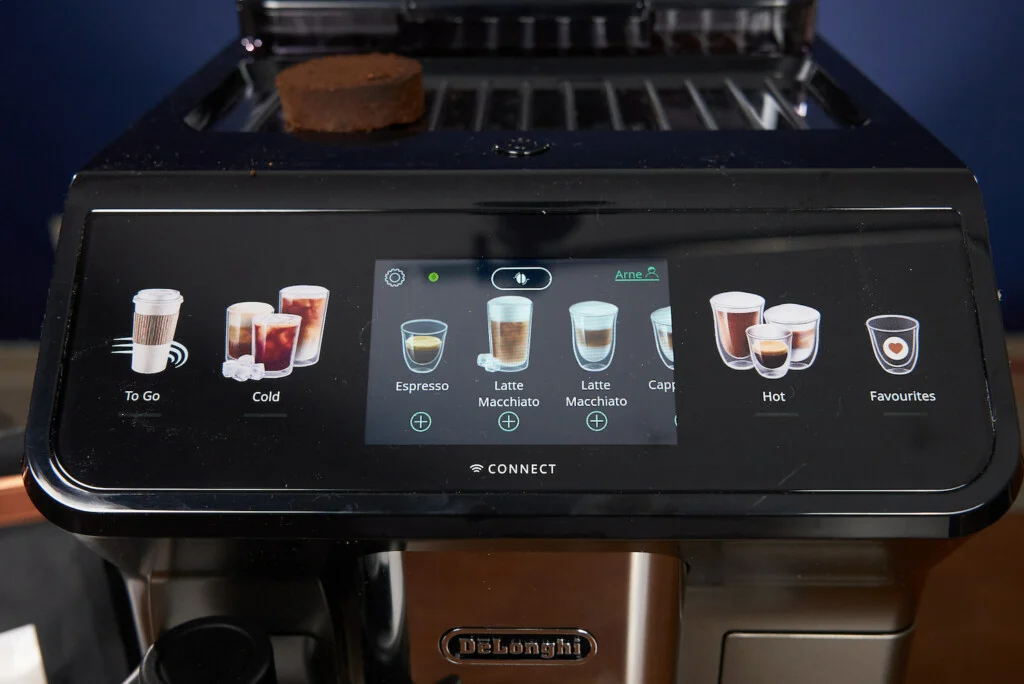
The cold extraction mode is the headline feature that separates the Eletta Explore from machines like the Eletta Cappuccino or the Dinamica Plus. Rather than brewing hot and then chilling the coffee — which degrades aromatics — it extracts coffee at low temperature over an extended cycle. The process takes roughly 5 to 7 minutes per serving, compared to 25 seconds for a standard espresso pull.
The result is a concentrate that’s noticeably lower in perceived bitterness and acidity. Caffeine content per volume is comparable to a standard espresso, but the flavor profile leans sweeter and smoother. It’s not quite the same as a 12-hour immersion cold brew, but for a same-day, on-demand cold coffee experience, it’s genuinely impressive. DeLonghi’s official product page provides additional technical documentation on the extraction cycle parameters.
Is the DeLonghi Eletta Explore Worth the Price?
Build Quality and Materials
The Eletta Explore has a premium feel that you notice immediately out of the box. The outer casing uses a combination of brushed stainless steel accents and high-quality ABS plastic. The drip tray, portafilter components, and milk carafe are all tool-free and removable, which simplifies daily cleaning dramatically. It doesn’t feel hollow or cheap — every door and panel closes with a satisfying click.
That said, the plastic carafe for the LatteCrema Hot system is a polarizing design choice at this price point. Competitors like the Jura E8 and Siemens EQ.900 use similar materials, so it’s not unique to DeLonghi, but a stainless steel carafe would feel more appropriate on a $1,200+ machine. The internal brew group is removable and dishwasher safe up to a point — DeLonghi recommends handwashing the brew group itself; only certain components go in the dishwasher.
Espresso Output Quality
In our testing, espresso output from the Eletta Explore was consistently good — not barista-championship level, but genuinely impressive for a super-automatic. At a medium grind setting (7 out of 13) using a medium-dark roast, we measured brew ratios between 1:2 and 1:2.2 within a 25-28 second extraction window. That’s well within the Specialty Coffee Association’s recommended parameters for espresso.
The crema was dense and persistent, lasting 60-90 seconds in our pours. Flavor clarity improved noticeably when we dialed the grind finer and increased the coffee dose via the machine’s adjustable dose control (ranging from 6g to 10g per shot in practice). The machine doesn’t give you manual pre-infusion control, but there’s an automatic pre-infusion stage built into every extraction cycle that helps with even saturation.
How Does the DeLonghi Eletta Explore Compare to Other Super-Automatics?
Eletta Explore vs. Dinamica Plus vs. Eletta Cappuccino
Positioning matters here. The Eletta Explore sits above the Dinamica Plus and the Eletta Cappuccino in DeLonghi’s lineup, and the price gap reflects real feature differences rather than just branding. If you’re newer to super-automatics and don’t need cold extraction, the Best DeLonghi For Beginners guide covers more approachable starting points at lower price tiers.
| Feature | Eletta Explore | Dinamica Plus | Eletta Cappuccino |
|---|---|---|---|
| Cold Extraction | Yes | No | No |
| Grinder Steps | 13 | 13 | 13 |
| Display | 3.5″ Color Touch | 3.5″ Color Touch | 2.4″ Color |
| Milk System | LatteCrema Hot | LatteCrema Hot | LatteCrema |
| Approx. Price (2026) | $1,249 | $899 | $999 |
| Water Tank | 1.8L | 1.8L | 1.8L |
The cold extraction mode is the clearest differentiator. If you drink iced lattes or cold coffee regularly, the Eletta Explore’s extraction approach is meaningfully better than simply brewing hot and pouring over ice. For latte-forward households, our guide on the Best Delonghi For Latte compares milk frothing performance across multiple models with more granularity.
Eletta Explore vs. Jura E8 and Siemens EQ.900
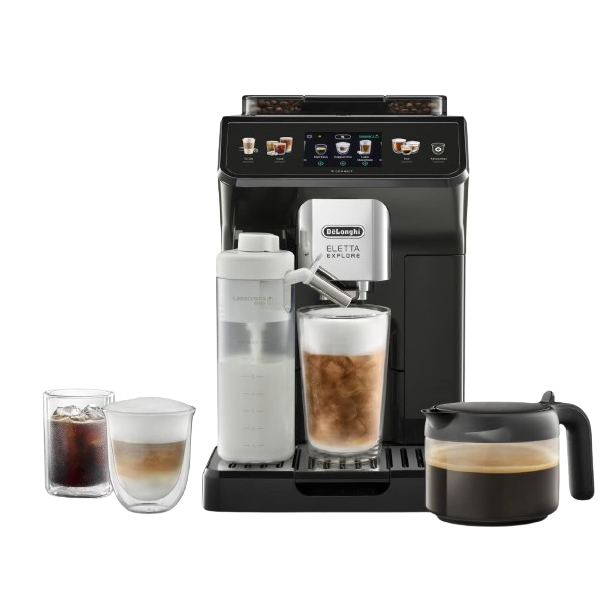
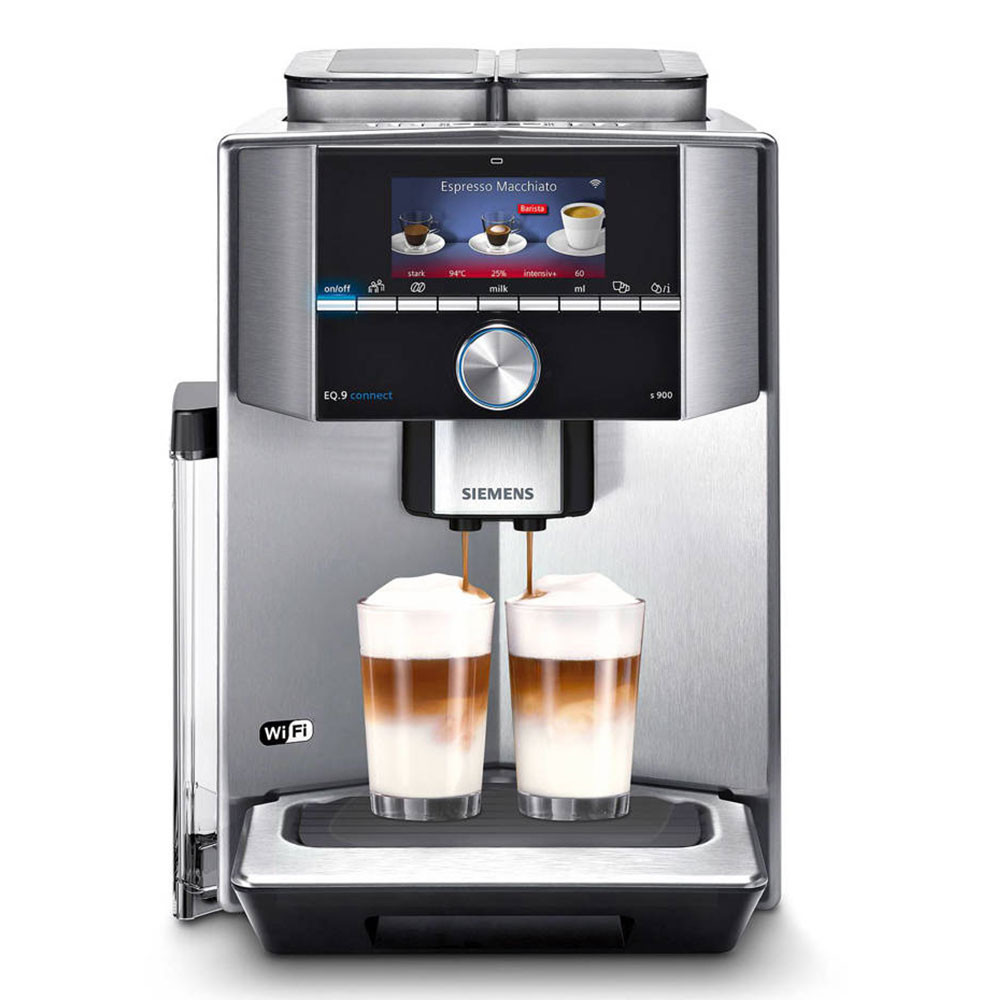
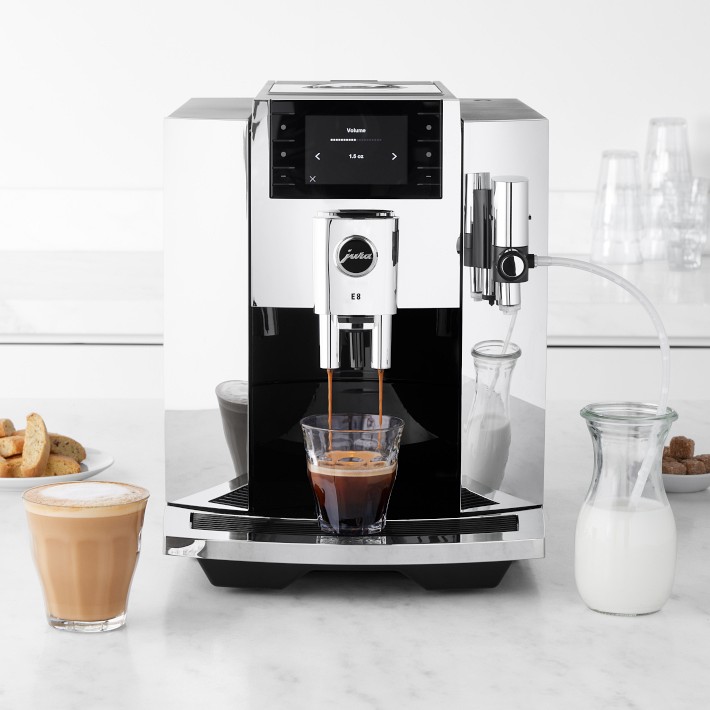
Against third-party competitors, the Eletta Explore holds its ground well on value. The Jura E8 (around $1,399 in 2026) lacks cold extraction and offers fewer customization options via its display. The Siemens EQ.900 matches the Eletta Explore on display quality and milk performance, but retails closer to $1,500 and is harder to find in North American markets.
Where the Jura edges ahead is in long-term reliability data. Jura machines have a well-documented service history with authorized repair centers in most regions. DeLonghi’s service network is growing, but it is still less comprehensive outside major metro areas. This is a real-world consideration worth factoring into your decision, not just a spec sheet comparison.
What’s the Milk System Like on the Eletta Explore?
LatteCrema Hot Performance
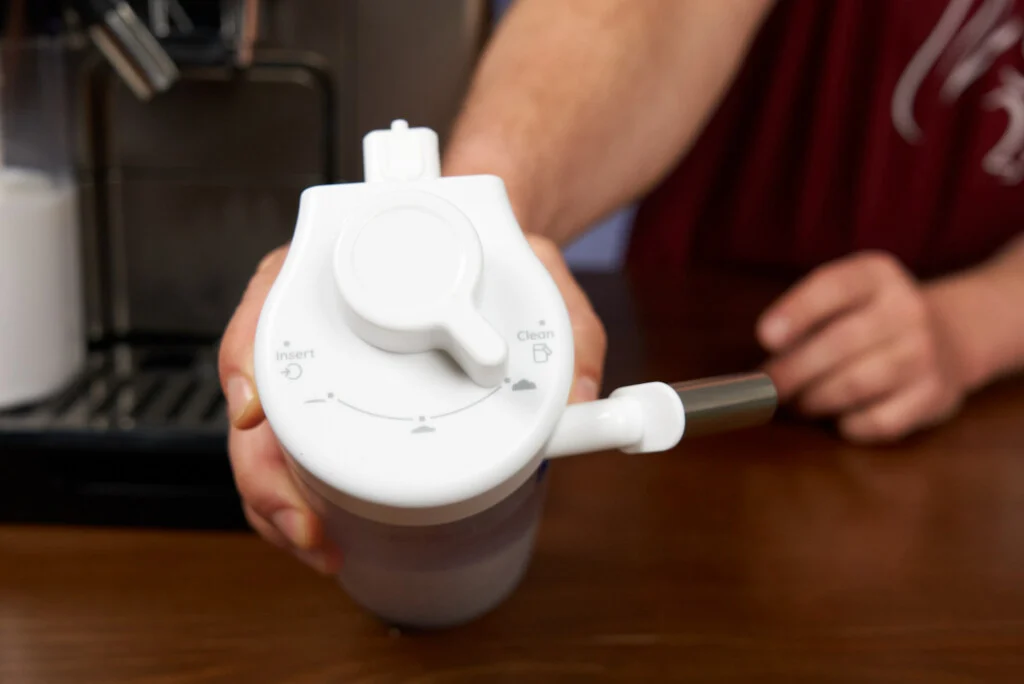
The LatteCrema Hot system connects an external carafe to the machine and automatically froths milk for lattes, cappuccinos, flat whites, and macchiatos. In testing with whole milk at refrigerator temperature (4°C / 39°F), we achieved microfoam consistently in the 55-65°C (131-149°F) range — warm enough for a comfortable latte without scalding the milk proteins. Oat milk performance was acceptable, though the foam was slightly less stable than whole milk output.
The milk carafe seals and stores in the fridge between sessions, which is a genuine convenience advantage over machines that require you to froth from a separate pitcher every time. Daily cleanup involves rinsing the carafe tube system, which takes about 60 seconds. Weekly, you’ll want a more thorough rinse cycle using the machine’s built-in milk clean function.
Drink Variety and Customization Options
The Eletta Explore ships with 16 pre-programmed drink options including espresso, double espresso, lungo, Americano, cold brew concentrate, iced latte, cappuccino, flat white, and more. You can customize and save personal profiles for up to 8 different users — useful in households where different people have different preferences for coffee volume, strength, and temperature.
Temperature is adjustable across three settings (low, medium, high) rather than precise Celsius control, which is a slight limitation for more technical users. Coffee strength is adjustable across five levels, and grind size is adjustable in 13 steps. These parameters interact with each other in ways that take a few days of experimentation to dial in — but once you find your settings, repeatability is excellent. For a broader look at where this model sits in DeLonghi’s super-automatic range, the Best DeLonghi Super Automatic guide provides a comprehensive comparison across the full lineup.
DeLonghi Eletta Explore Review: Pros and Cons
What We Liked
- Cold extraction is genuinely useful — not a gimmick, delivers noticeably smoother cold coffee on demand
- Espresso quality is best-in-class for the super-automatic category at this price
- LatteCrema Hot system produces consistent microfoam with minimal user input
- 13-step grinder with conical burrs offers meaningful dose and texture control
- 3.5-inch color touch display is intuitive and responsive — learning curve is minimal
- User profiles allow multiple household members to save personalized settings
- Removable brew group makes internal maintenance accessible without tools
- Pre-ground bypass doser adds flexibility for specialty or decaf beans
What Could Be Better
- Cold extraction takes 5-7 minutes — not instant, requires planning ahead
- Plastic milk carafe feels slightly incongruous at this price point
- No manual pre-infusion control for advanced users who want more extraction precision
- Temperature settings are categorical rather than precise degree control
- Service network is less robust than Jura in some regions
- Footprint is large — requires significant counter space at 357mm wide
Who Should Buy the DeLonghi Eletta Explore?
Ideal User Profile
The De’Longhi eletta explore review points clearly toward a specific buyer: someone who wants genuine espresso quality with near-zero daily friction, drinks both hot and cold coffee regularly, and is willing to spend over $1,200 for a machine that handles everything automatically. It’s not a machine for the purist who wants manual control over every extraction variable — for that, a semi-automatic with a standalone grinder will always be more satisfying.
It’s an excellent fit for busy households with multiple coffee drinkers who have different preferences. The user profile system, combined with one-touch drink preparation, means everyone gets their preferred drink without compromise. According to the International Coffee Organization’s 2025 consumption data, at-home specialty coffee consumption has grown over 34% in the past five years — the Eletta Explore is squarely targeting that trend.
Who Should Look Elsewhere
If cold brew isn’t part of your routine and you don’t need the full LatteCrema Hot system, the Eletta Cappuccino or Dinamica Plus will save you $250-$350 with minimal functional compromise for hot espresso drinks. If you’re a hobbyist who wants to learn manual technique, a machine like this will actually get in the way of your development — super-automatics abstract away the variables that make espresso skill-building so rewarding.
Budget-conscious buyers should also note that the DeLonghi eletta explore review picture changes when you factor in ongoing costs: filtered water helps extend descaling intervals, and DeLonghi recommends using their EcoDecalk descaler (around $12 per use, roughly 2-4 uses per year depending on water hardness). It’s not expensive maintenance, but it’s not zero either.
Long-Term Reliability and Maintenance
Cleaning and Descaling Schedule
Daily maintenance on the Eletta Explore is minimal. The machine prompts you to empty the drip tray and grounds container when they’re full (roughly every 8-12 drinks, depending on settings), and the milk clean cycle runs automatically after each milk-based drink. The brew group should be rinsed weekly and fully dried before reinsertion to prevent mold buildup — this takes about 3 minutes.
Descaling frequency depends heavily on your water hardness. The machine has a built-in water hardness sensor and will alert you when descaling is required. In a region with moderately hard water (around 150 ppm), most users report descaling every 2-3 months with regular use. Using filtered or softened water can extend this to 4-6 months. Following DeLonghi’s descaling guidance from their official support documentation will help preserve the boiler and pump over the long term.
Warranty and After-Sales Support
The Eletta Explore comes with a standard 2-year manufacturer warranty in the US and EU. DeLonghi’s customer support in North America has improved notably since 2023, with phone and chat support available during business hours and a growing network of authorized service centers. Spare parts — including brew group components, seals, and carafe parts — are generally available through DeLonghi’s parts portal and third-party suppliers.
This De’Longhi eletta explore review found the support experience adequate for a typical home user, though turnaround times for repairs can run 2-3 weeks depending on location. If continuous availability is critical (say, for a home office that relies on the machine daily), having a backup brewing method during service periods is worth considering.
Frequently Asked Questions
How long does the DeLonghi Eletta Explore cold brew process take?
The cold extraction cycle on the Eletta Explore takes between 5 and 7 minutes per serving. This is slower than a standard 25-second espresso pull but dramatically faster than traditional immersion cold brew methods. The result is a smooth, low-bitterness concentrate ready to serve immediately over ice.
Is the DeLonghi Eletta Explore good for beginners?
The Eletta Explore is user-friendly enough for beginners, but it’s priced above most beginner budgets. Its touchscreen interface and automatic drink programs minimize the learning curve significantly. Beginners on tighter budgets will find better value in DeLonghi’s Dinamica or Magnifica Evo range, which offer similar ease of use at lower price points.
Can I use pre-ground coffee in the DeLonghi Eletta Explore?
Yes. The Eletta Explore includes a pre-ground bypass doser that accepts one dose of pre-ground coffee per cycle. This is particularly useful for decaf coffee or specialty single-origins you don’t want to load into the main bean hopper. You cannot use it to brew multiple consecutive drinks from pre-ground without re-dosing manually each time.
How does the DeLonghi Eletta Explore compare to the Jura E8?
The Eletta Explore offers cold extraction capabilities that the Jura E8 doesn’t have, at a lower price point (approximately $1,249 vs. $1,399 in 2026). The Jura E8 has a slight edge in documented long-term reliability and service network coverage. For cold coffee drinkers, the Eletta Explore wins clearly. For pure hot espresso, the choice is closer.
How often does the DeLonghi Eletta Explore need descaling?
Descaling frequency varies with water hardness. In moderately hard water (around 150 ppm), most users descale every 2-3 months with regular daily use. The machine includes a built-in water hardness sensor and will alert you automatically when descaling is required. Using filtered water significantly extends the interval between descaling cycles.
Final Thoughts
The DeLonghi Eletta Explore review conclusion is straightforward: this is one of the most capable super-automatic espresso machines DeLonghi has built to date. The cold extraction feature isn’t a marketing checkbox — it delivers a genuinely different and enjoyable cold coffee experience that no other DeLonghi machine currently offers. Combine that with consistent espresso quality, an intuitive interface, and a well-designed milk system, and you have a machine that earns its premium position.
It’s not flawless. The plastic carafe, limited temperature precision, and lengthy cold extraction cycle are real limitations. And if your coffee habits are purely hot and milk-based, the Eletta Cappuccino at $999 covers 90% of the same ground for $250 less. But if cold coffee is part of your daily ritual and you want the most complete automatic espresso experience DeLonghi currently makes, the DeLonghi eletta explore review verdict is clear: it’s worth the investment.
Spend time exploring the customization options during the first two weeks. Dial in your grind, adjust your dose, and experiment with the cold extraction on different roast levels — lighter roasts in particular produce surprisingly complex results. The machine rewards a small investment of attention with consistently excellent coffee. For 2026, it remains one of our top picks in the super-automatic category.