Imagine starting your day with the perfect espresso—rich, smooth, and perfectly balanced. Now, contrast that with a shot that tastes bitter or sour, with uneven crema and inconsistent texture. What went wrong? One common issue is channeling. In this post, we’ll explore what Espresso Channeling is, why it happens, and how to prevent it to ensure every shot of espresso you brew is as delightful as it should be.
What is Espresso Channelling?
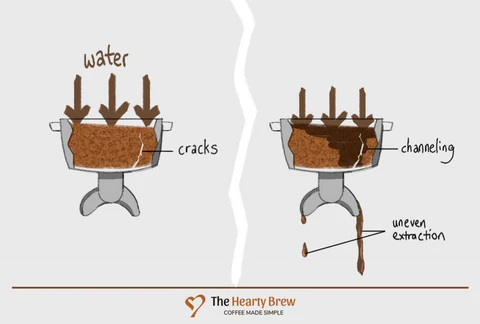
Espresso channelling occurs when water finds a path of least resistance through the coffee puck, leading to an uneven extraction. Instead of flowing uniformly through the coffee grounds, water creates channels, causing some parts of the puck to be over-extracted and others under-extracted. This results in an espresso shot with imbalanced flavors and can often be identified by visual signs during extraction.
Channelling leads to several negative outcomes:
- Uneven Extraction: Some coffee grounds are over-extracted (bitter), while others are under-extracted (sour).
- Poor Flavor: The shot lacks balance, often resulting in unpleasant tastes.
- Inconsistent Crema: The visual appearance of the espresso is affected, with inconsistent crema formation.
Causes of Espresso Channelling
Understanding what causes channelling is the first step toward preventing it. Here are the main factors that contribute to this issue:
Uneven Tamping:
- Importance of a Flat, Even Tamp: A level tamp ensures the coffee grounds are compacted evenly, preventing water from finding easy paths through the puck.
- Common Mistakes: Tamping at an angle can tilt the coffee bed, leading to uneven water distribution and channelling.
Poor Distribution of Coffee Grounds:
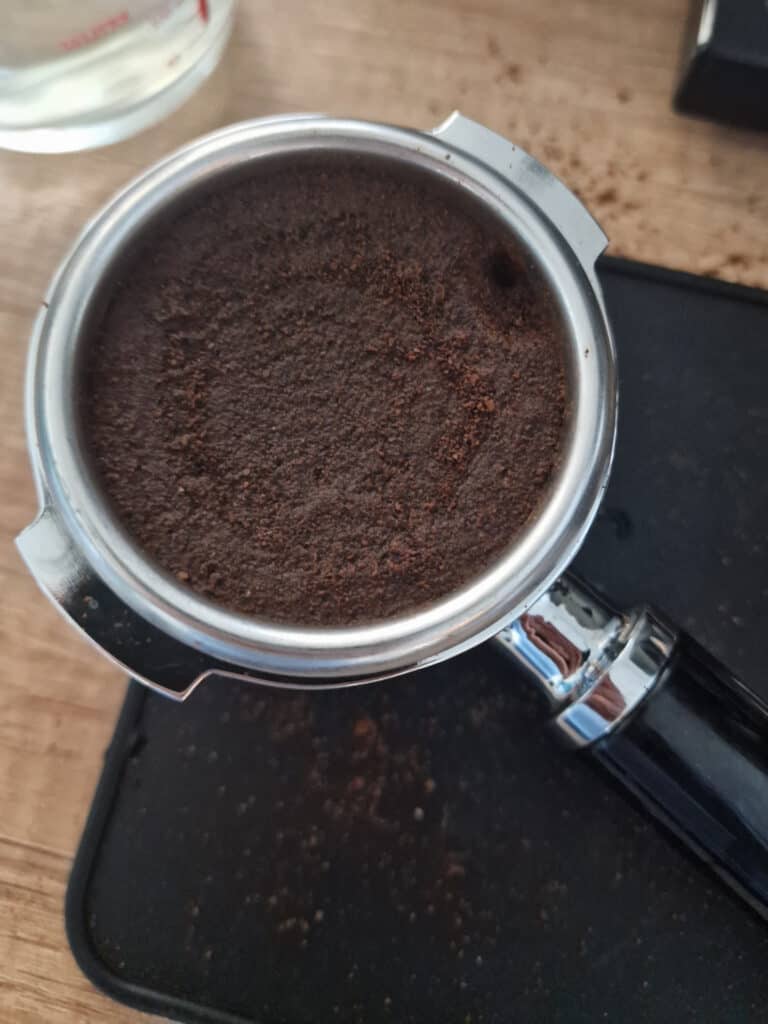
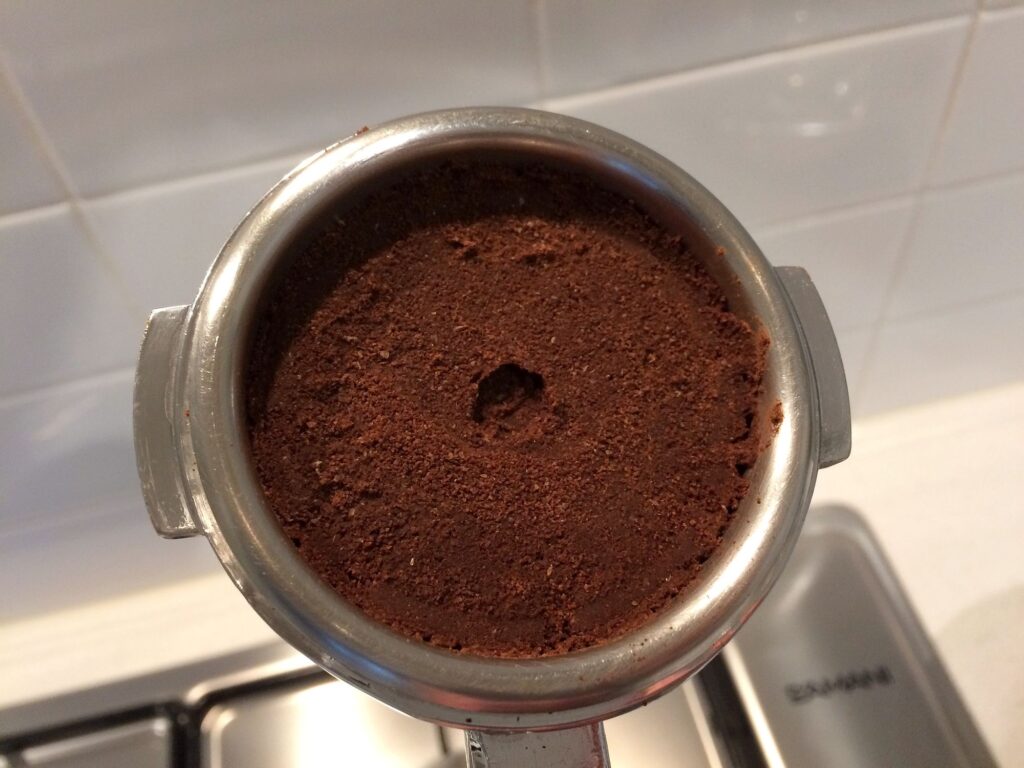
- Clumping: Coffee grounds can clump together, creating pockets of air in the puck. These pockets make it easier for water to find paths through the puck, leading to channelling.
- Uneven Distribution: If coffee grounds are not evenly spread in the portafilter, some areas will be denser than others. This uneven density creates weak spots where water can flow more freely.
Grind Size Issues:
- Too Fine: If the grind size is too fine, the coffee puck becomes very dense, making it difficult for water to pass through. This forces the water to find the path of least resistance, creating channels.
- Too Coarse: Conversely, if the grind size is too coarse, water flows too easily through the puck, also causing channelling.
Improper Dosing:
- Under-Dosing: Not using enough coffee grounds can result in a puck that doesn’t fill the portafilter properly, leading to uneven water flow.
- Over-Dosing: Using too much coffee can cause the puck to be overly compacted, again forcing water to find easier paths.
Defective Equipment:
- Worn Out Grinders: Grinders that produce inconsistent particle sizes can lead to an uneven puck, contributing to channelling.
- Damaged Portafilters and Shower Screens: Equipment in poor condition can cause uneven water distribution.
Signs of Espresso Channelling
Identifying channelling can be tricky, but there are several signs to look for:
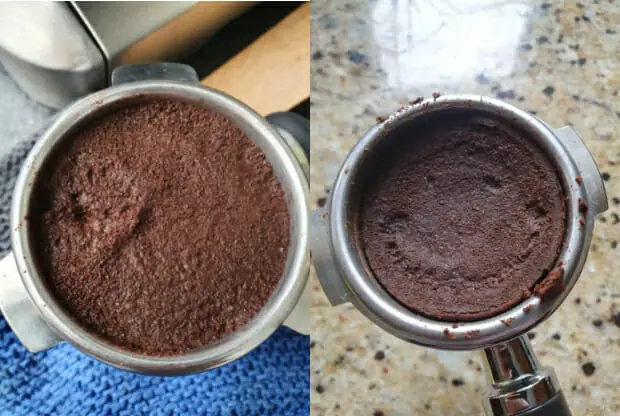
- Visual Indicators:
- Uneven Flow: When using a bottomless portafilter, channelling can often be seen as multiple streams of espresso instead of a single, steady flow.
- Sputtering: The espresso may spurt out unpredictably, indicating uneven pressure.
- Inconsistent Crema: A shot affected by channelling might have an uneven crema or appear watery and thin.
- Taste Indicators:
- Bitter or Sour Flavors: An imbalanced shot with channelling often tastes either too bitter or too sour.
- Watery Texture: If the espresso shot tastes watery, it’s a sign that the water is not extracting enough coffee.
How to Prevent Espresso Channeling
Preventing channelling involves attention to detail and consistent technique. Here are some tips:

- Proper Tamping Techniques:
- Use a Level Tamper: Ensure you apply even pressure when tamping to create a uniform coffee puck.
- Practice Good Technique: Make sure to tamp straight and even. Consider using a calibrated tamper for better consistency.
- Effective Coffee Ground Distribution:
- Weiss Distribution Technique (WDT): Use a tool with thin needles to break up clumps and distribute the grounds evenly.
- Distribution Tools: Consider using tools that help level the coffee grounds in the portafilter.
- Adjusting Grind Size:
- Find the Right Grind: Experiment with different grind settings to find the one that works best for your espresso machine and coffee beans.
- Maintaining Equipment:
- Regular Cleaning: Clean your espresso machine and grinder regularly to ensure consistent performance.
- Check for Wear and Tear: Replace any worn-out components to maintain even water distribution.
- Advanced Techniques:
- Pre-Infusion: Wet the coffee grounds with a small amount of water before the full extraction to allow the grounds to expand and settle evenly.
- Using Puck Screens: Place a fine mesh screen on top of the coffee puck to help distribute water more evenly.
Conclusion
Channelling is a common issue in espresso making, but with careful attention to technique and equipment, it can be minimized. By understanding the causes and signs of channelling, and applying the tips provided, you can achieve more consistent and flavorful espresso shots. Happy brewing!