Moka pots have long been a staple in many kitchens, cherished for their ability to brew rich and flavorful coffee right on the stovetop. Known for their distinctive design and simplicity, these classic coffee makers have earned a special place in the hearts of coffee enthusiasts worldwide.
However, like any beloved kitchen tool, maintaining your Moka pot is crucial to ensure it continues to deliver that perfect cup of coffee. One often overlooked but vital component of the Moka pot is the filter plate. In this article, we’ll dive into the significance of Moka pot filter plates, common issues they face, and how to maintain and replace them to keep your coffee game strong.

What are Filter Plates?
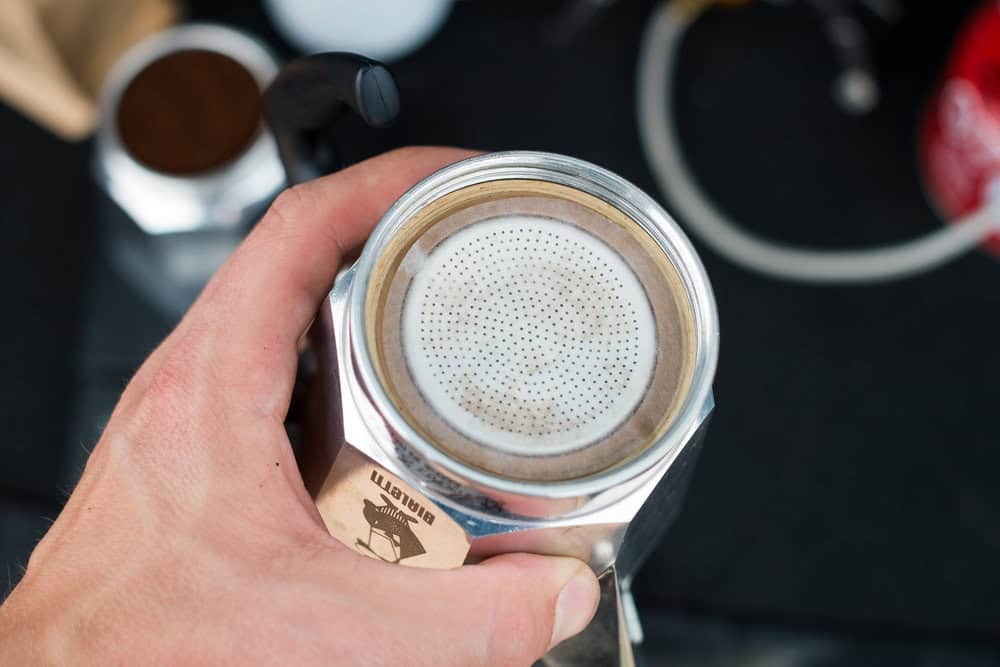
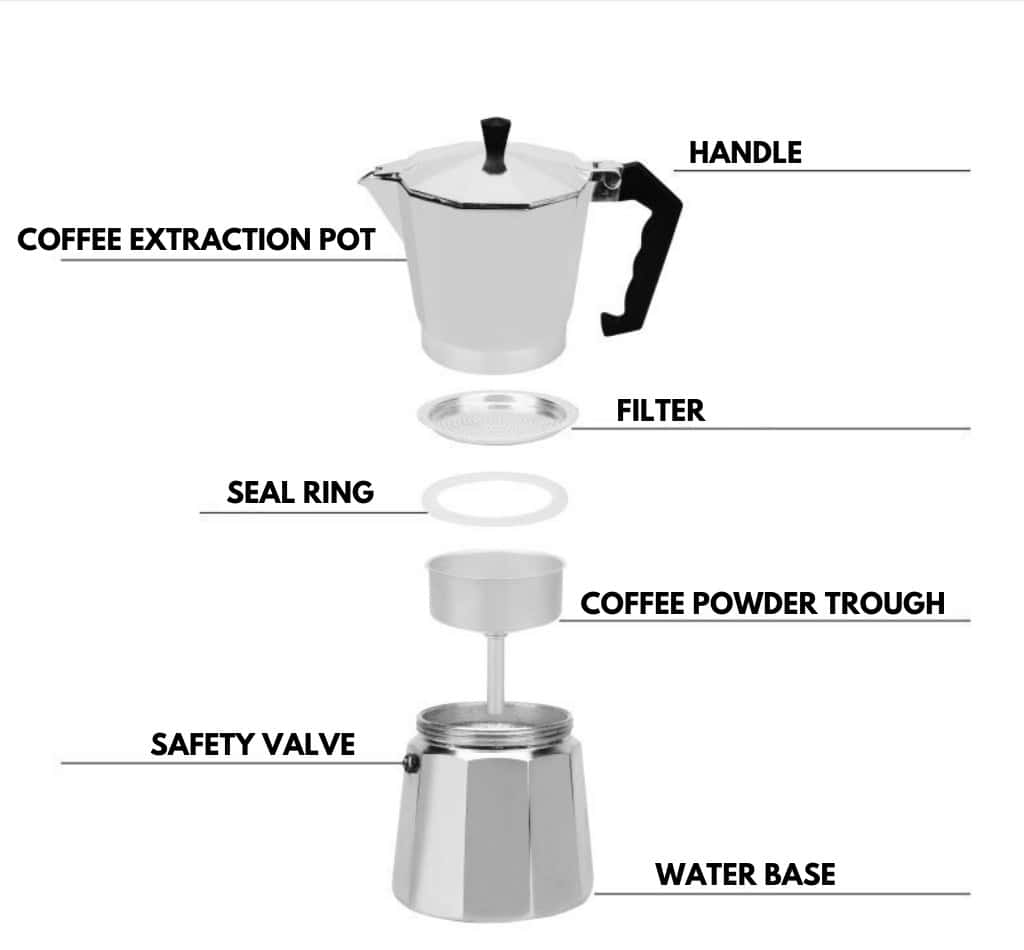
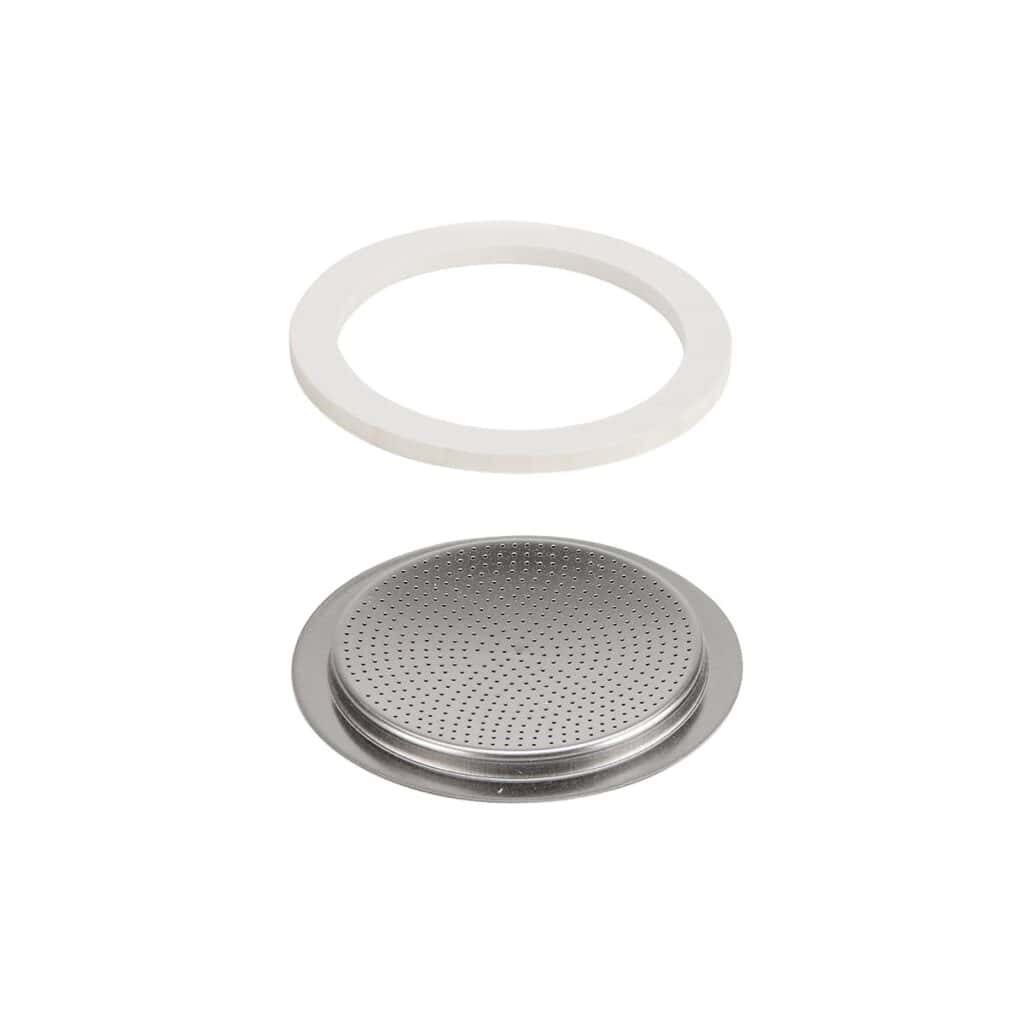
Filter plates are crucial components within a Moka pot, typically made of metal with numerous small perforations. Their primary function is to act as a barrier between the water in the bottom chamber and the coffee grounds in the middle funnel. As the water heats up and creates pressure, it is forced through the filter plate, ensuring that the water is evenly distributed through the coffee grounds, leading to a more consistent and flavorful extraction.
In the Moka pot’s structure, the filter plate is situated directly above the bottom chamber where the water is placed. The funnel-shaped middle section, which holds the coffee grounds, sits atop the filter plate. When the Moka pot is assembled, the filter plate ensures that water can pass through the coffee grounds effectively, without letting any grounds escape into the brewed coffee.

Why are Filter Plates Important?
Role in Coffee Brewing: The filter plate’s role in the brewing process is to allow the heated water to pass through the coffee grounds under pressure, facilitating the extraction of flavors and oils from the coffee. This pressure-driven extraction is what gives Moka pot coffee its characteristic strong, rich flavor, similar to that of espresso but less intense.
Impact on Coffee Quality: The quality of the filter plate directly impacts the quality of the brewed coffee. A clean, well-maintained filter plate ensures that water flows smoothly and evenly through the coffee grounds, preventing clogs and ensuring a consistent extraction. Conversely, a damaged or clogged filter plate can lead to uneven extraction, resulting in coffee that may taste bitter, weak, or otherwise unpleasant. Regular inspection and cleaning of the filter plate are essential to maintain the Moka pot’s performance and the quality of the coffee it produces.
Common Issues with Filter Plates
Clogging: Clogging is a common issue with Moka pot filter plates and can be caused by several factors. The primary culprits are the accumulation of coffee grounds and mineral deposits from water. Over time, fine coffee particles can get lodged in the tiny holes of the filter plate, leading to blockages. Additionally, hard water can leave mineral deposits, further contributing to clogging.
Symptoms of a clogged filter plate include:
- Reduced water flow through the coffee grounds.
- Longer brewing times.
- A weaker or more bitter taste in the brewed coffee.
- Coffee grounds in the final brew.
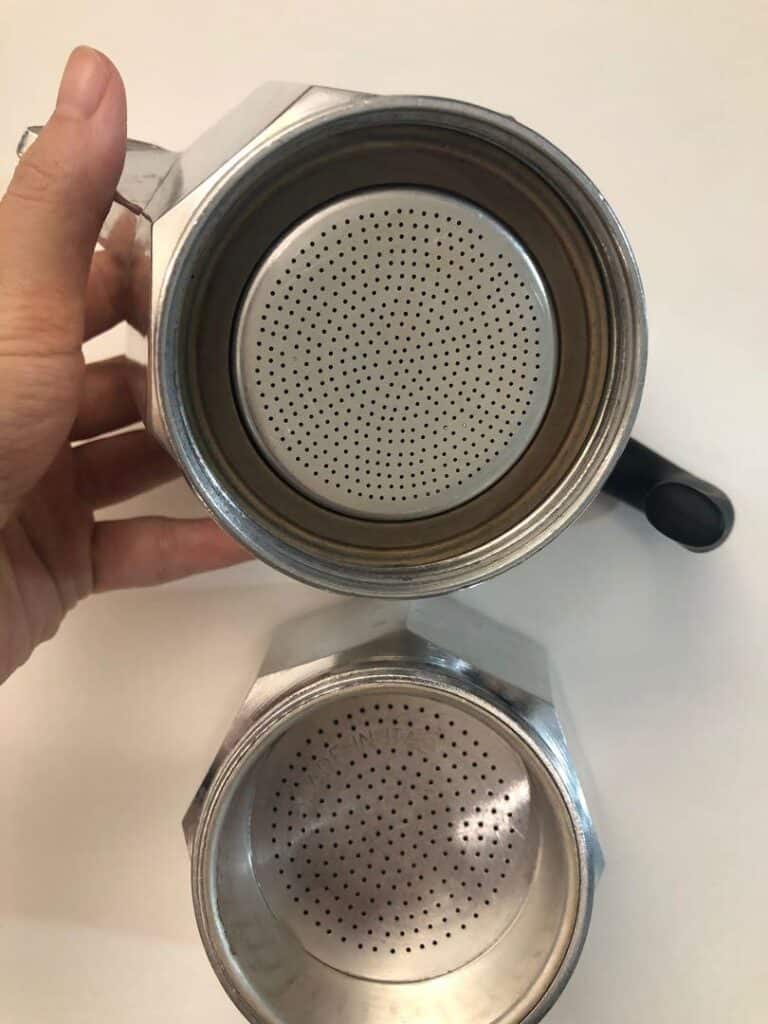
How Clogging Affects the Brewing Process: Clogging impedes the water flow, which is crucial for the pressure-driven brewing process of a Moka pot. When the filter plate is clogged, the hot water cannot pass through the coffee grounds evenly, leading to uneven extraction. This results in under-extracted coffee, which can taste weak and acidic, or over-extracted coffee, which can be bitter and astringent. Consistent clogging can also increase the brewing time and cause undue pressure buildup, potentially damaging the Moka pot.
Wear and Tear: Like any other component, filter plates are subject to wear and tear over time. Signs of damage include:
- Visible cracks or bends in the filter plate.
- Enlarged or misshapen holes.
- Rust or corrosion, especially in aluminum filter plates.
- Persistent clogging despite regular cleaning.
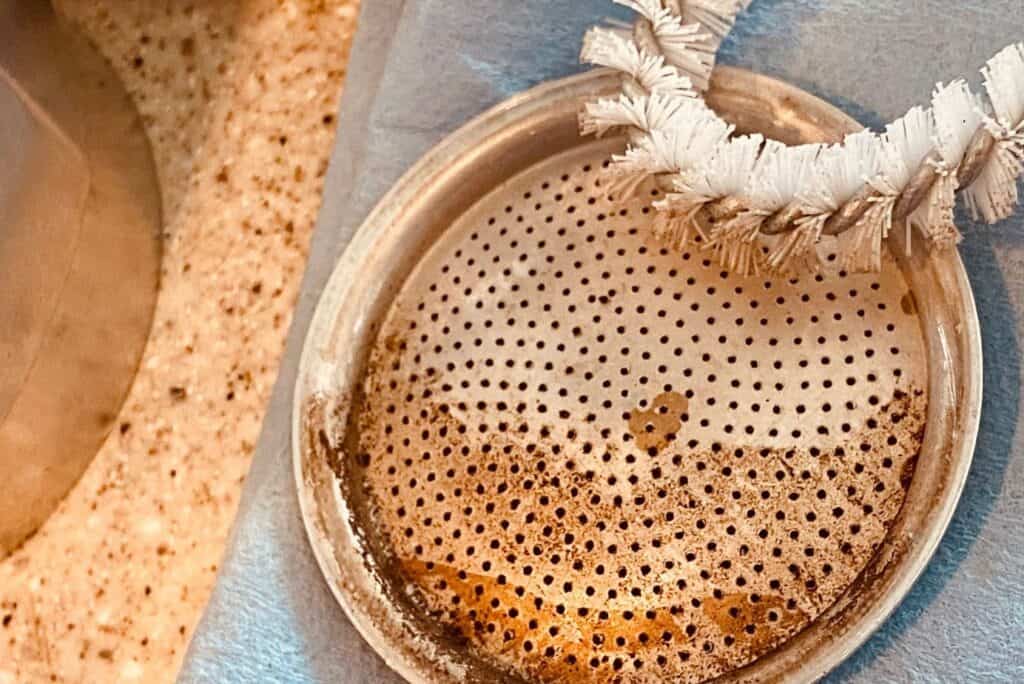
How Often to Inspect and Replace Filter Plates: To ensure optimal performance of your Moka pot, it’s important to regularly inspect the filter plate for any signs of wear and tear. A good practice is to check the filter plate each time you clean your Moka pot, which should ideally be after every use. Look for any physical damage or buildup that could affect performance.
As a general rule, replacing the filter plate every 6 to 12 months, depending on usage, is advisable. If you notice any damage or persistent clogging that cleaning does not resolve, it’s time to replace the filter plate sooner. Regular replacement helps maintain the quality of your coffee and ensures the longevity of your Moka pot.
Choosing the Right Filter Plate for Your Moka Pot
Different Sizes and Models (1-cup, 3-cup, 6-cup, etc.): Moka pots come in various sizes, typically measured by the number of cups they brew. The most common sizes are 1-cup, 3-cup, 6-cup, 9-cup, and 12-cup. Each size requires a filter plate that fits its specific dimensions to ensure proper functioning. Using a filter plate that is too large or too small can lead to leaks or poor extraction.
How to Measure and Ensure Compatibility: To ensure you get the right filter plate, you should measure the diameter of the existing filter plate in your Moka pot. This can be done using a ruler or caliper to measure across the center of the plate from edge to edge. Once you have the measurement, you can match it with the specifications of replacement filter plates. Additionally, referring to the manufacturer’s guide or model number can help ensure compatibility. Always double-check the size and fit before purchasing a replacement to avoid mismatched parts.
Materials
Stainless Steel vs. Aluminum Filter Plates: Filter plates are typically made from either stainless steel or aluminum, each having its own set of advantages and disadvantages.
Stainless Steel:
- Pros:
- Durability: Stainless steel filter plates are highly durable and resistant to corrosion, making them a long-lasting option.
- Heat Resistance: They can withstand high temperatures without degrading.
- Ease of Cleaning: Stainless steel is non-porous, making it easier to clean and less likely to retain coffee oils and residues.
- Cons:
- Cost: Stainless steel filter plates are generally more expensive than aluminum ones.
- Weight: They are heavier, which might slightly alter the handling of the Moka pot.
Aluminum:

- Pros:
- Lightweight: Aluminum filter plates are lighter, making the Moka pot easier to handle and transport.
- Cost-Effective: They are usually cheaper than stainless steel options, making them a more budget-friendly choice.
- Heat Conductivity: Aluminum conducts heat well, which can be beneficial for the brewing process.
- Cons:
- Corrosion: Aluminum is more prone to corrosion, especially if not dried properly after washing.
- Durability: They are less durable and more susceptible to wear and tear over time.
Choosing the Best Material: The choice between stainless steel and aluminum filter plates largely depends on personal preferences and usage patterns. For those looking for longevity and ease of maintenance, stainless steel is the preferred choice. However, if budget and weight are major considerations, aluminum can be a suitable alternative. Regular inspection and maintenance are crucial, regardless of the material, to ensure the best coffee brewing experience.
Where to Buy Replacement Filter Plates
Online Marketplaces
One of the most convenient places to buy replacement filter plates for your Moka pot is through online marketplaces. These platforms offer a wide variety of options, catering to different sizes and brands.
- Amazon: Amazon is a great place to start due to its vast selection and customer reviews. You can find filter plates for various Moka pot sizes, from trusted brands to generic options. Amazon also provides user reviews and ratings, helping you make an informed decision.
- eBay: eBay is another excellent marketplace where you can find both new and used filter plates. It’s a good option for those looking for hard-to-find parts or seeking deals on replacement items. The auction feature can sometimes help you get parts at a lower price.
Specialty Coffee Stores
For those who prefer a more curated shopping experience, specialty coffee stores are an ideal option. These stores often carry high-quality parts and have knowledgeable staff who can provide advice and support.
- Italian Cookshop: This store specializes in Italian coffee makers and accessories. They offer a variety of filter plates compatible with different Moka pot sizes and brands. The quality is often higher, and the selection is tailored to coffee enthusiasts looking for specific, high-quality parts.
- Cape Coffee Beans: Known for their wide range of coffee equipment and accessories, Cape Coffee Beans offers replacement filter plates for popular Moka pot brands. Shopping here ensures you get parts that are specifically designed for coffee aficionados.
Official Manufacturer Parts
For guaranteed compatibility and quality, purchasing directly from the manufacturer is often the best choice. Many reputable brands offer replacement parts through their official websites or authorized dealers.

- Bialetti: As one of the most iconic brands in Moka pots, Bialetti offers a range of replacement parts, including filter plates, directly on their website or through authorized retailers. Buying from Bialetti ensures you get genuine parts designed to fit their Moka pots perfectly.
- Other Brands: Other Moka pot manufacturers also provide replacement parts. Check the official website of your Moka pot brand or their authorized dealers to find filter plates that are guaranteed to fit your specific model.
How to Replace and Maintain Your Filter Plate

Tools Needed:
- A new filter plate compatible with your Moka pot size.
- A small screwdriver or a similar tool to pry out the old filter plate.
- A soft cloth or sponge for cleaning.
- Mild dish soap and warm water.
Detailed Instructions:
- Disassemble the Moka Pot:
- Ensure the Moka pot is cool and empty.
- Unscrew the top chamber from the bottom chamber and remove the middle funnel that holds the coffee grounds.
- Remove the Old Filter Plate:
- Locate the filter plate on the bottom of the middle funnel.
- Use a small screwdriver or a similar tool to gently pry the filter plate out. Be careful not to damage the surrounding areas.
- Clean the Area:
- Before placing the new filter plate, clean the area thoroughly with warm water and mild dish soap.
- Use a soft cloth or sponge to remove any residual coffee grounds or oils. Rinse and dry completely.
- Insert the New Filter Plate:
- Place the new filter plate into the slot on the bottom of the middle funnel.
- Press down firmly to ensure it is seated correctly and evenly.
- Reassemble the Moka Pot:
- Put the middle funnel back into the bottom chamber.
- Screw the top chamber back onto the bottom chamber, ensuring all parts are tightly and securely connected.
- Test the Moka Pot:
- Fill the bottom chamber with water and the middle funnel with coffee grounds.
- Brew a pot of coffee to ensure everything is working correctly and there are no leaks.
Maintenance Tips
Tips to Prevent Clogging and Prolong the Life of Your Filter Plate:
- Use Fresh, Properly Ground Coffee: Coarser grounds reduce the likelihood of clogging. Avoid using very fine or oily coffee grounds.
- Avoid Hard Water: If possible, use filtered or bottled water to prevent mineral deposits from building up on the filter plate.
- Regular Inspection: Check the filter plate for signs of wear and tear, such as enlarged holes or corrosion. Replace it if necessary.
- Gentle Handling: When removing and cleaning the filter plate, handle it with care to avoid bending or damaging it.
Additional Tips for Moka Pot Care
Regular Inspection
What to Look for in a Well-Maintained Moka Pot:
- Gaskets: Check the rubber or silicone gaskets regularly for cracks, deformities, or wear. A worn-out gasket can lead to leaks and poor pressure buildup.
- Filter Plate: Inspect the filter plate for any clogging, cracks, or corrosion. Replace it if any damage is found.
- Safety Valve: Ensure the safety valve is clean and free of coffee grounds or residue. This is crucial for preventing pressure build-up.
- Body: Look for any dents or scratches on the Moka pot body that might affect its sealing and pressure capabilities.

Cleaning and Storage
Best Practices for Keeping Your Moka Pot in Top Condition:
- After Each Use:
- Disassemble the Moka pot and rinse all parts with warm water. Avoid using soap, as it can leave a residue that affects the taste of your coffee.
- Dry all parts thoroughly with a towel to prevent rusting, especially if your Moka pot is made of aluminum.
- Deep Cleaning:
- Occasionally soak the parts in a solution of vinegar and water to dissolve any mineral deposits. Rinse thoroughly afterward.
- Use a soft brush to clean the inside of the bottom chamber and the filter plate.
- Weekly Deep Clean:
- Soak the filter plate and other removable parts in warm, soapy water for 15-20 minutes.
- Use a soft brush to scrub away any stubborn coffee residues or mineral deposits.
- Rinse thoroughly and dry completely before reassembling.
- Soak the filter plate and other removable parts in warm, soapy water for 15-20 minutes.
- Storage:
- Store the Moka pot disassembled to allow all parts to dry completely and prevent moisture build-up, which can lead to mold or corrosion.
Using Quality Coffee
The Importance of Using the Right Grind Size and Fresh Coffee:
- Grind Size: Use a medium-fine grind for Moka pots. Too fine a grind can clog the filter plate, while too coarse a grind can result in weak coffee.
- Fresh Coffee: Always use freshly ground coffee for the best flavor. Coffee loses its freshness quickly, so grind your beans just before brewing.
- Proper Measurement: Use the right amount of coffee grounds for your Moka pot size. Overfilling can cause pressure issues and underfilling can result in weak coffee.
Conclusion
Maintaining your Moka pot filter plates is crucial for ensuring the longevity and performance of your coffee maker. Regular inspection, proper cleaning, and timely replacement of the filter plates can make a significant difference in the quality of your brew. Remember, using the right grind size and fresh coffee will enhance your coffee experience even further.
By following these maintenance tips and being attentive to the condition of your Moka pot, you can enjoy consistently delicious coffee every day. Feel free to leave comments or questions below if you need more information or have specific issues with your Moka pot. Let’s keep the coffee conversation brewing!