
Knowing when to backflush espresso machine equipment is one of the most important skills any serious home barista can develop. Get it right and your machine rewards you with clean, bright espresso shots that taste the way they’re supposed to. Get it wrong — or skip it entirely — and you’re essentially brewing through layers of rancid oil buildup that quietly destroys every shot you pull.
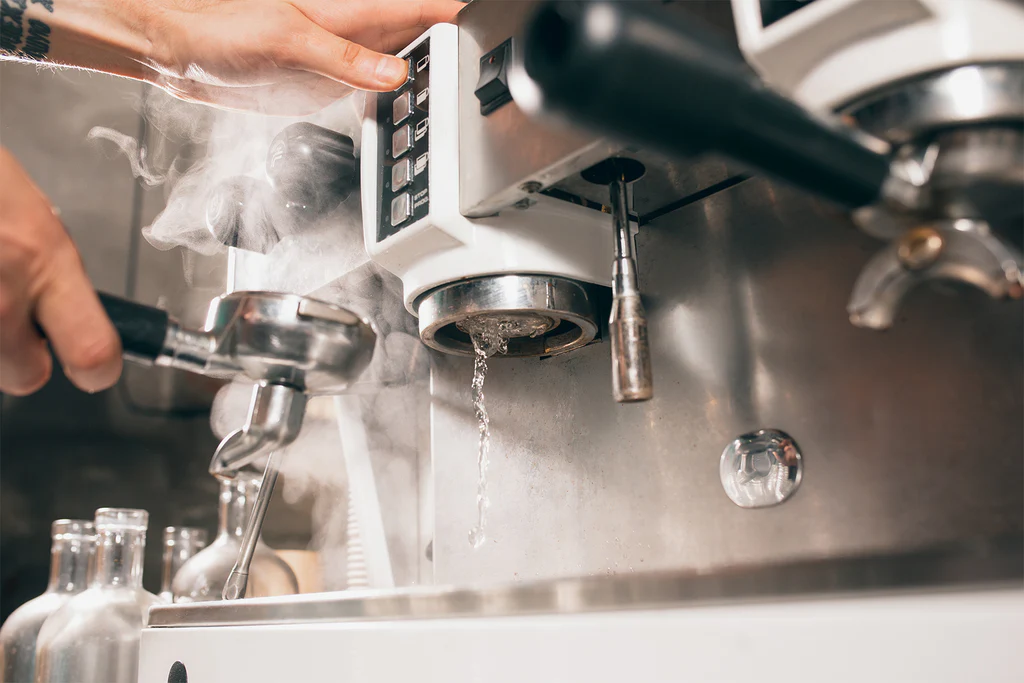
This guide covers everything: the schedule, the technique, the chemistry behind why backflushing works, and the mistakes most home baristas make without realizing it. We’ve pulled together real measurements, machine-specific guidance, and expert insights so you never have to guess again.
What Is Backflushing and Why Does It Matter?
The Basic Mechanics of Backflushing
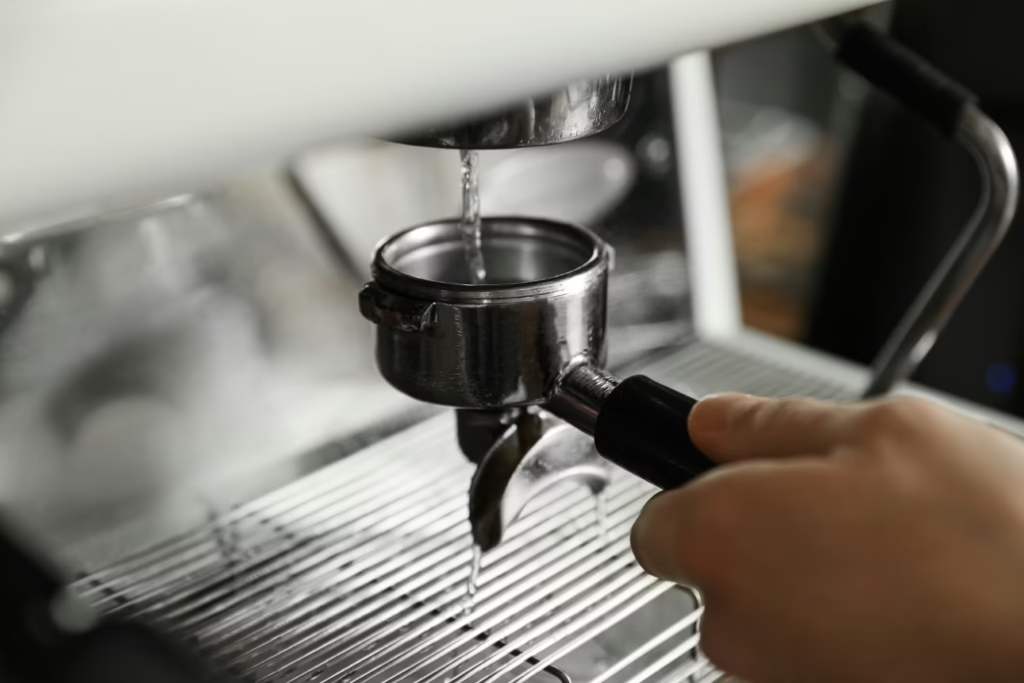
Backflushing is the process of forcing water backward through your espresso machine’s group head and three-way solenoid valve using a blind filter basket — a basket with no holes in the bottom. When you activate the pump with a blind basket installed, water has nowhere to go, so it builds pressure inside the group head. When you stop the pump, that pressure releases and forces water (along with dislodged coffee oils and grounds) backward through the system and out the solenoid drain.
The three-way solenoid valve is the component that makes this possible. It’s what releases pressure after a shot and what allows dirty water to evacuate during a backflush cycle. Without it, backflushing simply isn’t possible — which is why single-boiler machines without a solenoid valve, like many entry-level options, cannot be backflushed at all.
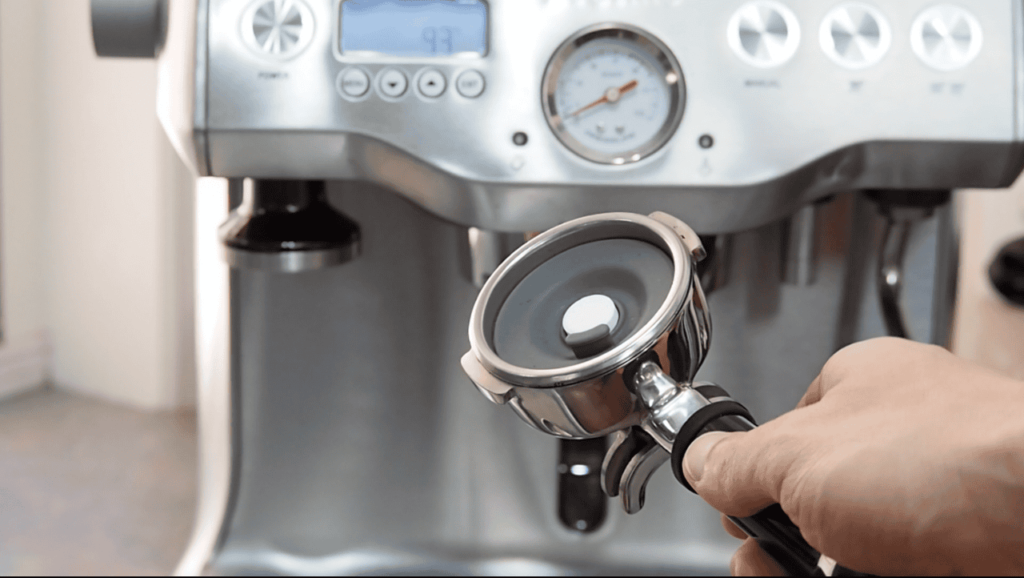
The blind basket sits in your standard portafilter. You likely already own a blind basket — it often ships with machines like the Breville Barista Express or the Rancilio Silvia and is sometimes labeled a “cleaning disc” or “blanking disc.”
What Backflushing Actually Removes
Every espresso shot you pull leaves behind micro-residues of coffee oils, fine grounds, and emulsified compounds inside the group head gasket, shower screen, and the passageways leading to the solenoid valve. These oils oxidize quickly at brewing temperatures (around 90–96°C / 194–205°F), turning rancid within hours. After days of shots without cleaning, that rancidity transfers directly into your espresso.
Backflushing with plain water removes the fresh, water-soluble residue from recent shots. Backflushing with a dedicated espresso machine cleaner — like Cafiza (Urnex) or Puly Caff — uses alkaline chemistry to emulsify and lift oxidized oils that water alone can’t touch. The combination of both approaches is what keeps machines performing at their best.
You can actually see the difference. A proper backflush with cleaner will produce noticeably brown, murky water in the drip tray during the drain cycles. That’s weeks of accumulated oil being purged from your system.
Machines That Can and Cannot Be Backflushed
Not every espresso machine supports backflushing. The essential requirement is a three-way solenoid valve. Prosumer and commercial machines almost universally include one. However, some pump machines — particularly older or budget models — lack this valve and cannot be backflushed safely.
Machines that support backflushing include: E61 group head machines (ECM, Rocket, Profitec, Bezzera), Breville/Sage machines (Barista Express, Barista Pro, Oracle), Rancilio Silvia, La Marzocca Linea Mini, Jura (with their proprietary cleaning tablets), and most commercial machines from La Marzocca, Synesso, and Victoria Arduino.
If you’re unsure, check your machine’s manual or the manufacturer’s website. Home-Barista’s maintenance forum is an excellent community resource where experienced users document cleaning procedures for virtually every espresso machine on the market.
When to Backflush Espresso Machine: The Definitive Schedule
Daily Backflushing for Home Use
For most home baristas pulling 1–4 shots per day, a daily water-only backflush at the end of your brewing session is the gold standard. This takes less than two minutes and prevents oil buildup from ever reaching problematic levels. Think of it like rinsing your pan after cooking — far easier than scrubbing baked-on residue later.
A daily water-only backflush involves running 5–10 cycles with your blind basket and no cleaning powder. Each cycle lasts about 5–10 seconds of pump activation followed by a 5-second pause. The water that evacuates through the solenoid drain will progressively run cleaner after each cycle — that’s how you know it’s working.
Many baristas skip this step because it feels unnecessary after just a couple of shots. The reality is that coffee oils begin oxidizing within minutes at brewing temperature, so even one or two shots produce enough residue to warrant a rinse cycle. This habit alone extends machine lifespan significantly.
Weekly Backflushing With Cleaner
Once per week, you should perform a full chemical backflush using approximately 0.5–1g of espresso machine cleaner per cycle. For reference, the Cafiza recommended dose is about half a teaspoon for a standard home machine. For commercial machines with larger group heads and higher volume, follow the manufacturer’s dosing instructions directly.
The weekly chemical backflush should consist of 8–10 pump cycles, alternating between cycles with cleaner and plain water rinse cycles. Start with 3–4 active cycles using cleaner, then run 5–6 rinse cycles to flush all chemical residue from the system. This alternating approach ensures the alkaline cleaner does its job without leaving a chemical taste in subsequent shots.
After a chemical backflush, always pull and discard a blank shot or two before brewing your actual espresso. Even trace amounts of residual cleaner can impart a soapy, metallic taste that ruins the cup.
High-Volume and Commercial Schedules
Commercial environments operate under completely different pressure. A café pulling 200+ shots per day needs to backflush after every 50–100 shots, and a full chemical backflush should happen at least once daily, typically at close of business. Many high-volume operations do a mid-service water backflush as well.
For home baristas who entertain frequently or pull more than 10 shots per day on weekends, treat those high-volume days like mini-commercial sessions. A water backflush between morning and afternoon brewing sessions, plus a chemical backflush at day’s end, keeps things clean without requiring a complicated schedule.
The La Marzocca support documentation provides detailed maintenance schedules for both commercial and home machines, including specific cycle counts and chemical recommendations that are worth bookmarking regardless of what machine you own.
Step-by-Step Backflushing Technique for Home Baristas
What You’ll Need Before You Start
Gather your supplies before beginning: a blind filter basket (fits your portafilter), espresso machine cleaner (Cafiza, Puly Caff, or your machine manufacturer’s branded cleaner), a clean cloth or towel, and a small scale if you want to measure your cleaner dose precisely. Having everything ready makes the process smooth and consistent.
Remove your regular filter basket from the portafilter and insert the blind basket. Wipe the inside of the portafilter clean with a dry cloth to remove any loose grounds before inserting it into the group head. This prevents loose particles from being pushed further into the system during the backflush.
For a chemical backflush, add your measured dose of cleaner directly into the blind basket. The powder will dissolve as water is forced through the system. Don’t add cleaner to the water reservoir — it needs to be concentrated in the group head area to work effectively.
The Backflush Cycle Process
Lock your portafilter into the group head as you normally would for brewing. Activate your pump for 5–10 seconds — you’ll notice the machine sounds slightly different because pressure is building with nowhere to release forward. Stop the pump and wait 5 seconds. You’ll hear the solenoid release and water draining into the drip tray.
Repeat this cycle 8–10 times for a chemical backflush (3–4 with cleaner loaded, then 5–6 rinse cycles). For a water-only backflush, 5–7 cycles is typically sufficient. The entire process should take 3–5 minutes from start to finish — it’s genuinely one of the fastest maintenance tasks in home espresso.
After completing all cycles, remove the portafilter and rinse it thoroughly under hot water. Clean the blind basket separately and let it dry. Run a quick rinse of hot water through the group head without the portafilter attached to flush any remaining loosened debris from the shower screen area.
Cleaning the Shower Screen and Group Gasket
Backflushing cleans the internal pathways but doesn’t fully address the shower screen and group gasket. These should be removed and manually cleaned monthly. The shower screen is held in place by a single screw on most machines — remove it, soak it in a solution of hot water and Cafiza for 15–20 minutes, then scrub with a soft brush before rinsing thoroughly.
The group gasket — the rubber seal that creates a watertight connection between the portafilter and group head — accumulates oils and compressed grounds over time. Wipe it clean with a damp cloth during every backflush session, and inspect it monthly for cracking, hardening, or deformation. A failing gasket causes portafilter leaks and poor extraction pressure.
Replacing the group gasket annually is recommended for home machines used daily. They typically cost $5–15 and are straightforward to replace. Ignoring a worn gasket leads to inconsistent brew pressure, channeling, and eventually damage to the group head itself.
Signs Your Machine Desperately Needs Backflushing Right Now
Taste Changes in Your Espresso
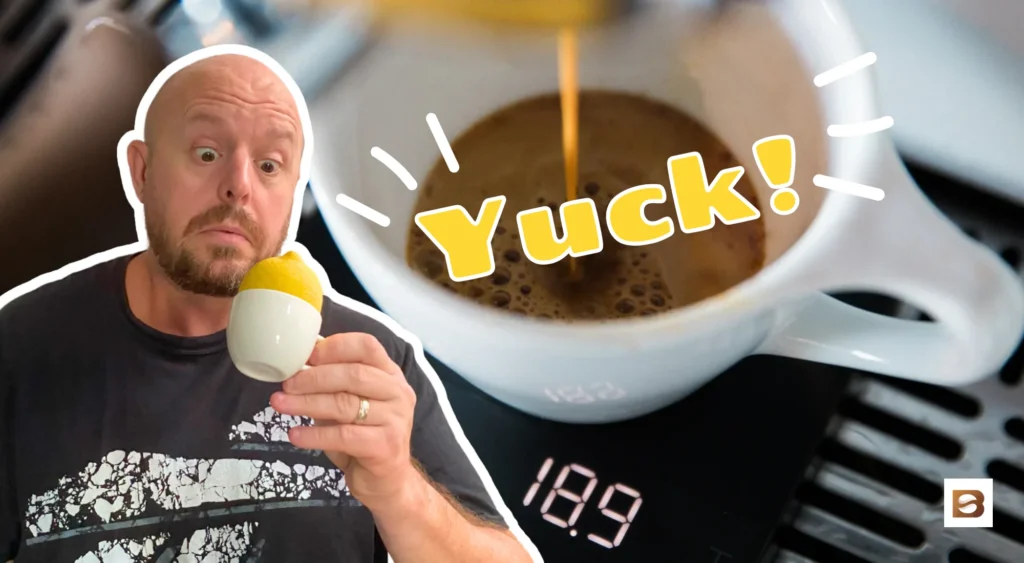
The clearest signal that your machine is overdue for a backflush is a change in how your espresso tastes. Specifically, watch for a bitter, harsh, or rancid quality that appears even when your dose, grind, and technique haven’t changed. This bitterness differs from over-extraction bitterness — it has an oily, almost burnt undertone that lingers on the palate longer than it should.
Another taste indicator is a flat, muted espresso that lacks the brightness and clarity you’re used to. When oils from dozens of previous shots coat the group head pathways, they effectively contaminate every subsequent extraction. Your coffee tastes like all those previous shots combined, which is rarely a good thing.
If your espresso has started tasting worse and you can’t pinpoint why, a thorough chemical backflush should be your first diagnostic step before changing your grind, dose, or coffee. Nine times out of ten, cleaning the machine solves “mysterious” quality problems faster than tweaking your recipe.
Visual and Physical Warning Signs
Remove your portafilter after a shot and inspect the group head. If you can see brown or black oil residue coating the group head shower screen, the inside of the portafilter lugs, or the surfaces around the group gasket, you’re overdue for a clean. Healthy machines have relatively clean, light-colored surfaces in these areas.
A longer-than-usual pressure build time, inconsistent shot timing despite consistent parameters, or a portafilter that feels sticky or harder to lock in are all physical signs of excessive buildup. These symptoms suggest the cleaner passageways are partially obstructed and are robbing you of consistent extraction pressure.
Watch your drip tray as well. If it’s collecting brownish, oily water even when you haven’t pulled a shot recently, your solenoid valve may be draining residue continuously — a sign the buildup inside the system is substantial enough to be weeping through the valve.
Machine Sounds and Performance Clues
Pay attention to your pump sound. A clean machine has a steady, consistent pump note during extraction. A machine clogged with oil and residue may sound labored, inconsistent, or louder than usual as the pump works harder to push water through partially blocked pathways. This isn’t always dramatic — sometimes it’s just a subtle change in pitch or rhythm.
Longer pre-infusion times or erratic pressure profiles on machines with pressure gauges are also performance clues. If your pressure gauge shows unusual spikes or drops that weren’t there before, internal blockages from oil and grounds residue are a likely culprit worth investigating before assuming a mechanical fault.
Common Backflushing Mistakes That Damage Your Machine
Using the Wrong Cleaning Products
Never use dish soap, baking soda, or general kitchen cleaners in your espresso machine. These products can leave residues, damage rubber seals, and introduce flavors that contaminate future shots. Even “natural” cleaners like white vinegar, while useful for descaling, are not appropriate for backflushing and will damage internal rubber components over time.
Stick to purpose-formulated espresso machine cleaners. Cafiza by Urnex and Puly Caff are the two most trusted brands in both home and commercial settings. Many machine manufacturers sell their own branded cleaner — Breville’s “Full Clean” tablets, Jura’s cleaning tablets — and these are generally just rebranded versions of the same alkaline formulations, often at higher cost.
Using too much cleaner is also a mistake many beginners make. More isn’t better here. Overdosing with alkaline cleaner can damage seals and leave residue that takes many rinse cycles to fully purge. Follow the recommended dose: approximately 0.5–1g per backflush cycle for home machines, and always err on the conservative side.
Skipping the Rinse Cycles
One of the most damaging mistakes is performing the chemical backflush without adequate rinse cycles afterward. Residual alkaline cleaner left in the group head doesn’t just taste bad — it can actively degrade rubber components, including the group gasket and any O-rings in the solenoid valve assembly, if left in contact for extended periods.
The rule of thumb: run at least as many rinse cycles as cleaning cycles. If you did four active cleaning cycles, run five or six rinse cycles. The water exiting the solenoid drain should look clear and have no soapy character before you consider the process complete.
Pull a blank shot — espresso with no coffee — and taste a small amount after completing your rinse cycles. If you detect any soapiness or unusual taste, run additional rinse cycles. It takes literally no coffee to perform this test, just a few seconds of pump time.
Backflushing Machines That Can’t Handle It
Attempting to backflush a machine without a three-way solenoid valve is a serious mistake. On incompatible machines, the blind basket blocks all water flow, which forces the pump to work against a completely closed system. This can overstress the pump motor, rupture internal seals, or damage the boiler’s pressure relief valve. Always verify your machine’s compatibility before attempting a backflush.
Similarly, some lever espresso machines — both manual and spring-lever — operate differently from pump machines and have their own specific cleaning procedures that don’t involve backflushing at all. Cleaning a Pavoni or a Flair requires different tools and techniques than cleaning an E61 group head machine.
How Backflushing Frequency Affects Espresso Quality and Machine Longevity
The Chemistry of Oil Oxidation in Espresso Machines
Coffee oils are predominantly lipids — triglycerides and diterpenes like cafestol and kahweol. When exposed to heat and oxygen inside a hot group head, these oils oxidize rapidly, forming aldehyde compounds responsible for the rancid, stale flavors that ruin espresso. This process happens at temperatures above 60°C (140°F) and accelerates significantly at brewing temperatures of 90–96°C.
Even a thin film of oxidized oil coating the shower screen or group head walls affects extraction in measurable ways. It alters the surface tension of water as it passes through, disrupts even water distribution across the puck, and physically contaminates the espresso as it extracts. You’re tasting chemistry you didn’t intend to brew.
Regular backflushing interrupts this oxidation cycle before the oils polymerize into harder, more stubborn deposits. Think of it like oil maintenance on an engine — regular changes prevent varnish buildup that requires aggressive chemistry to reverse.
Long-Term Machine Health and Repair Costs
The financial case for consistent backflushing is compelling. A solenoid valve replacement on a mid-range home machine typically costs $40–120 in parts alone, plus labor if you’re not comfortable doing it yourself. A clogged solenoid is almost entirely preventable with regular backflushing. A group head gasket worn prematurely by oil contamination costs $5–15 to replace but causes weeks of poor performance before it’s diagnosed.
In commercial settings, the cost calculation is even more stark. Preventive maintenance via regular backflushing costs pennies per session in cleaning powder. Emergency service calls for a clogged or damaged solenoid valve in a commercial machine can run $200–500 or more. The math isn’t complicated.
Beyond components, consistently clean machines simply make better espresso — and better espresso means fewer wasted shots, less coffee used finding a dialed-in extraction, and more consistent results for latte art or serving guests. The habit pays for itself many times over.
How Different Machine Types Respond to Backflushing
E61 group head machines are particularly well-suited to regular backflushing because of their thermosiphon design, which circulates water continuously through the group to maintain temperature. This constant circulation also means oils accumulate in the group head passageways more readily than in machines with passive group heads. Weekly chemical backflushing is especially important for E61 owners.
Heat exchange (HX) machines like the Rocket Appartamento or ECM Mechanika face similar considerations. Their group heads run hot even when idle, which accelerates oil oxidation between sessions. Backflushing immediately after your last shot of the day, while the group is still at full temperature, is more effective than trying to clean a cold machine the next morning.
Dual-boiler machines like the Breville Dual Boiler or Profitec Pro 700 have dedicated brew boilers that stay at precise temperatures. These machines benefit enormously from consistent backflushing schedules because their precision engineering means even slight contamination can cause measurable deviations in extraction parameters.
Backflushing vs. Other Espresso Machine Cleaning Methods
Backflushing vs. Descaling: Understanding the Difference
Backflushing and descaling address completely different problems and should never be confused or substituted for each other. Backflushing removes coffee oils and grounds from the group head and solenoid valve pathway. Descaling removes mineral scale (calcium carbonate deposits) from the boiler, heating element, and water lines. Both are essential, but neither replaces the other.
Descaling frequency depends on your water hardness. If you’re using hard tap water (above 150 ppm total dissolved solids), you may need to descale every 1–2 months. If you’re using filtered or softened water, descaling might only be needed every 3–6 months. Many modern machines have built-in water hardness settings or descaling alerts for exactly this reason.
Use citric acid-based descalers (like Dezcal) or manufacturer-approved descaling solutions. Never use backflush cleaner for descaling or descaler for backflushing — the chemistry is completely different and using the wrong product in the wrong application can cause damage.
Group Head Brush Cleaning vs. Backflushing
A group head brush — a stiff-bristled brush sized to fit the group head — is a quick cleaning tool used between shots to dislodge loose grounds from the shower screen. It takes 5 seconds and should be done before every backflush. It’s not a substitute for backflushing, but it complements the process by removing loose debris before the water cycles push it deeper into the system.
Some baristas use a dry brush, others use a wet brush with a small amount of espresso machine cleaner on particularly dirty days. Either approach works as a between-session maintenance habit. The key distinction is that brush cleaning addresses surface debris, while backflushing addresses the internal pathways and emulsified oil deposits that a brush can never reach.
Portafilter and Basket Cleaning in Context
Your backflush routine should always include portafilter and basket cleaning as a companion step. Soak your portafilter and baskets in hot water with a small amount of Cafiza for 15–20 minutes weekly. Scrub with a soft brush, rinse thoroughly, and dry before reassembling. This removes oils from the basket holes and portafilter spout that affect extraction flow rate over time.
A comparison table below summarizes the full maintenance ecosystem every espresso machine owner should follow:
| Cleaning Task | Frequency | Product Needed | Time Required | What It Cleans |
|---|---|---|---|---|
| Water backflush | Daily (after last shot) | Blind basket + water | 2–3 minutes | Fresh oil residue, group head pathways |
| Chemical backflush | Weekly | Cafiza / Puly Caff | 5–10 minutes | Oxidized oils, solenoid valve, group head |
| Shower screen removal | Monthly | Cafiza soak + brush | 20–30 minutes | Shower screen holes, mounting area |
| Group gasket inspection | Monthly | Damp cloth | 5 minutes | Group gasket seal integrity |
| Portafilter / basket soak | Weekly | Cafiza solution | 20 minutes | Basket holes, spout, oil residue |
| Descaling | Every 1–3 months | Dezcal / citric acid | 30–45 minutes | Boiler scale, heating element, water lines |
| Group gasket replacement | Annually | Replacement gasket | 15–30 minutes | Group head seal |
Machine-Specific Backflushing Tips and Quirks
Breville / Sage Machines
Breville machines (sold as Sage outside North America) have a built-in cleaning cycle mode that automates much of the backflush process. On the Barista Express, Barista Pro, and Oracle models, inserting the blind basket and pressing the dedicated cleaning button initiates a timed cycle sequence. This is convenient but not a complete replacement for manual chemical backflushing on a weekly basis.
Breville’s own cleaning tablets are sized and formulated for their specific cycle duration. If you use third-party cleaner like Cafiza, use a slightly conservative dose (about 0.3–0.5g) to account for Breville’s shorter automated cycle time. Overdosing in automated cycles leaves more residue to rinse out.
One Breville-specific tip: the solenoid valve on these machines tends to accumulate mineral deposits more quickly than on E61 machines. If your Barista Express starts spitting or dripping erratically after shots, a thorough chemical backflush followed by a descaling cycle often resolves the issue without needing a service call.
E61 Group Head Machines
E61 group head machines — the workhorses of prosumer home espresso — require consistent backflushing more than almost any other category. The E61’s thermosiphon system keeps the group at temperature continuously, which accelerates oil degradation. Weekly chemical backflushing is non-negotiable for these machines if you want consistent shot quality and long-term reliability.
An often-overlooked E61-specific step: the mushroom valve inside the group head can accumulate compressed oil and grounds over time, even with regular backflushing. Annual disassembly and cleaning of the group head internals — including the mushroom valve, cam lever, and associated seals — is recommended by most E61 machine manufacturers and extends the group’s service life significantly.
Refer to your machine manufacturer’s documentation for specific disassembly guidance. For community-sourced machine-specific instructions, Home-Barista’s machine-specific forums contain detailed teardown and cleaning guides contributed by experienced technicians and enthusiasts.
Single Boiler Machines Without Solenoid Valves
If your machine lacks a solenoid valve — common on entry-level machines under $200 — you can’t backflush, but you’re not without options. Regular group head brush cleaning after every session, monthly shower screen removal and soaking, and frequent portafilter and basket cleaning go a long way toward maintaining shot quality. These machines also benefit from a flush of hot water through the group head before each session to clear any oxidized residue from the previous day.
Consider upgrading cleaning frequency to compensate for the inability to backflush. Shower screen soaking every two weeks instead of monthly, and deeper basket cleaning, helps offset the limitation. If coffee quality degrades despite these measures, it may be time to consider a machine upgrade that includes a solenoid valve as a baseline feature.
Building a Backflushing Habit That Actually Sticks
Integrating Backflushing Into Your Daily Coffee Ritual
The biggest challenge with backflushing isn’t the technique — it’s consistency. The baristas who maintain the cleanest machines aren’t doing anything complicated. They’ve just integrated the backflush into their brewing ritual so it happens automatically, the same way you’d wipe down a countertop after cooking without thinking about it.
The simplest trigger: after your last shot of the day, always do a water backflush before turning the machine off. Link it to the act of turning off the machine. You can’t turn the machine off until the backflush is done. That single rule, followed consistently, prevents 90% of the buildup problems that plague neglected machines.
For weekly chemical backflushing, pick a specific day — Sunday morning before your first shot, or Friday evening. Set a phone reminder for the first month until it becomes habit. Once it’s automatic, you’ll be surprised how little mental energy it requires.
Keeping a Simple Maintenance Log
A maintenance log sounds overly formal, but it can be as simple as a sticky note on the machine or a note on your phone. Track the date of your last chemical backflush, last descale, and last shower screen cleaning. This takes 10 seconds to update and prevents the common problem of losing track of how long it’s been since the last proper clean.
When you start tasting problems in your espresso, a log lets you immediately cross-reference whether you’re due for a specific type of maintenance. It also helps if you ever need machine service — a technician will appreciate knowing your maintenance history, and it can sometimes void or preserve warranty claims.
Frequently Asked Questions
How often should I backflush my espresso machine at home?
For most home baristas pulling 1–4 shots daily, a water-only backflush after every brewing session and a chemical backflush once per week is the ideal schedule. High-volume home use (10+ shots daily) warrants a chemical backflush every 2–3 days. Consistency matters more than perfection — a weekly chemical backflush beats irregular deep cleans every time.
Can I backflush my espresso machine with vinegar?
No — never use vinegar for backflushing. Vinegar is an acidic descaler, while backflushing requires an alkaline cleaner to emulsify coffee oils. Using vinegar in backflush cycles damages rubber seals, group gaskets, and O-rings over time. Use purpose-formulated espresso machine cleaners like Cafiza or Puly Caff. Vinegar belongs in your descaling routine, not your backflush routine.
What happens if you never backflush your espresso machine?
Without regular backflushing, coffee oils oxidize and accumulate inside the group head, shower screen, and solenoid valve. Your espresso will taste increasingly rancid and bitter. Eventually, the solenoid valve may clog, leading to inconsistent pressure, leaking, or complete valve failure. Repair costs far exceed the few minutes and pennies per session that regular backflushing requires.
How do I know if my espresso machine can be backflushed?
Your machine needs a three-way solenoid valve to support backflushing. Check your manual — machines with a solenoid release pressure audibly after each shot (you’ll hear a hiss and see residual water drain from the group head). If your machine doesn’t do this after shots, it likely lacks a solenoid and cannot be safely backflushed. When in doubt, contact your manufacturer.
What is the best cleaner to use when backflushing an espresso machine?
Cafiza (by Urnex) and Puly Caff are the two most widely trusted espresso machine backflush cleaners. Both use alkaline chemistry to emulsify coffee oils effectively. Machine-branded cleaners (Breville Full Clean, Jura tablets) also work well but tend to cost more. Use approximately 0.5–1g per cycle for home machines and always follow with thorough rinse cycles afterward.
Does backflushing remove scale from my espresso machine?
No. Backflushing removes coffee oils and grounds from the group head area but does not descale the boiler or heating element. Descaling requires a separate acidic solution (citric acid or a commercial descaler like Dezcal) run through the machine’s boiler and water lines. Both backflushing and descaling are essential maintenance tasks — they address completely different types of buildup.
How long does a backflush take on a home espresso machine?
A water-only backflush takes 2–3 minutes including 5–7 pump cycles. A full chemical backflush with rinse cycles takes 5–10 minutes. Neither process requires hands-on attention for every second — you can set cycles, walk away briefly, and return for the next cycle. It’s genuinely one of the quickest maintenance tasks in home espresso and well worth the time investment.
Final Thoughts
Understanding when to backflush espresso machine equipment transforms your relationship with your machine from reactive to proactive. The answer isn’t complicated: water backflush daily, chemical backflush weekly, and pay attention to what your machine and your espresso are telling you. Those signals are always there — you just have to learn to read them.
Knowing when to backflush espresso machine equipment is only half the equation. How you do it matters too — the right cleaner, the right cycle count, the proper rinse protocol. Cut corners on any of these and you’ll either leave contamination behind or introduce new problems through inadequate rinsing.
The investment of time is genuinely minimal. Five to ten minutes per week of proper maintenance is all that stands between you and consistently excellent espresso — and a machine that lasts years longer than one that’s been neglected. Every time you wonder when to backflush espresso machine gear again, come back to this guide and the answer will be right here.
Take care of your machine, and it’ll take care of every shot you ask it to pull.