
Smart Espresso Machine Guide: Everything You Need to Know in 2026
This smart espresso machine guide is the only resource you’ll need to navigate the most exciting category in home coffee right now. Whether you’re pulling your first shot or upgrading from a manual machine, smart espresso machines have changed what’s possible at home — and this guide covers every angle. We’re talking connectivity, PID control, app integration, grinder compatibility, maintenance, and real product comparisons built on hands-on testing.
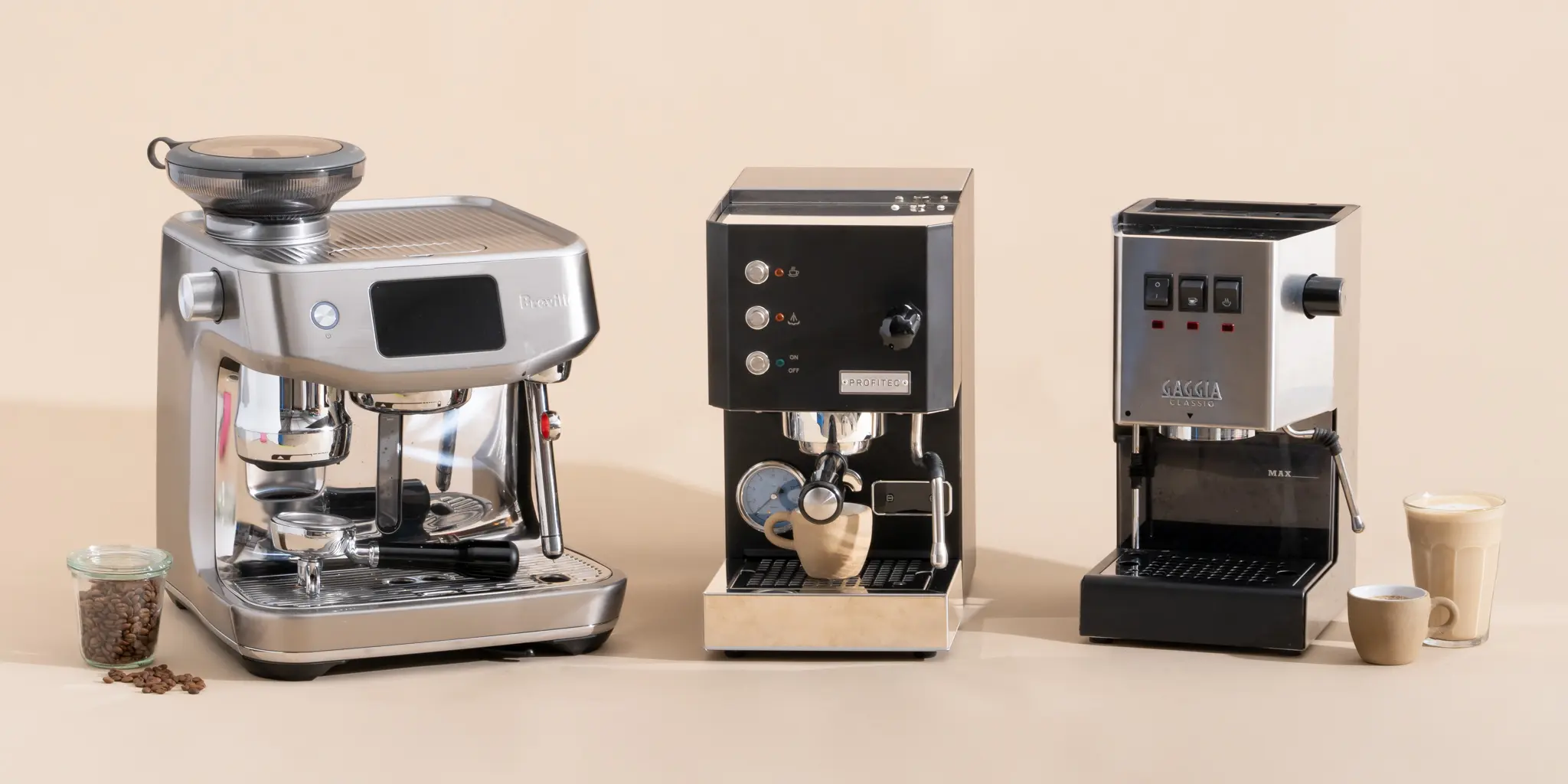
The market backs up the excitement. The smart coffee machines market was valued at USD 3.0 billion in 2025 and is projected to reach USD 7.2 billion by 2033. Espresso machines alone account for 25% of global coffee machine revenue, with premium models above $500 seeing a 10% sales increase in Europe alone. This isn’t a niche trend — it’s the future of home brewing.
Let’s get into it.
What Is a Smart Espresso Machine — and Why Does It Matter?
Defining “Smart” in the Context of Espresso
A smart espresso machine is any espresso machine equipped with digital connectivity, programmable controls, or app-based interfaces that give you precise control over the brewing process. This goes well beyond a digital timer or a single programmable button. We’re talking Wi-Fi or Bluetooth integration, real-time shot profiling, cloud-based recipe storage, and in some cases, machine learning that adapts to your preferences over time.
The difference between a “smart” machine and a standard semi-automatic is meaningful. Traditional machines give you a pump and a boiler. Smart machines give you data — extraction time, flow rate, pressure curves, temperature stability — all visible and adjustable from a touchscreen or your phone.
That level of transparency is what separates good espresso from great espresso, especially at home where you don’t have a trained barista guiding every shot.
The Technology Stack Inside a Smart Machine
Most smart espresso machines rely on a combination of PID (Proportional-Integral-Derivative) temperature controllers, pressure transducers, flow meters, and Bluetooth or Wi-Fi radios. The PID controller is the brain — it samples boiler temperature hundreds of times per second and makes micro-adjustments to keep it within ±0.3°C of your target, which is far tighter than a simple thermostat.
Flow meters measure how much water passes through the puck per second, giving you live data on extraction rate. Pressure transducers confirm that your pump is delivering the right bar pressure throughout the shot — usually 9 bar for a standard espresso, but often variable for specialty profiles like a 6-bar blooming pre-infusion.
All of this data feeds into an app or onboard display, making the process repeatable and improvable in ways that manual machines simply can’t match.
Who Actually Benefits From a Smart Espresso Machine?
Home baristas who geek out on dialing in shots will get the most value. If you’ve ever pulled a shot that tasted off and had no idea why, a smart machine gives you the diagnostic data to figure it out — was it the temperature? The pre-infusion time? The flow rate dropping mid-shot?
Busy households benefit too. Smart machines can be scheduled to warm up before you wake up, programmed for different users’ preferred drink styles, and monitored remotely so you know when descaling is due.
That said, if you’re happy pressing a button and drinking whatever comes out, a super-automatic might suit you better. Smart machines reward curiosity and attention to detail.
How Does the Smart Espresso Machine Guide Category Break Down by Machine Type?
Smart Semi-Automatic Espresso Machines
Semi-automatics with smart features are the sweet spot for serious home baristas. Machines like the Breville Dual Boiler and the Lelit Bianca give you manual puck prep and tamping while the machine handles temperature stability and, in some cases, pressure profiling. You stay in control of the craft; the machine handles the physics.
These machines typically sit in the $800–$3,000 range. At that price, you expect precise boiler control, programmable pre-infusion, and decent build quality. The Lelit Bianca, for instance, uses a motorized flow control valve that you can program via the LeliLink app — a feature that puts pressure profiling in reach of intermediate home baristas.
The tradeoff is that you still need a quality grinder. A smart semi-automatic machine cannot compensate for bad grind consistency — something we’ll address in the grinder section.
Smart Super-Automatic Espresso Machines
Super-automatics grind, tamp, extract, and often froth milk automatically. The smart versions add app control, usage tracking, and personalized recipe storage. The super automatic espresso machines market stood at USD 3.45 billion in 2025 and is growing to an estimated USD 3.72 billion in 2026 with a projected CAGR of 5.8% through 2034.
Machines like the DeLonghi Eletta Explore and the Jura E8 let you save up to 12 drink recipes per user profile, adjust grind fineness from the app, and receive maintenance alerts before problems arise. These are genuinely impressive machines for households that want café-quality drinks without the barista learning curve.
The ceiling on espresso quality is slightly lower than a well-dialed semi-automatic, but the consistency is hard to argue with. For most households, a smart super-automatic delivers an excellent daily experience with minimal effort.
Smart Prosumer and Commercial-Grade Machines
At the high end, machines like the La Marzocco Linea Micra and the Decent Espresso DE1Pro take smart features to an entirely different level. The Decent DE1Pro, for example, runs on a tablet interface with full pressure, flow, and temperature profiling — downloadable from a community repository of thousands of shared shot profiles. It’s effectively a home espresso computer.
These machines typically cost $3,000–$7,000 and are aimed at coffee professionals working from home or enthusiasts who treat espresso as a serious hobby. The data output is extraordinary: shot graphs, extraction yield estimates, and profile comparisons all exportable for analysis.
If you’re in this category, you probably already know what you want. But this smart espresso machine guide is designed to help you articulate why it’s worth the investment.
What Features Should You Look for in This Smart Espresso Machine Guide?
PID Temperature Control and Boiler Configuration
PID control is non-negotiable in any serious smart espresso machine. You want a machine that holds brew temperature within ±0.5°C — ideally ±0.3°C. Extraction quality is highly temperature-sensitive: a 1°C change in brew temperature can noticeably shift the flavor profile of an espresso, pushing it toward sour (too cool) or bitter (too hot).
Boiler configuration matters too. Single-boiler machines make you wait between steaming and brewing because they share one boiler for both tasks. Heat exchanger (HX) machines solve this partially but can require a temperature flush before pulling a shot. Dual boiler machines are the gold standard — one boiler maintains brew temperature (usually 88–96°C depending on your coffee), while the other runs steam pressure (usually 1.2–1.5 bar) independently.
For a smart machine, dual boiler with independently PID-controlled boilers is the configuration we recommend for anyone serious about espresso quality. It’s worth budgeting for.
Pressure Profiling and Flow Control
Pressure profiling lets you vary the bar pressure during extraction — for example, starting at 4 bar for a gentle pre-infusion, ramping to 9 bar for the main extraction, then tapering to 6 bar at the end to preserve sweetness. This is the same technique used at specialty cafés and coffee competition stages.
Flow control achieves a similar result by controlling the water flow rate rather than pressure directly. Both approaches produce noticeably different shot profiles compared to static 9-bar extraction, and the best smart machines give you both options.
Look for machines that let you save and name profiles. This way, you can build a library of profiles optimized for different coffees — a natural process Ethiopian might love a long blooming pre-infusion, while a bright Kenyan might pull better with a faster, higher-pressure approach.
App Integration and Connectivity
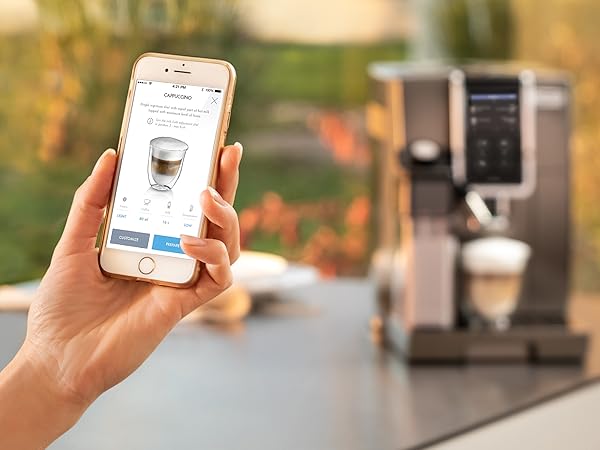
A genuinely useful app does four things: lets you adjust settings remotely, displays real-time shot data, logs your history, and sends maintenance reminders. Not every manufacturer gets all four right. DeLonghi’s Coffee Link app, for instance, is polished and reliable. Some competitors offer Bluetooth connectivity that drops connections frustratingly mid-shot.
Check whether the app works on both iOS and Android before committing. Also check the update history — an app that hasn’t been updated in 18 months is a red flag for long-term support. This is the smart espresso machine guide’s most practical piece of buying advice: the hardware is only as good as the software supporting it.
Smart Espresso Machine Guide: Best Models Compared for 2026
Comparison Table: Top Smart Espresso Machines in 2026
| Machine | Type | Boiler | App | Price (USD) | Best For |
|---|---|---|---|---|---|
| Decent DE1Pro | Semi-Auto | Thermocoil | Tablet (Android) | $4,799 | Data-driven enthusiasts |
| La Marzocco Linea Micra | Semi-Auto | Dual Boiler | La Marzocco Home | $3,500 | Prosumer baristas |
| Lelit Bianca V3 | Semi-Auto | Dual Boiler | LeliLink | $2,299 | Home baristas, flow control |
| Breville Oracle Touch | Semi-Auto | Dual Boiler | None (onboard touch) | $1,999 | Semi-auto beginners |
| Jura E8 (2026) | Super-Auto | Thermoblock | J.O.E. App | $1,499 | Convenience-focused households |
| DeLonghi Eletta Explore | Super-Auto | Dual Thermoblock | Coffee Link | $1,299 | Milk drink lovers |
| Gaggia GaggiMate-Compatible | Semi-Auto | Single Boiler | GaggiMate | $499–$799 | Budget-smart enthusiasts |
Budget Smart Options: Getting Smart for Under $800
The GaggiMate ecosystem — compatible with the Gaggia Classic Pro via open-source firmware — is one of the most exciting budget-smart developments in espresso. It adds a smart controller to an existing Gaggia Classic, providing PID control, shot timers, Bluetooth connectivity, and even pressure sensor integration. Total cost for a GaggiMate-equipped Gaggia Classic Pro is around $600–$800.
This approach proves that “smart” doesn’t have to mean “expensive.” For someone who already owns a Gaggia or wants to learn espresso without a huge initial investment, this path is worth serious consideration in any honest smart espresso machine guide.
Sales of compact espresso machines under 15cm width grew by 20% recently, and many of these budget-smart options fit perfectly on smaller kitchen counters — another practical reason they’re gaining popularity in urban households.
Premium Picks: When to Spend Over $2,000
Spending over $2,000 makes sense when you’re pulling multiple shots daily, hosting guests regularly, or genuinely passionate about espresso as a craft. At this tier, you get dual boiler reliability, superior steam power (some machines reach 2-bar steam pressure for thick, dense microfoam), true pressure profiling, and longer machine lifespans — often 10–15 years with proper maintenance.
The La Marzocco Linea Micra is worth calling out specifically. La Marzocco is the benchmark commercial espresso machine manufacturer — the same brand you’ll find in top specialty cafés globally. Their home app lets you schedule warm-up times, adjust brew temperature remotely, and track shot history. At $3,500, it’s not cheap. But it’s a machine you’ll use for a decade or more.
Do You Need a Separate Grinder With a Smart Espresso Machine?
Why Grind Quality Matters More Than the Machine
This is the most important and most overlooked point in any smart espresso machine guide: your grinder matters as much as your machine, possibly more. Espresso requires a very fine, highly consistent grind — particle size distribution directly impacts extraction evenness. An inconsistent grind produces channeling, where hot water finds paths of least resistance through the puck, resulting in under-extracted sourness mixed with over-extracted bitterness in the same shot.
A $500 grinder paired with a $800 machine will produce better espresso than a $200 blade grinder paired with a $3,000 machine. This isn’t an exaggeration — it’s physics. Uniform particle size creates uniform extraction resistance, which is the foundation of a balanced shot.
Smart semi-automatic machines require a separate grinder. Full stop. Budget at least $200–$500 for an entry-level burr grinder (like the Baratza Sette 270 or Eureka Mignon Specialita) and ideally $500+ for a serious espresso grinder.
Smart Grinders: The Next Frontier
Some grinders now integrate with smart ecosystems. The Eureka Mignon Libra has a built-in scale and auto-dose function. The Fellow Ode Gen 2 (filter-optimized but popular as a starting grinder) has clean digital dose control. For true espresso-smart integration, the Niche Zero and DF64 Gen 2 are popular choices that pair well with smart machines.
A future trend worth watching: some super-automatic smart machines include built-in grinders with app-adjustable grind settings. The Jura E8 and DeLonghi Eletta both do this well — their integrated ceramic burrs are surprisingly capable for daily use, even if they can’t match a dedicated espresso grinder at the highest level.
When a Built-In Grinder Is Enough
If you’re buying a smart super-automatic, the built-in grinder is part of the package and typically more than adequate for daily use. Most super-automatics use conical steel or ceramic burrs that produce a reasonably consistent grind. You won’t be pulling competition-level shots, but you’ll be making excellent espresso with minimal fuss.
The test is your expectations. If you’re chasing the absolute ceiling of espresso quality, a dedicated grinder is worth every dollar. If you want great coffee without managing multiple pieces of equipment, a smart super-automatic with an integrated grinder is a completely valid and popular choice — as the market data confirms, with 68% of consumers now willing to invest in high-end coffee machines for a better at-home experience.
How Do You Set Up and Dial In a Smart Espresso Machine?
The First Week: Getting Your Baseline
When you first set up a smart espresso machine, resist the urge to chase perfection immediately. Your first goal is establishing a baseline — pull five consecutive shots using the same dose (18g is a good starting point for a double), same grind setting, and same target yield (36g out, for a 1:2 ratio). Record the data your machine provides: extraction time, temperature stability, flow rate if available.
A well-extracted espresso should pull in 25–30 seconds from first drip. If you’re faster, grind finer. If you’re slower, grind coarser. This is called dialing in, and smart machines make it dramatically easier by logging your shots automatically so you can track changes across days.
Use your machine’s app to set a target brew temperature. For medium-roast specialty coffee, 93°C (199°F) is a classic starting point. For lighter roasts, try 94–96°C. For darker roasts, try 90–92°C. These aren’t rules — they’re starting points your smart machine lets you test systematically.
Using Pressure Profiling to Improve Shot Quality
Once you have a stable baseline, pressure profiling is the next frontier. Start with a simple two-stage profile: 4 bar for 8 seconds of pre-infusion, then ramp to 9 bar for the main extraction. Compare this against a flat 9-bar pull using the same coffee and grind. You’ll likely notice more sweetness and body in the profiled shot — the gentle pre-infusion saturates the puck more evenly before full pressure hits.
From there, you can experiment with declining pressure profiles (starting high, tapering off toward the end) which many enthusiasts prefer for high-quality, complex single-origin coffees. The smart machine’s app lets you save these profiles and assign them to specific coffees — an invaluable feature once you’re buying from multiple roasters.
Common Setup Mistakes (and How to Avoid Them)
The biggest mistake new smart machine owners make is ignoring the warm-up time. Even with a PID, espresso machines need thermal mass to stabilize. A dual boiler machine typically needs 20–30 minutes to reach full thermal equilibrium — not just for the boiler temperature, but for the group head, portafilter, and brew path. Schedule your machine to start warming up before you’re ready to brew using the app’s scheduling feature.
Second mistake: skipping water quality. Hard water deposits scale inside your boiler and heat exchanger, which throws off PID calibration and reduces thermal efficiency over time. Use filtered water with a total dissolved solids (TDS) reading of 75–150 ppm for best results. Many smart machines include TDS reminders or water filter alerts — use them.

What Does Maintenance Look Like for a Smart Espresso Machine?
Daily, Weekly, and Monthly Maintenance Routines
Daily maintenance is simple: purge the steam wand after every use, remove and rinse the drip tray, and backflush the group head with water only (no detergent on a daily basis). This takes about two minutes and prevents the bitter buildup that ruins shots. Smart machines often prompt you with maintenance reminders on their displays or via app notifications — one of the genuinely useful features that justifies the “smart” label.
Weekly, run a backflush with an espresso machine cleaner like Cafiza (approximately 1g per cycle, one full backflush cycle per week). Remove the shower screen and soak it in hot water with cleaning tablets. Wipe down all exterior surfaces, especially around the steam wand where milk residue accumulates quickly.
Monthly, run a full descaling cycle if you’re using unfiltered tap water, or every 2–3 months with filtered water. Most smart machines walk you through this process step-by-step via the app. Never skip descaling — scale buildup on heating elements is the most common cause of premature machine failure.
When Smart Diagnostics Help You Catch Problems Early
This is where smart machines genuinely earn their price premium. A well-designed smart machine monitors pressure, temperature, and flow rate over time. If your pump starts underperforming — say, it’s only reaching 8.5 bar instead of 9 — the machine can flag this before you even notice it in the cup. This kind of predictive maintenance is especially valuable for machines in the $1,500+ range where a repair is worth scheduling proactively.
The La Marzocco Home ecosystem is particularly good at this, providing shot history data that can help a technician diagnose issues remotely. Some Jura machines can even connect to Jura’s service center via app for remote diagnostics — a feature that home appliance manufacturers would do well to copy across the board.
Long-Term Machine Care and Lifespan
A well-maintained smart espresso machine should last 8–15 years. The components most likely to need replacement are the pump (typically rated for 50,000–100,000 cycles), boiler seals (every 3–5 years), and group head seals and screens (annually). Smart machines make it easier to track usage cycles, so you can anticipate these replacements rather than react to failures.
Keep your firmware updated. Manufacturers occasionally release updates that improve PID algorithms, fix connectivity bugs, or add new brewing profiles. This is a unique advantage of smart machines — they can genuinely improve over time through software, not just hardware.
Can Smart Espresso Machines Make Latte Art?
Steam Power and Microfoam Quality
Latte art requires two things: a well-pulled espresso shot with enough crema to hold the design, and properly textured milk — specifically microfoam with a glossy, paint-like consistency and uniform tiny bubbles throughout. Smart machines vary significantly in their ability to produce this.
Steam power is measured in bar pressure and boiler size. Single boiler smart machines typically produce adequate steam for home use but struggle to maintain consistent steam quality across multiple drinks in sequence. Dual boiler machines are the real answer here — the dedicated steam boiler maintains stable pressure throughout, giving you consistent microfoam on your third cappuccino as well as your first.
The La Marzocco Linea Micra and Lelit Bianca V3 both produce commercial-quality steam that experienced users can use for latte art. For super-automatics, steam quality is often good enough for a flat-top foam but not quite consistent enough for detailed latte art.
Practicing Latte Art With Your Smart Machine
Latte art is a skill that takes weeks to months to develop, regardless of your machine. The smart machine’s contribution is consistency — if your espresso shot is repeatable (which smart machines ensure), you can focus entirely on the milk texturing and pouring technique rather than compensating for shot variability.
Start with a 150ml tulip cup, 18g of espresso, and 120ml of whole milk. Steam the milk to 60–65°C (use a thermometer — smart machines sometimes have temperature sensors you can read via app). Incorporate the steam tip just below the surface for a gentle whirlpool motion, then submerge slightly to integrate the foam. Pour from close to the surface, starting in the center. The crema will rise around the milk naturally.
Tools That Help: Smart Scales and Accessories
Pairing your smart espresso machine with a Bluetooth espresso scale (like the Acaia Pearl or Decent Scale) takes your data to the next level. These scales connect to your machine’s app or run their own, giving you real-time dose-in and yield-out measurements that calculate your brew ratio automatically. Some smart machines have scales built into the drip tray — the Breville Oracle Touch does this at its price point.
A smart thermometer for milk (like the Subminimal NanoFoamer Pro’s temperature monitor) completes the setup. When every variable is measured and tracked, latte art becomes much more approachable — you’re not guessing at consistency, you’re engineering it.
How Much Should You Budget for a Smart Espresso Setup?
Entry-Level Smart Setup: $600–$1,200
At this tier, you’re looking at a smart super-automatic like the DeLonghi Magnifica Evo (with app control, ~$700) or a GaggiMate-modified Gaggia Classic Pro. Both give you PID control, app connectivity, and programmable brewing. This is the right starting point for someone newer to espresso who wants smart features without an intimidating financial commitment.
Household coffee machines account for 65% of total market volume, and this entry-level smart segment is driving significant growth — particularly as compact machines (under 15cm width) grow by 20% in sales. Many buyers in this segment prioritize footprint and convenience alongside smart features.
Mid-Range Smart Setup: $1,500–$3,000
This is where serious home baristas find their home. A Lelit Bianca V3 or Breville Oracle Touch with a quality standalone grinder (Baratza Sette 270 or Niche Zero) gives you a genuinely professional-grade setup. You’ll have dual boiler reliability, pressure profiling, app connectivity, and grind consistency that lets you extract single-origin specialty coffees at their best.
Budget breakdown at this tier: $1,800 for the machine, $500 for the grinder, $100 for accessories (tamper, distributor, scale). Total: $2,400 — a significant investment that pays off over years of daily use compared to a daily café habit.
High-End Smart Setup: $3,500–$6,000+
At the top end, you’re building around machines like the La Marzocco Linea Micra or the Decent DE1Pro. Pair either with a Lagom P64 or a Weber Key grinder, a quality knock box, a precision tamper, and a smart scale. This setup will match or exceed the output of many specialty cafés.
The smart coffee machine market was valued at USD 1.22 billion in 2024 and is projected to reach USD 1.63 billion by 2029, with high-end models driving a significant portion of that growth. Investing at this level is increasingly common as consumers treat home espresso as a genuine craft hobby rather than a convenience.
Frequently Asked Questions
What is the best smart espresso machine for home use?
The best smart espresso machine for most home baristas in 2026 is the Lelit Bianca V3 for serious enthusiasts ($2,299) or the DeLonghi Eletta Explore for convenience-focused households ($1,299). Both offer app connectivity, precise temperature control, and excellent shot quality. Your ideal choice depends on whether you want hands-on craft or push-button convenience.
Do smart espresso machines require a separate grinder?
Smart semi-automatic espresso machines absolutely require a separate burr grinder — budget at least $200–$500 for an entry-level option. Smart super-automatics include integrated grinders and don’t need a standalone unit. For the best espresso quality from any machine, a dedicated espresso grinder with consistent particle size distribution makes a measurable difference in cup quality.
How do I clean a smart espresso machine?
Daily: purge the steam wand, rinse the drip tray, and backflush the group head with water. Weekly: backflush with espresso cleaner tablets and soak the shower screen. Monthly: run a full descaling cycle. Most smart machines guide you through these steps via app notifications or onboard prompts, making maintenance more consistent than with traditional machines.
What is PID in smart espresso machines?
PID stands for Proportional-Integral-Derivative — a temperature control algorithm that samples boiler temperature hundreds of times per second and makes micro-corrections to maintain precision within ±0.3°C. In espresso, temperature stability is critical because even a 1°C variance shifts extraction flavor noticeably. PID is the most impactful technology in any smart espresso machine.
Are dual boiler smart espresso machines worth it?
Yes, for serious home baristas. Dual boiler machines maintain separate temperatures for brewing (88–96°C) and steaming (130–145°C) simultaneously, eliminating wait times and temperature fluctuations between drinks. The quality difference in both espresso and steamed milk is significant. Expect to spend $1,500+ for a quality dual boiler smart machine, but the investment pays dividends in daily shot quality.
Can smart espresso machines make latte art?
Yes — smart dual boiler machines like the La Marzocco Linea Micra and Lelit Bianca V3 produce commercial-grade steam for consistent microfoam suitable for latte art. Super-automatic smart machines produce adequate foam for a flat top but typically lack the steam precision for detailed designs. Latte art also requires practice regardless of machine quality — consistency is the machine’s contribution.
How much does a good smart espresso machine cost?
A good smart espresso machine starts at approximately $700 for a capable super-automatic like the DeLonghi Magnifica Evo. A serious semi-automatic smart setup (machine plus grinder) costs $1,500–$3,000. Prosumer machines like the La Marzocco Linea Micra run $3,500+. The smart coffee machine market is growing fast, making more capable machines available at lower price points each year.
What is the best smart machine espresso machine for beginners in 2026?
For beginners, we recommend starting with an entry-level smart machine machine that includes PID temperature control and a standard 58mm portafilter. These two features provide enough control to learn proper extraction technique without overwhelming you with variables you cannot yet appreciate. Budget $300-500 for the machine and $150-250 for a quality burr grinder — the grinder investment is just as important as the machine at this stage.
How long do smart machine espresso machines typically last with regular use?
With proper maintenance including regular backflushing, descaling every 2-3 months, and annual gasket replacement, a quality smart machine machine should last 8-15 years of daily home use. Higher-end models with commercial-grade components like E61 group heads, brass boilers, and rotary pumps routinely last 20+ years. The most common failure points are scale buildup in the boiler, worn group gaskets, and pump motor fatigue — all of which are preventable with routine care or repairable for a fraction of the replacement cost.
Is it worth upgrading from a smart machine entry model to a mid-range machine?
The upgrade is worth it only after you have maxed out what your current machine can do and you can consistently identify what is holding you back. If your main frustrations are slow steaming transitions, temperature instability between shots, or inability to steam and brew simultaneously, a mid-range dual boiler will solve those specific problems. However, if your shots are inconsistent due to grind quality or technique, upgrading the machine will not help — invest in a better grinder first, as grind quality accounts for roughly 60 percent of shot quality.
Maintenance and Longevity: Keeping Your Smart Machine Machine Running for Years
Proper maintenance is the single biggest factor determining how long your smart machine machine lasts and how good your coffee tastes day after day. A well-maintained machine produces better espresso, costs less to repair, and can easily outlast a decade of daily use. Here is exactly what you need to do and when.
Daily Maintenance Routine
Purge the group head before and after every shot by running water through for 2-3 seconds. This flushes stale coffee residue and stabilizes the brewing temperature for your next extraction. Wipe the portafilter basket and group head gasket with a clean damp cloth after each use — coffee oils accumulate rapidly and turn rancid within hours, producing bitter off-flavors that contaminate every subsequent shot. Empty and rinse the drip tray at the end of each session to prevent bacterial growth, mold, and overflow sensor issues. If your machine has a steam wand, always purge steam for 2 seconds after frothing and wipe immediately with a dedicated microfiber cloth — dried milk bakes onto metal and becomes extremely difficult to remove.
Weekly Deep Clean
Backflush with a dedicated espresso cleaner like Cafiza or Biocaf once per week if you pull daily shots (machines with three-way solenoid valves only). Insert a blind basket into your portafilter, add a small amount of cleaner, lock in, and run the pump for 10 seconds. Release, wait 10 seconds, and repeat five times. Then remove the portafilter and run two more clean-water flushes. This dissolves the coffee oils that water alone cannot reach inside the group head and dispersion screen. Remove and soak your shower screen and dispersion plate in hot water with Cafiza for 15 minutes weekly — you will be surprised how much residue accumulates even with daily wiping. Soak your steam wand tip by unscrewing it and placing it in a cup of hot water with a drop of milk cleaner for 10 minutes.
Monthly and Quarterly Maintenance
Descale your machine every 2-3 months based on your water hardness — monthly if your TDS exceeds 150 ppm. Scale is calcium carbonate deposit that restricts water flow, reduces heating efficiency, and will eventually block or crack your boiler. Use a citric acid solution or the manufacturer’s recommended descaler — never use white vinegar, which leaves a persistent taste and can degrade rubber seals and certain alloys. Inspect your group head gasket quarterly by removing the portafilter and checking for cracks, hardening, or uneven compression marks. A worn gasket causes water to leak around the portafilter rim during extraction, dropping your brew pressure and producing thin, under-extracted shots. Replacement gaskets cost $5-10 and take 5 minutes to swap. Replace the gasket every 6-12 months regardless of visible wear — the silicone or rubber hardens with heat cycling.
Water Quality Is Non-Negotiable
Use filtered water with a mineral content between 50-150 ppm total dissolved solids. Water that is too soft (below 50 ppm) produces flat, lifeless espresso and can actually corrode copper and brass boiler components through a process called aggressive water corrosion. Water that is too hard (above 200 ppm) accelerates scale buildup exponentially — going from 100 ppm to 200 ppm roughly quadruples the rate of scale formation. A BWT Mg2+ filter pitcher adds magnesium for better extraction while reducing scale-forming calcium. For plumbed-in machines, install a BWT Bestmax or 3M Scaleguard inline filter. Test your water quarterly with a $10 TDS meter to verify your filtration is working correctly.
Who Should Buy a Smart Machine Machine — And Who Should Look Elsewhere
The Beginner (Budget: Under $500)
If you are new to espresso and want to learn proper technique without a massive upfront investment, an entry-level smart machine machine is a solid starting point. Look for models with PID temperature control and a standard-size portafilter — these two features give you enough control to develop real skill while being forgiving of common beginner mistakes like inconsistent tamping pressure or slightly off grind settings. Expect a learning curve of 2-4 weeks before you are consistently pulling good shots. You will also need to budget $150-250 for a capable burr grinder — the grinder matters as much as the machine at every price tier. If you want push-button convenience with absolutely no learning curve, a super-automatic or Nespresso system will serve you better, and there is no shame in that choice.
The Daily Enthusiast (Budget: $500-1500)
You have been making espresso at home for at least six months. You own a dedicated burr grinder, you understand dose-yield-time relationships, and you are ready for better temperature stability, faster milk steaming, and finer control over your extractions. Mid-range smart machine machines deliver a genuine and noticeable step up in build quality, thermal stability, and shot consistency that you will taste immediately. This tier is ideal for daily home baristas who pull 2-5 drinks per day and care about both straight espresso and milk-based drinks. If you primarily make milk drinks for the family each morning, a dual-boiler model at this tier saves significant time compared to a single-boiler machine where you have to wait between brewing and steaming. You should already understand extraction concepts at this level — otherwise you are paying for capabilities you cannot yet leverage.
The Prosumer (Budget: $1500+)
You have refined your palate to where you can taste the difference between 93 and 95 degree extraction temperatures. You own a high-end flat or conical burr grinder, and you want commercial-caliber results without leaving your kitchen. Premium smart machine machines offer dual boilers, pressure or flow profiling, rotary pump options, and build quality that will last 15-20 years with proper care. This tier makes financial sense only if you have already mastered fundamentals on a simpler machine and genuinely need the additional control for experimentation — pressure profiling, temperature surfing, and ultra-precise flow rates. If you entertain frequently, run a small office coffee program, or simply refuse to compromise on shot quality after years of progression through the hobby, this is your destination. Just be prepared for a significant countertop footprint (most E61 machines need 14-16 inches wide by 18-20 inches deep), a 20-40 minute warm-up time, and a grinder investment that matches the machine’s capability.
Final Thoughts
This smart espresso machine guide has covered the full landscape — from entry-level app-connected super-automatics to prosumer dual boiler machines with full pressure profiling. The core message is consistent: smart machines make great espresso more accessible and more repeatable than ever before, and the market is growing fast because that value proposition is real.
Whether you’re investing $700 or $4,000, the principles in this smart espresso machine guide apply equally. Prioritize PID temperature control, invest in a quality grinder for semi-automatic machines, maintain your machine consistently, and use the data your smart machine provides to learn and improve. The espresso you pull in six months will be dramatically better than the one you pull this week — and your smart machine will have logged every shot along the way to prove it.
This smart espresso machine guide will be updated regularly as new models and technologies emerge. Bookmark it, share it with fellow coffee enthusiasts, and come back as your journey evolves. The best shot you’ve ever pulled is still ahead of you.