
This reusable Nespresso pods guide is the resource I wish existed when I first tried to ditch single-use capsules and take control of my daily espresso. Whether you’re running an Original Line machine like the Essenza Mini or a VertuoLine brewer, reusable pods can slash your per-cup cost, reduce plastic waste, and — done right — pull shots that rival anything in a foil-sealed capsule.
For the complete picture, see our Best Third-Party Nespresso Pods: Tested and Ranked 2026.
The market is flooded with options, though, and not every reusable pod performs the same. Some leak. Some clog. Some produce flat, under-extracted espresso that makes you question every life choice. This guide cuts through all of that noise.
What Is a Reusable Nespresso Pod and How Does It Work?
The Basic Mechanics Behind Refillable Capsules
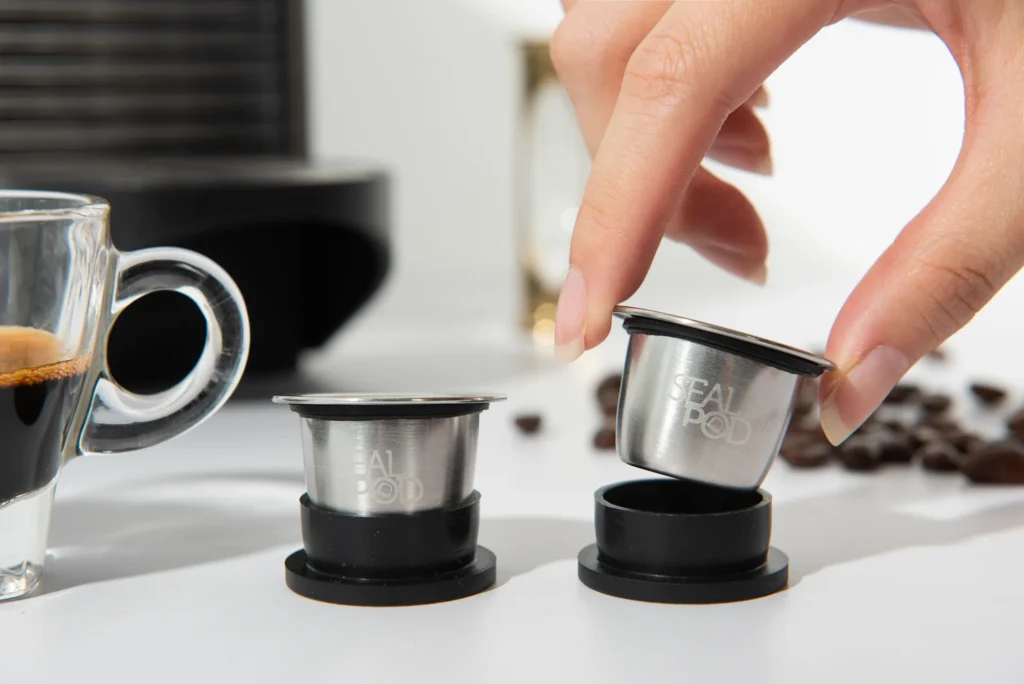
A reusable Nespresso pod is a refillable capsule — usually made from stainless steel, food-grade plastic, or aluminum — that fits into your existing Nespresso machine and replaces the factory-sealed single-use capsule. You fill it with ground coffee, tamp it lightly, snap on a lid or foil seal, and brew exactly as you normally would.
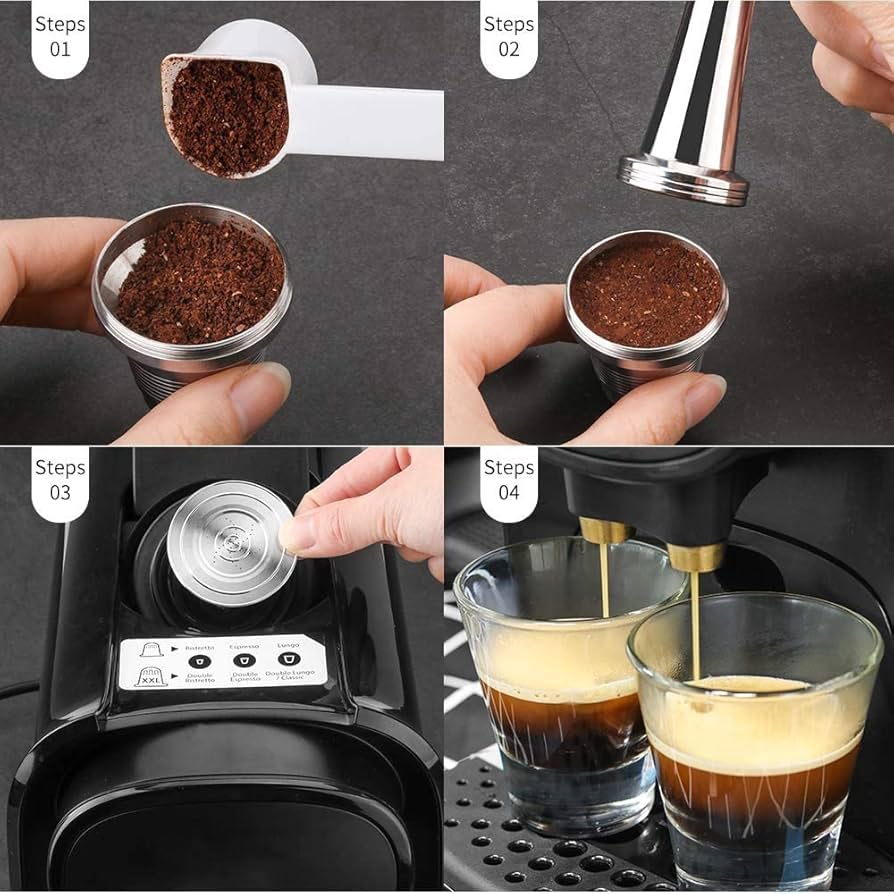
Nespresso machines work by puncturing the top and bottom of a capsule, then forcing pressurized hot water — typically between 19 and 22 bars on Original Line machines — through the packed grounds. Reusable pods are engineered to mimic this process, with a mesh filter floor that allows water to pass through while holding the grounds in place.
The Original Line and VertuoLine systems use fundamentally different pod shapes and brewing methods, so compatibility matters enormously. Original Line pods use pressure-based extraction; VertuoLine uses centrifusion technology, spinning the capsule at up to 7,000 RPM while water is injected. Not all reusable pods work with both systems, so always confirm compatibility before buying.
Original Line vs. VertuoLine: Which Accepts Reusable Pods More Easily?
Original Line machines are widely regarded as the more reusable-pod-friendly platform. The capsule shape is simple, the brewing mechanism is straightforward, and dozens of third-party manufacturers make compatible refillable options. Brands like Capmesso, Sealpod, and Alchemy Bar Goods have strong reputations in this category.
VertuoLine machines are more restrictive because they use barcode-reading technology on each capsule to set brew parameters automatically. Some reusable pods for VertuoLine come with pre-printed barcodes that mimic a specific capsule size, but the selection is smaller and results are more variable. If reusability is your top priority, an Original Line machine gives you far more flexibility.
That said, products like the RECAPS refillable capsule for VertuoLine have improved considerably in recent years. For a broader look at how third-party capsule options compare across both platforms, our cluster overview of third party Nespresso pods covers compatibility in detail.
The Complete Reusable Nespresso Pods Guide to Choosing the Right One
Materials: Stainless Steel vs. Food-Grade Plastic vs. Aluminum
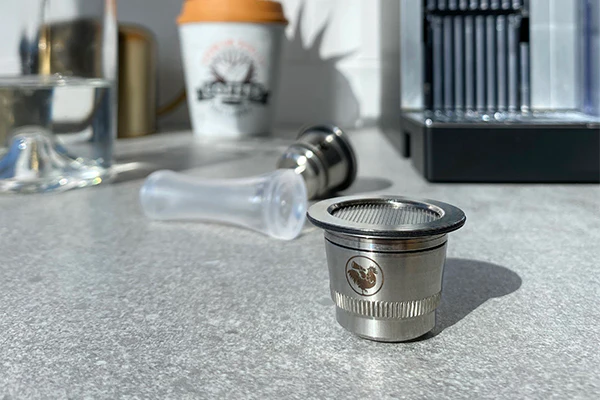
Material choice affects durability, flavor neutrality, and ease of cleaning. Here’s a quick breakdown:
| Material | Durability | Flavor Impact | Ease of Cleaning | Avg. Cost |
|---|---|---|---|---|
| Stainless Steel | Excellent (200+ uses) | None — fully neutral | Dishwasher safe (most) | $12–$25 per pod |
| Food-Grade Plastic | Good (50–100 uses) | Minimal if BPA-free | Easy — hand wash | $5–$12 per pod |
| Aluminum (refillable) | Limited (10–30 uses) | None | Not reusable long-term | $0.15–$0.30 per seal |
Stainless steel pods are the investment play. They cost more upfront but deliver consistent pressure distribution and don’t absorb odors or flavors over time. I’ve personally used a set of Capmesso stainless pods for over eight months without any degradation in performance.
Food-grade plastic pods are great for beginners who want to test the format without committing significant money. Just make sure any plastic pod you buy is explicitly labeled BPA-free — this is non-negotiable for anything in direct contact with high-temperature brewing water (around 83–86°C / 181–187°F).
Related reading: Gourmesso Pods Review.
Sealing Systems: Lids, Foil Discs, and Silicone Caps
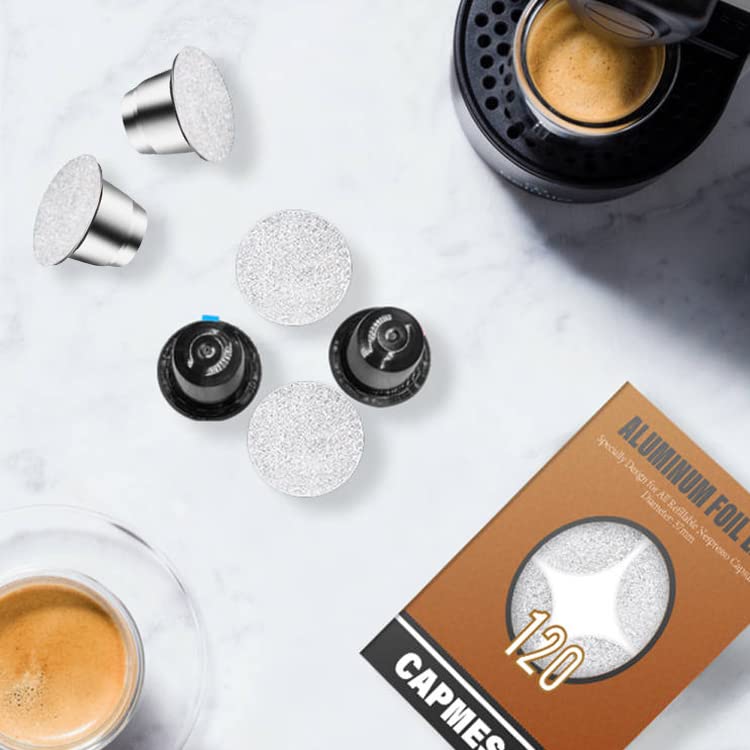
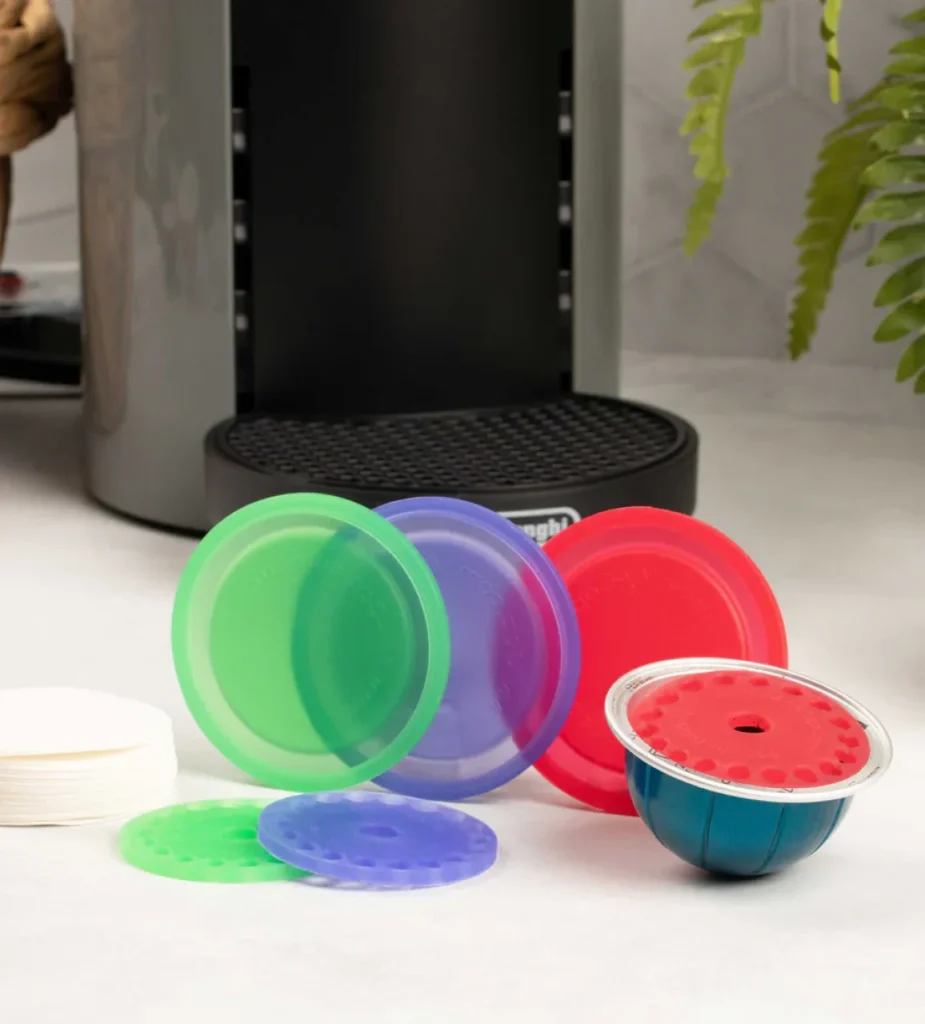
How you seal the pod before brewing is as important as the pod itself. A poor seal causes two problems: leakage during brewing (grounds in your cup) and pressure bypass (weak, watery espresso).
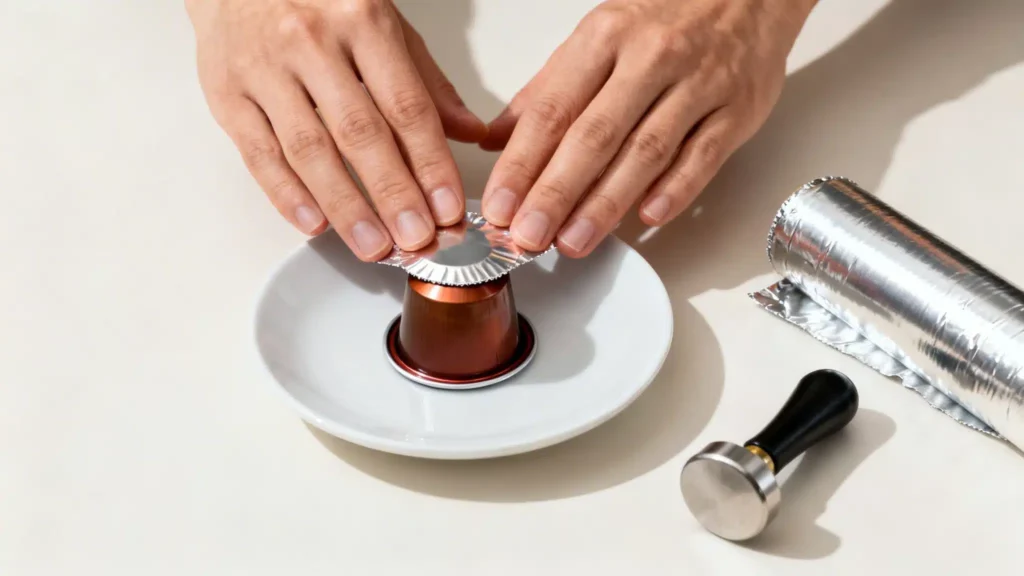
Lids with silicone gaskets create the most reliable seal for everyday use. Foil disc systems — where you press a pre-cut aluminum seal onto the capsule — are popular with Original Line pods because they closely replicate the factory capsule experience. The downside is ongoing cost for foil replacements, typically around $0.15–$0.30 per disc.
Some newer designs use a snap-on plastic lid with a built-in one-way valve that regulates pressure during extraction, similar to the concept used in high-end coffee storage. These are worth paying extra for if you brew multiple shots daily.
How to Fill and Use Reusable Pods for the Best Espresso Results
Grind Size: The Most Critical Variable
Grind size is where most people go wrong when they first start using reusable pods. Nespresso’s original capsules are filled with coffee ground to a precise fineness — typically between 200 and 400 microns — and packed under controlled conditions. When you fill a pod yourself, you’re replicating that process manually.
For Original Line machines, you want a fine grind, roughly equivalent to espresso grind on most home burr grinders. On a 1–10 grind scale (where 1 is Turkish fine and 10 is French press coarse), you’re aiming for a 2–3. Too coarse and water flows through too quickly, producing a thin, sour shot. Too fine and you’ll risk clogging the mesh filter and getting zero flow at all.
Pre-ground “espresso” coffee from the supermarket is a workable starting point, but a quality burr grinder gives you real control. Brands like Baratza, Eureka, and Fellow Ode are popular among home baristas for good reason. According to Baratza’s brewing guides, espresso grind settings require the most precision of any brew method — a point that applies directly to reusable pod use.
Filling, Tamping, and Dosing Techniques
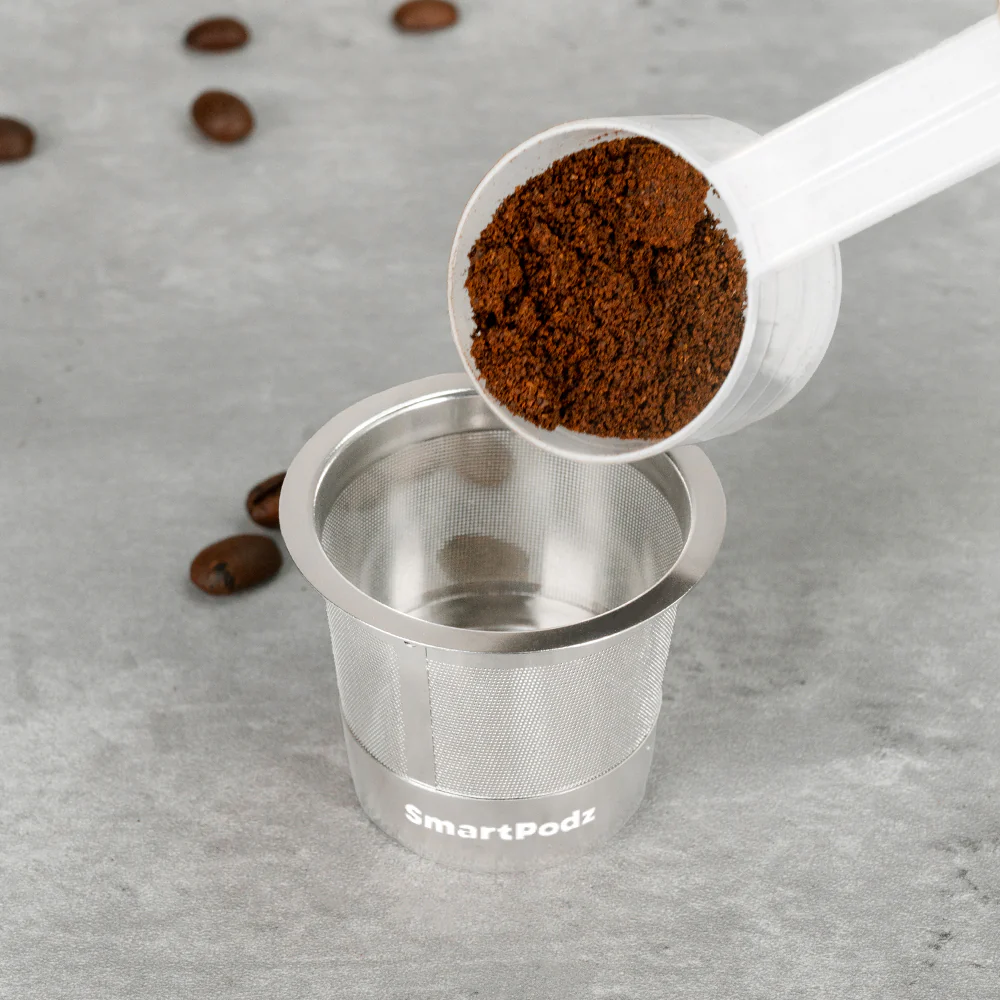
Most reusable Nespresso pods hold between 5 and 7 grams of coffee, depending on the capsule size. Original Line capsules are typically filled with 5–6g from the factory; VertuoLine Alto capsules can hold up to 14g for longer brews.
Fill the pod to just below the rim — roughly 5–5.5g for standard Original Line pods. Use a small tamper or the flat bottom of a teaspoon to apply light, even pressure. You’re not trying to achieve espresso-machine-level tamping pressure (30 lbs); a gentle 5–8 lbs of pressure is sufficient. Over-tamping restricts water flow and causes channeling.
Here’s a repeatable process that works consistently:
- Grind fresh coffee to a fine espresso setting.
- Fill pod to 80% capacity (approximately 5g).
- Level the surface with a finger or small spatula.
- Apply light, even tamp — 5 to 8 lbs of pressure.
- Wipe the rim clean before sealing.
- Attach lid, foil disc, or silicone cap firmly.
- Insert and brew immediately.
Brewing immediately after sealing matters because Nespresso machines begin pressurizing the capsule within seconds of insertion. A loose or improperly seated lid can cause a pressure blowout — and grounds in your espresso cup are as unpleasant as they sound.
Cost Savings and Environmental Benefits: The Real Numbers
Breaking Down the Per-Cup Savings
One of the biggest selling points in any reusable nespresso pods guide is the cost argument. Let’s run the actual numbers.
Official Nespresso capsules for the Original Line cost between $0.70 and $1.10 per pod depending on the range (Classic vs. Master Origins vs. Barista Creations). A stainless steel reusable pod costs around $15–$20 upfront. If you fill it with specialty espresso coffee at $20 per 250g bag (yielding roughly 50 doses at 5g each), your per-cup cost drops to approximately $0.40.
Related reading: Pact Coffee Nespresso Pods.
Over 200 uses — a reasonable lifespan for a quality stainless pod — you’d spend around $95 total (pod cost + coffee) versus $140–$220 for the equivalent in original capsules. That’s a saving of $45–$125 per pod over its lifetime, and that assumes you’re buying mid-range Nespresso capsules, not the premium limited-edition lines.
Environmental Impact: What the Data Actually Shows
Nespresso has made real strides in recycling, with their Nespresso sustainability program claiming over 100,000 collection points globally as of 2024. However, participation rates remain low — estimates suggest less than 30% of capsules sold are actually returned for recycling.
Each standard Nespresso capsule weighs approximately 3 grams of aluminum. At a consumption rate of two capsules per day, one household generates over 2 kilograms of aluminum waste annually — even before factoring in plastic packaging and shipping materials. A single reusable pod, used daily for a year, replaces roughly 730 single-use capsules.
According to research published by the Journal of Cleaner Production, the lifecycle environmental impact of reusable coffee capsules is significantly lower than single-use alternatives when capsule production emissions, transport, and end-of-life disposal are all accounted for. The evidence strongly favors switching, particularly for high-frequency drinkers.
Top Reusable Nespresso Pod Brands Worth Trying
Best Options for Original Line Machines
After testing several products, these are the brands that consistently deliver in real-world use:
- Capmesso Stainless Steel Pods: Excellent build quality, easy to clean, holds 5–6g comfortably. One of the most popular choices among home baristas for a reason.
- Sealpod Reusable Capsule: Comes with foil disc seals, which produce a very authentic extraction experience. Slightly more fiddly but excellent pressure consistency.
- Alchemy Bar Goods Refillable Pods: Budget-friendly BPA-free plastic option with a silicone lid. Great starter pod for anyone new to this format.
- Recycle & Refill Stainless (RRP): A premium stainless option with a spring-loaded pressure valve — genuinely improves shot consistency over standard mesh-bottom designs.
Best Options for VertuoLine Machines
- RECAPS Vertuoline Pods: Currently the most reliable VertuoLine reusable option. Comes with barcodes for multiple size emulations including Espresso (40ml) and Gran Lungo (150ml).
- Cometeer Reusable VertuoLine Caps: A newer entrant focusing on the large-cup sizes. Results vary more than Original Line equivalents, but workable with the right grind.
This reusable nespresso pods guide recommends always buying at least two pods — one in use, one drying — to maintain a hygienic rotation without slowing down your morning routine.
Common Mistakes and How to Fix Them
Leaking, Weak Shots, and Clogging — Solved
Leaking during brewing usually comes down to one of three causes: an improperly seated lid, a worn silicone gasket, or a pod that’s slightly out of spec for your specific machine model. Always check the gasket seal before each use and replace it when it shows visible wear or cracking.
Weak, watery espresso is almost always a grind problem. Go finer. Most people transitioning from pre-ground supermarket coffee to specialty beans grind too coarse initially. Aim for a grind that feels like fine sand, not coarse salt.
Clogging — where the machine struggles to push water through — points to an overly fine grind, over-tamping, or an overfilled pod. Back off 0.5 steps on your grinder, reduce tamp pressure, and fill to no more than 80% capacity. This reusable nespresso pods guide returns to this point repeatedly because it’s genuinely the most common failure mode.
Cleaning and Maintenance for Long-Term Use
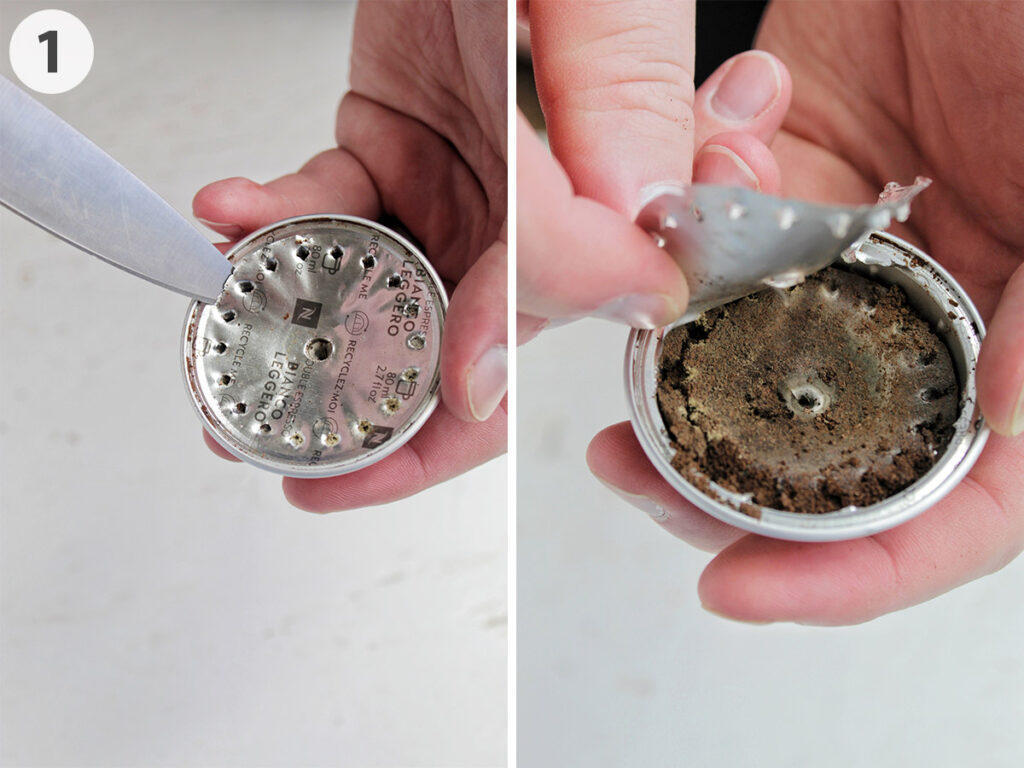
Rinse your pod immediately after use — don’t let spent grounds dry inside the mesh filter. Coffee oils become rancid within hours and will taint subsequent brews. A quick rinse under warm water and a tap against the sink removes 90% of spent grounds.
Once a week, soak the pod in a solution of warm water and a small amount of cafiza or Puly Caff descaler for 15–20 minutes. This dissolves accumulated coffee oils that rinsing alone won’t remove. Dry completely before storing, especially stainless steel pods — moisture trapped in the mesh creates off-flavors and can accelerate corrosion in lower-quality alloys.
Frequently Asked Questions
Do reusable Nespresso pods affect the taste of espresso?
They can, but not necessarily negatively. The biggest flavor variable is your choice of coffee and grind size, not the pod itself. A well-filled stainless steel pod with freshly ground specialty coffee routinely outperforms mass-market original capsules. Taste quality is fully in your hands with reusable pods.
Are reusable Nespresso pods safe to use in my machine?
Yes, when made from food-grade materials and used correctly. Choose BPA-free plastic or stainless steel options and ensure the pod dimensions match your machine’s capsule holder. Using an incorrectly sized or cheap pod can, in rare cases, cause pressure issues or residue buildup inside the brewing chamber.
How many times can you reuse a Nespresso pod?
Quality stainless steel pods are rated for 200 or more uses with proper cleaning. Food-grade plastic pods typically last 50–100 uses before lids or gaskets degrade. Aluminum fill-and-seal systems are technically reusable but practically limited to around 10–30 fills before the structural integrity compromises the seal.
What grind size works best for reusable Nespresso pods?
A fine espresso grind, approximately 200–400 microns, works best for Original Line machines. On a home burr grinder, this is typically a 2–3 on a 1–10 scale. VertuoLine pods tolerate a slightly coarser medium-fine grind. Always dial in by adjusting grind size first before changing dose or tamp pressure.
Can you use any coffee in a reusable Nespresso pod?
Technically yes, but results vary widely. Single-origin espresso roasts and dark blends designed for pressure extraction perform best. Light roasts can work but require a finer grind. Avoid coarse-ground filter coffee — it won’t produce adequate pressure for espresso extraction and will taste thin and sour regardless of other variables.
Final Thoughts
A solid reusable nespresso pods guide should leave you not just informed, but actually ready to make a change — and that’s what we’ve aimed for here. The case for switching is strong across cost, environment, and flavor flexibility. You’re spending less per cup, generating dramatically less waste, and unlocking access to the full world of specialty espresso coffee rather than being locked into a branded capsule catalog.
The key takeaways from this reusable nespresso pods guide are simple: match your pod to your machine platform, prioritize stainless steel for long-term use, nail your grind size before tweaking anything else, and maintain a consistent cleaning routine. Do those four things and reusable pods will outperform your expectations.
This reusable nespresso pods guide covers the essentials, but the real learning happens at the grinder. Start with a fine espresso setting, brew a shot, evaluate, and adjust. That iterative process is exactly what separates a home barista from someone who just pushes a button — and it’s one of the most satisfying parts of the whole coffee journey.