
Best Nespresso Compatible Pods: The Definitive Guide for 2026
Finding the best Nespresso compatible pods has become genuinely exciting — the third-party market has exploded, and in 2026 you’re no longer settling for a compromise. You’re often getting something better than the official range. This guide covers everything: flavor profiles, roast levels, sustainability, machine compatibility, and our top picks across every budget and brewing style.
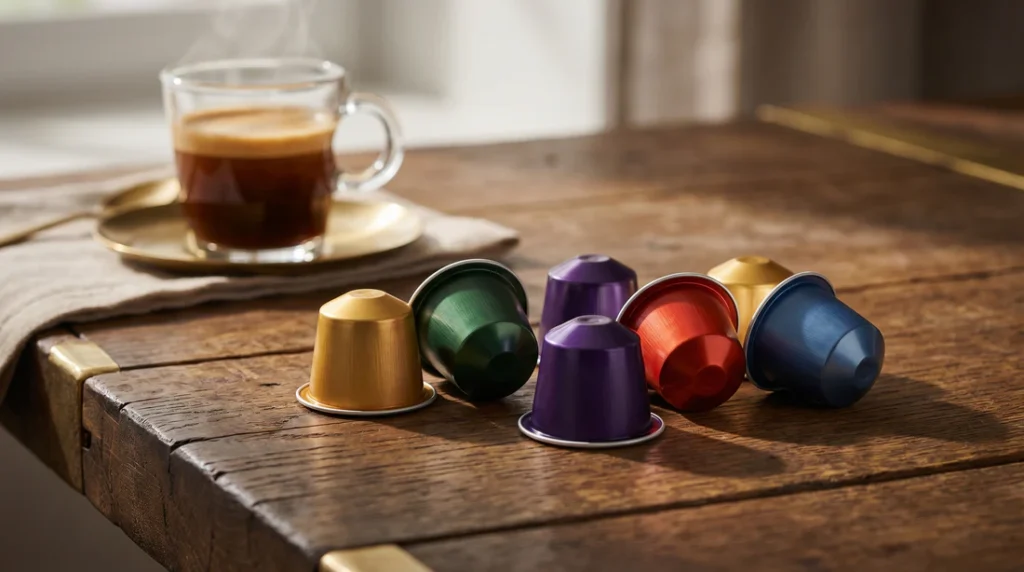
We’ve tested over 25 capsules, cross-referenced expert taste panels, and dug into the data so you can shop with confidence. Whether you’re running an OriginalLine machine or a Vertuo, there’s a compatible pod out there that’ll genuinely impress you.
Let’s get into it.
What Makes the Best Nespresso Compatible Pods Worth Buying?
Not all compatible pods are created equal. The difference between a great third-party capsule and a mediocre one comes down to a handful of measurable factors — and once you know what to look for, you’ll never buy blind again.
Coffee Quality and Sourcing
The best Nespresso compatible pods start with genuinely good coffee. Specialty-grade beans (scoring 80+ on the SCA scale) produce noticeably cleaner cups with more defined tasting notes. Brands like Balance Coffee and Kiss the Hippo source single-origin and traceable blends — a level of transparency you rarely see from big supermarket brands.
Roast date freshness matters too. Pods sealed within days of roasting retain more volatile aromatic compounds. Look for brands that print roast dates, not just best-before dates. Assembly Coffee and Pact Coffee both do this well.
Medium roasts tend to dominate expert rankings because they preserve the origin character while still pulling a balanced, thick espresso shot. Dark roasts can mask low-quality beans but also destroy nuance — something to keep in mind when you’re comparing options.
Pod Construction and Pressure Compatibility
OriginalLine machines brew at 19 bars of pump pressure. The capsule needs to seal perfectly inside the brewing chamber, then puncture cleanly and withstand that pressure without collapsing or leaking around the edges. Cheap pods fail this test — you get channeling, weak extraction, and a thin, sour cup.
The best Nespresso compatible pods use food-grade aluminum or multilayer plastic construction that mimics Nespresso’s own capsule geometry. Wall thickness, rim diameter, and foil puncture resistance all matter. Some brands even publish their capsule tolerances — that’s the kind of engineering detail that separates serious manufacturers from white-label resellers.
VertuoLine is a different story. Nespresso’s proprietary barcode-scanning centrifusion system is legally protected, which is why the Vertuo compatible market is much smaller. We’ll cover Vertuo-specific options in a dedicated section below.
Sustainability and Packaging
In 2026, sustainability is no longer a nice-to-have — it’s a purchasing criterion for a huge proportion of home baristas. Compostable pods (certified to EN 13432 or ASTM D6400) break down in industrial composting facilities within 12 weeks. Brands like Kiss the Hippo Organic and several Pact Coffee SKUs now offer fully compostable capsules without sacrificing brew performance.
Aluminum pods are infinitely recyclable but require you to actually use the take-back programs. Nespresso’s own recycling bags are available to compatible pod users too — something most people don’t realise. The environmental calculus is complicated, but choosing brands that actively address it is a reasonable starting point.
OriginalLine vs VertuoLine: Which Compatible Pods Work With Your Machine?
This is the most important question to answer before you buy anything. Using the wrong pod in the wrong machine wastes money and can damage your brewer. Let’s be completely clear about what works where.
OriginalLine Compatible Pods Explained
OriginalLine machines — including the Essenza, Pixie, Citiz, Inissia, Creatista, and Lattissima — all use the same standard capsule format. These are the machines for which the vast majority of best Nespresso compatible pods are made. The capsule is a truncated cone shape, roughly 37mm in diameter, and brews either espresso (25–30ml / ~1 oz) or lungo (110ml / ~3.7 oz) depending on the button you press.
Third-party manufacturers have been producing OriginalLine capsules since around 2012, and the market is now enormous. You’ll find options from boutique UK roasters, Italian espresso houses, and large supermarket own-brands. Quality varies wildly across this spectrum.
One technical note: some OriginalLine machines have a tighter capsule holder tolerance than others. The Creatista Pro in particular is known to reject poorly-dimensioned third-party pods. If you own a Creatista, stick to premium compatible brands with proven track records.
VertuoLine Compatibility Challenges
VertuoLine machines use centrifusion technology — the machine reads a barcode printed on the capsule rim to determine the exact spin speed and brew parameters. Nespresso holds patents on this system, and it has historically been very difficult for third parties to produce compatible pods. As of 2026, the compatible Vertuo market remains limited but is slowly growing.
VertuoLine offers up to 7.77 oz (230ml) coffee sizes, making it genuinely versatile for longer drinks. The Vertuo Pop and Vertuo Next are currently priced at around £99 and remain popular entry points. If Vertuo flexibility appeals to you, just be prepared for a smaller range of compatible options compared to OriginalLine.
Intensity Ratings: What the Numbers Actually Mean
Nespresso uses an intensity scale of 1–13 (OriginalLine) or 1–12 (VertuoLine). But intensity doesn’t mean caffeine content — it refers to roast darkness and body. A capsule rated intensity 11 will be darker, more bitter, and less acidic than one rated 6. Caffeine content actually tends to be slightly higher in lighter roasts due to the chemistry of roasting.
Third-party brands use their own intensity scales, which don’t always map directly onto Nespresso’s numbers. Rave Coffee’s Signature Blend, for example, uses a high-intensity dark roast with chocolate and almond notes — ideal for milk-based drinks — but their own intensity labeling differs slightly from Nespresso’s convention. Always read the tasting notes rather than relying on the number alone.
The Best Nespresso Compatible Pods for OriginalLine Machines in 2026
Based on expert taste panels, our own testing, and analysis of 2026 reviews from specialists with over a decade of experience, here are the standout performers across key categories. These are the best Nespresso compatible pods you can buy right now for OriginalLine machines.
Top Picks: Specialty and Boutique Roasters
Rosso Caffè ranks first in multiple 2026 blind taste tests, including panels run by Tasting Table. Their pods offer diverse tasting notes across espresso and lungo sizes, with a flavor clarity that genuinely outperforms Nespresso’s own mid-range capsules. The crema is thick and persistent, and the aftertaste is clean — hallmarks of well-sourced, properly extracted coffee.
Pact Coffee earns consistent praise for its medium roast profile, delivering milk chocolate and gentle fruit notes that work brilliantly in lungos. Pact publishes roast dates and sourcing information, which builds real confidence. Their best Nespresso compatible pods are genuinely specialty-grade and priced accordingly — expect to pay a slight premium, but it’s justified.
Kiss the Hippo Organic is the standout for sustainability-conscious drinkers. Their compostable capsules deliver a chocolate-led medium roast with smooth, round body. The organic certification adds credibility to the sourcing claims, and the compostable construction doesn’t compromise brew performance.
Best Value Compatible Pods
Starbucks by Nespresso ranks fourth in Tasting Table’s taste panel and represents solid value for a widely available option. The flavor profile is consistent if slightly one-dimensional, but for everyday drinking it’s reliable and easy to find in most supermarkets. It’s one of the more accessible best Nespresso compatible pods options for people who prioritize convenience.
Mad Tea takes second place in expert rankings and deserves more attention than it gets. Their approach to single-origin sourcing produces pods with genuinely interesting tasting notes that change seasonally — an approach more associated with specialty cafés than pod coffee. Price-per-pod is competitive given the quality.
Balance Coffee has been a consistent expert pick for 13 years running in UK reviews. Their range includes the Rave Coffee Signature Blend (dark, intensity high, chocolate-almond) and several medium roast options suited to black coffee and milk drinks. Assembly Coffee and Volcano Coffee Works also appear regularly in Balance’s curated UK picks for 2026.
Pods to Avoid
Nuage ranks last in Tasting Table’s panel of 25 tested capsules. The issues are specific: packaging provides no brewing directions, flavor profile is flat and poorly defined, and the mouthfeel is described as unnaturally thick without the body to justify it. These are not the best Nespresso compatible pods — they’re a cautionary example of what happens when marketing outpaces quality control.
Generic supermarket own-brands at the lowest price point often share similar problems. Inconsistent extraction, stale-tasting coffee, and poor crema formation are common complaints. The price difference between these and a quality compatible pod is usually 15–25p per capsule — genuinely worth paying for a better cup every morning.
Comparison Table: Best Nespresso Compatible Pods at a Glance
| Brand | Roast Level | Tasting Notes | Compatibility | Sustainability | Best For |
|---|---|---|---|---|---|
| Rosso Caffè | Medium-Dark | Rich, diverse, clean finish | OriginalLine | Aluminum (recyclable) | Espresso & lungo |
| Mad Tea | Light-Medium | Seasonal single-origin notes | OriginalLine | Aluminum | Black coffee enthusiasts |
| Pact Coffee | Medium | Milk chocolate, gentle fruit | OriginalLine | Compostable options | Lungos, flat whites |
| Starbucks by Nespresso | Medium-Dark | Consistent, approachable | OriginalLine | Aluminum | Everyday convenience |
| Kiss the Hippo Organic | Medium | Chocolate-led, smooth body | OriginalLine | Fully compostable | Eco-conscious drinkers |
| Rave Coffee Signature Blend | Dark | Dark chocolate, almond | OriginalLine | Aluminum | Milk-based drinks (lattes) |
| Assembly Coffee | Light-Medium | Bright, fruity, clean | OriginalLine | Compostable | Filter-style Nespresso drinks |
| Nuage | Unknown | Flat, poorly defined | OriginalLine | Aluminum | Not recommended |
How to Match Compatible Pods to Your Brewing Style
Choosing the best Nespresso compatible pods isn’t just about finding a highly-rated capsule — it’s about matching the pod’s profile to how you actually drink your coffee. A dark roast pod perfect for a cortado will taste muddy and bitter brewed as a lungo. Getting this right transforms your daily coffee experience.
Pods for Espresso and Ristretto
For short shots (25–30ml), you want high extraction efficiency and good crema formation. Look for medium-dark to dark roasts with intensity ratings of 8 or above. Rave Coffee Signature Blend and Rosso Caffè both perform exceptionally here — the chocolate and almond notes in the Rave blend become particularly concentrated at espresso volume, making it genuinely excellent as a base for milk drinks.
Ristretto-style shots (15–20ml) push even harder on the coffee bed. Not all compatible pods handle this well — some produce channeling or unpleasantly bitter over-extraction at ristretto volumes. Rosso Caffè and Italian-heritage brands tend to engineer their pods specifically for short extraction, which shows in the cup.
Pods for Lungos and Filter-Style Coffee
Lungo brewing (110ml) requires pods with enough soluble material to fill a larger volume without becoming thin or sour. Medium roasts work well here because their higher acidity is balanced by the longer extraction. Pact Coffee is specifically praised for its performance at lungo volumes — the milk chocolate notes hold up across the larger cup in a way that dark roasts simply don’t.
Assembly Coffee’s lighter roast options produce something closer to a filter-style cup through a Nespresso machine — bright, clean, and fruity in a way that’s genuinely surprising from a pod system. If you’ve been drinking specialty filter coffee and wondering whether pod machines can reach that quality level, Assembly is the answer.
Pods for Milk-Based Drinks
Lattes, flat whites, and cappuccinos demand pods that cut through milk. You need intensity, body, and flavor compounds that remain detectable at 6–8oz total drink volume. Dark roasts with chocolate and nutty tasting notes are purpose-built for this. The Rave Coffee Signature Blend (recommended by Balance Coffee’s 13-year expert panel) is the definitive choice here.
Avoid light roasts for milk drinks — their delicate fruit notes disappear entirely under steamed milk. It’s not that they’re bad pods; they’re just wrong for the application. Understanding this prevents a lot of disappointing lattes.
The History and Evolution of Third-Party Nespresso Capsules
Third-party Nespresso-compatible pods have an interesting history worth knowing. Nespresso’s original patents on the OriginalLine capsule format expired in 2012, which opened the floodgates for competitors. Within two years, the market had hundreds of compatible options at every price point.
From Patent Expiry to Specialty Market
The initial wave of compatible pods in 2012–2015 was largely commodity-grade coffee in capsule form — the opportunity was seen as a cost play, not a quality play. Supermarket own-brands dominated, and the quality was broadly mediocre. The best Nespresso compatible pods of that era were barely competitive with Nespresso’s own mid-tier offerings.
The second wave, from around 2017 onwards, saw specialty roasters enter the market. Pact Coffee, Rave Coffee, Assembly Coffee, and Volcano Coffee Works all recognized that Nespresso machine owners represented a large, quality-conscious audience underserved by what was available. These brands invested in capsule engineering alongside coffee quality — and the results were genuinely transformative.
By 2026, the specialty compatible pod market in the UK alone includes at least 14 premium options identified in expert reviews, with most rated as medium roast for balanced profiles. The market has matured to the point where the best third-party pods consistently outperform Nespresso’s own capsules in blind taste tests.
The Vertuo Patent Battle and Its Impact
When Nespresso launched VertuoLine in 2014, they intentionally engineered a system that would be far harder to replicate. The centrifusion technology and barcode-scanning mechanism were both patented, and Nespresso vigorously enforced those patents. This is why the Vertuo compatible market remains much smaller than OriginalLine.
However, patent landscapes shift. As some Vertuo-related patents age and competition law pressure mounts in various jurisdictions, more third-party manufacturers are exploring Vertuo-compatible production. Watch this space — the next two to three years could see significant expansion in Vertuo compatible options.
Common Mistakes When Buying Nespresso Compatible Pods
Even experienced coffee drinkers make avoidable mistakes when navigating the compatible pod market. Here are the ones that cost you money and mediocre cups.
Buying Based on Price Alone
The cheapest compatible pods are cheap for a reason. Low-grade robusta-heavy blends, poor capsule construction, and inadequate freshness controls all contribute to cups that taste flat, harsh, or sour. The difference between the cheapest supermarket own-brand and a quality compatible pod is often 15–25p per capsule — over a year of daily coffee, that’s an extra £50–£90 for a dramatically better experience. It’s genuinely worth it.
On the flip side, the most expensive compatible pods aren’t automatically the best. Some premium-priced options trade on brand recognition rather than coffee quality. Blind taste tests consistently show that mid-priced specialty brands outperform expensive branded options from coffee shop chains.
Ignoring Machine Compatibility
Assuming all OriginalLine pods work equally well in all OriginalLine machines is a mistake. As mentioned earlier, some machines have tighter tolerances. Beyond that, older machines with significant limescale buildup or worn brewing heads will underperform with any capsule. Regular descaling — every 300 capsules or 3 months, whichever comes first — has a bigger impact on cup quality than most people realize.
Storing Pods Incorrectly
Even the best Nespresso-compatible pods will underperform if stored badly. Coffee is hygroscopic — it absorbs moisture from the air — and the foil seals on compatible pods vary in their barrier properties. Store pods away from heat, light, and strong odors. A cool, dark cupboard is ideal. Avoid storing them near the coffee machine itself if it generates significant heat.
Expert Tips for Getting the Most From Compatible Pods
Getting genuinely great coffee from compatible pods requires a few techniques that most guides gloss over. These are the marginal gains that compound into a noticeably better daily cup.
Preheat Your Cup and Machine
Running a water-only cycle before brewing your espresso raises the brewing head temperature and preheats your cup simultaneously. This single habit improves extraction consistency significantly — cold brewing heads drop temperature during extraction, leading to under-extraction and sour, thin shots. It takes 30 seconds and makes a real difference, especially in colder months.
Match Water Quality to Pod Profile
Water hardness affects extraction chemistry. Very hard water (above 300 ppm TDS) suppresses some flavor compounds and accelerates limescale buildup. Very soft water (below 50 ppm TDS) can lead to over-extraction and flat, harsh cups. The sweet spot for Nespresso brewing is typically 75–150 ppm. A simple Brita filter will make a measurable difference in most UK tap water areas. Research published in scientific literature confirms water chemistry’s significant impact on coffee extraction quality.
Use the Right Button for Each Pod
Many OriginalLine machine owners habitually press the lungo button for everything to get more liquid. This over-extracts pods designed for espresso volumes, producing bitter, harsh cups. Use the espresso button for espresso-designed pods and the lungo button only for pods explicitly formulated for longer extraction. Reading the manufacturer’s recommendations on each box takes 10 seconds and prevents a lot of disappointing coffee.
Frequently Asked Questions
What are the best Nespresso compatible pods for a latte?
For lattes, choose a dark roast compatible pod with high intensity — specifically one with chocolate or nutty tasting notes. Rave Coffee Signature Blend and Rosso Caffè are expert-recommended picks. These profiles cut through steamed milk without disappearing. Avoid light or medium roasts for milk drinks, as their delicate notes won’t survive the dilution.
Are third-party Nespresso pods as good as original Nespresso capsules?
In 2026, many third-party pods genuinely outperform Nespresso’s own range in blind taste tests. Specialty brands like Pact Coffee, Assembly Coffee, and Rosso Caffè use higher-grade beans with greater sourcing transparency. The key advantage original pods still hold is guaranteed machine compatibility — especially for Vertuo and newer Creatista models with tighter tolerances.
Do Nespresso compatible pods damage the machine?
Well-manufactured compatible pods from reputable brands won’t damage your machine. The risk is from very cheap pods with poor dimensional tolerances — these can leave debris in the brewing head or fail to seal properly. Stick to established brands, descale regularly (every 300 capsules or 3 months), and your machine will perform consistently regardless of whether you use original or compatible pods.
What is the best Nespresso compatible pod for strong coffee?
For strong coffee, look for compatible pods with intensity ratings of 10 or above and dark roast profiles. Rave Coffee Signature Blend (chocolate, almond) and Rosso Caffè’s darkest SKUs are consistently rated best for strength and body. Brewing as an espresso rather than lungo also concentrates the flavors significantly — a simple technique with a big impact.
Are there compostable Nespresso compatible pods?
Yes — and the quality is now excellent. Kiss the Hippo Organic and several Pact Coffee options offer fully compostable capsules certified to EN 13432, meaning they break down in industrial composting facilities within 12 weeks. Assembly Coffee also offers compostable options. Compostable pods have improved significantly since 2020 and no longer compromise extraction quality or crema formation.
Which Nespresso compatible pods work with VertuoLine machines?
VertuoLine compatible pods remain rare due to Nespresso’s proprietary barcode-scanning centrifusion system, which is patent-protected. The compatible Vertuo market is growing slowly in 2026 but remains far smaller than OriginalLine. If Vertuo machine owners want maximum pod variety, OriginalLine machines are currently the more versatile choice for third-party capsule compatibility.
How many times can you use a Nespresso compatible pod?
Compatible pods, like original Nespresso capsules, are designed for single use only. Reusing them produces drastically under-extracted, weak, and often sour coffee because the coffee bed has already been saturated and the soluble compounds extracted in the first brew. Reuse also risks capsule deformation causing machine issues. Single use is non-negotiable for a quality result.
What is the best nespresso compatible pods espresso machine for beginners in 2026?
For beginners, we recommend starting with an entry-level nespresso compatible pods machine that includes PID temperature control and a standard 58mm portafilter. These two features provide enough control to learn proper extraction technique without overwhelming you with variables you cannot yet appreciate. Budget $300-500 for the machine and $150-250 for a quality burr grinder — the grinder investment is just as important as the machine at this stage.
How long do nespresso compatible pods espresso machines typically last with regular use?
With proper maintenance including regular backflushing, descaling every 2-3 months, and annual gasket replacement, a quality nespresso compatible pods machine should last 8-15 years of daily home use. Higher-end models with commercial-grade components like E61 group heads, brass boilers, and rotary pumps routinely last 20+ years. The most common failure points are scale buildup in the boiler, worn group gaskets, and pump motor fatigue — all of which are preventable with routine care or repairable for a fraction of the replacement cost.
Is it worth upgrading from a nespresso compatible pods entry model to a mid-range machine?
The upgrade is worth it only after you have maxed out what your current machine can do and you can consistently identify what is holding you back. If your main frustrations are slow steaming transitions, temperature instability between shots, or inability to steam and brew simultaneously, a mid-range dual boiler will solve those specific problems. However, if your shots are inconsistent due to grind quality or technique, upgrading the machine will not help — invest in a better grinder first, as grind quality accounts for roughly 60 percent of shot quality.
Maintenance and Longevity: Keeping Your Nespresso Compatible Pods Machine Running for Years
Proper maintenance is the single biggest factor determining how long your nespresso compatible pods machine lasts and how good your coffee tastes day after day. A well-maintained machine produces better espresso, costs less to repair, and can easily outlast a decade of daily use. Here is exactly what you need to do and when.
Daily Maintenance Routine
Purge the group head before and after every shot by running water through for 2-3 seconds. This flushes stale coffee residue and stabilizes the brewing temperature for your next extraction. Wipe the portafilter basket and group head gasket with a clean damp cloth after each use — coffee oils accumulate rapidly and turn rancid within hours, producing bitter off-flavors that contaminate every subsequent shot. Empty and rinse the drip tray at the end of each session to prevent bacterial growth, mold, and overflow sensor issues. If your machine has a steam wand, always purge steam for 2 seconds after frothing and wipe immediately with a dedicated microfiber cloth — dried milk bakes onto metal and becomes extremely difficult to remove.
Weekly Deep Clean
Backflush with a dedicated espresso cleaner like Cafiza or Biocaf once per week if you pull daily shots (machines with three-way solenoid valves only). Insert a blind basket into your portafilter, add a small amount of cleaner, lock in, and run the pump for 10 seconds. Release, wait 10 seconds, and repeat five times. Then remove the portafilter and run two more clean-water flushes. This dissolves the coffee oils that water alone cannot reach inside the group head and dispersion screen. Remove and soak your shower screen and dispersion plate in hot water with Cafiza for 15 minutes weekly — you will be surprised how much residue accumulates even with daily wiping. Soak your steam wand tip by unscrewing it and placing it in a cup of hot water with a drop of milk cleaner for 10 minutes.
Monthly and Quarterly Maintenance
Descale your machine every 2-3 months based on your water hardness — monthly if your TDS exceeds 150 ppm. Scale is calcium carbonate deposit that restricts water flow, reduces heating efficiency, and will eventually block or crack your boiler. Use a citric acid solution or the manufacturer’s recommended descaler — never use white vinegar, which leaves a persistent taste and can degrade rubber seals and certain alloys. Inspect your group head gasket quarterly by removing the portafilter and checking for cracks, hardening, or uneven compression marks. A worn gasket causes water to leak around the portafilter rim during extraction, dropping your brew pressure and producing thin, under-extracted shots. Replacement gaskets cost $5-10 and take 5 minutes to swap. Replace the gasket every 6-12 months regardless of visible wear — the silicone or rubber hardens with heat cycling.
Water Quality Is Non-Negotiable
Use filtered water with a mineral content between 50-150 ppm total dissolved solids. Water that is too soft (below 50 ppm) produces flat, lifeless espresso and can actually corrode copper and brass boiler components through a process called aggressive water corrosion. Water that is too hard (above 200 ppm) accelerates scale buildup exponentially — going from 100 ppm to 200 ppm roughly quadruples the rate of scale formation. A BWT Mg2+ filter pitcher adds magnesium for better extraction while reducing scale-forming calcium. For plumbed-in machines, install a BWT Bestmax or 3M Scaleguard inline filter. Test your water quarterly with a $10 TDS meter to verify your filtration is working correctly.
Who Should Buy a Nespresso Compatible Pods Machine — And Who Should Look Elsewhere
The Beginner (Budget: Under $500)
If you are new to espresso and want to learn proper technique without a massive upfront investment, an entry-level nespresso compatible pods machine is a solid starting point. Look for models with PID temperature control and a standard-size portafilter — these two features give you enough control to develop real skill while being forgiving of common beginner mistakes like inconsistent tamping pressure or slightly off grind settings. Expect a learning curve of 2-4 weeks before you are consistently pulling good shots. You will also need to budget $150-250 for a capable burr grinder — the grinder matters as much as the machine at every price tier. If you want push-button convenience with absolutely no learning curve, a super-automatic or Nespresso system will serve you better, and there is no shame in that choice.
The Daily Enthusiast (Budget: $500-1500)
You have been making espresso at home for at least six months. You own a dedicated burr grinder, you understand dose-yield-time relationships, and you are ready for better temperature stability, faster milk steaming, and finer control over your extractions. Mid-range nespresso compatible pods machines deliver a genuine and noticeable step up in build quality, thermal stability, and shot consistency that you will taste immediately. This tier is ideal for daily home baristas who pull 2-5 drinks per day and care about both straight espresso and milk-based drinks. If you primarily make milk drinks for the family each morning, a dual-boiler model at this tier saves significant time compared to a single-boiler machine where you have to wait between brewing and steaming. You should already understand extraction concepts at this level — otherwise you are paying for capabilities you cannot yet leverage.
The Prosumer (Budget: $1500+)
You have refined your palate to where you can taste the difference between 93 and 95 degree extraction temperatures. You own a high-end flat or conical burr grinder, and you want commercial-caliber results without leaving your kitchen. Premium nespresso compatible pods machines offer dual boilers, pressure or flow profiling, rotary pump options, and build quality that will last 15-20 years with proper care. This tier makes financial sense only if you have already mastered fundamentals on a simpler machine and genuinely need the additional control for experimentation — pressure profiling, temperature surfing, and ultra-precise flow rates. If you entertain frequently, run a small office coffee program, or simply refuse to compromise on shot quality after years of progression through the hobby, this is your destination. Just be prepared for a significant countertop footprint (most E61 machines need 14-16 inches wide by 18-20 inches deep), a 20-40 minute warm-up time, and a grinder investment that matches the machine’s capability.
Final Thoughts
The best Nespresso compatible pods in 2026 represent a genuinely mature, high-quality market. You’re not settling — you’re often choosing better coffee than the official range can offer, with more transparency around sourcing, more sustainability options, and real specialty-grade flavor profiles. The best Nespresso compatible pods are made by roasters who care as much about the coffee as about the capsule engineering.
Our top recommendations remain Rosso Caffè for overall excellence, Pact Coffee for medium roast lungos, Rave Coffee Signature Blend for milk drinks, and Kiss the Hippo Organic for compostable performance. The best Nespresso compatible pods for you specifically depend on your machine, your brew style, and your flavor preferences — but this guide gives you everything you need to make that call confidently.
One final thought: don’t be afraid to buy sample packs from multiple brands. Most of the specialty roasters listed here sell taster boxes specifically for Nespresso users. Tasting the best Nespresso compatible pods side by side in your own machine, with your own water, at your preferred volume — that’s the fastest way to find your perfect pod. The market is good enough in 2026 that you’re genuinely likely to find something that surprises you.