
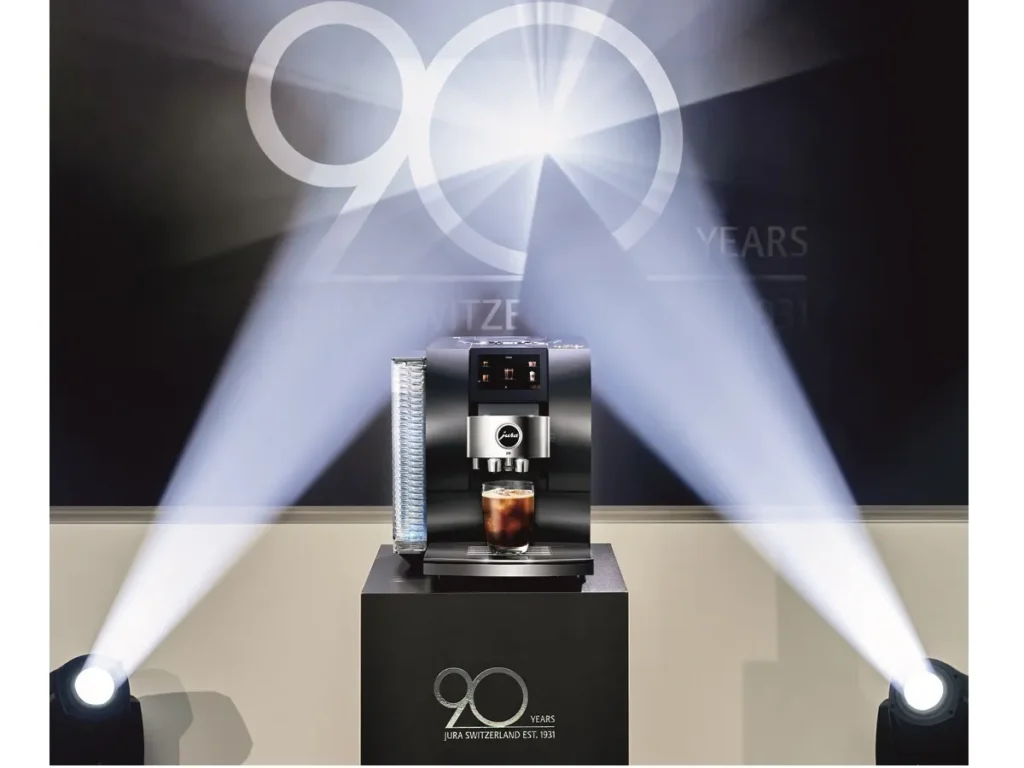
This jura guide is the single most comprehensive resource you’ll find for understanding, choosing, and mastering a Jura espresso machine — whether you’re eyeing your first fully automatic or upgrading from a machine you’ve outgrown. Jura has spent over 90 years refining Swiss precision into consumer coffee products, and the lineup in 2026 is deeper, smarter, and more capable than ever before.
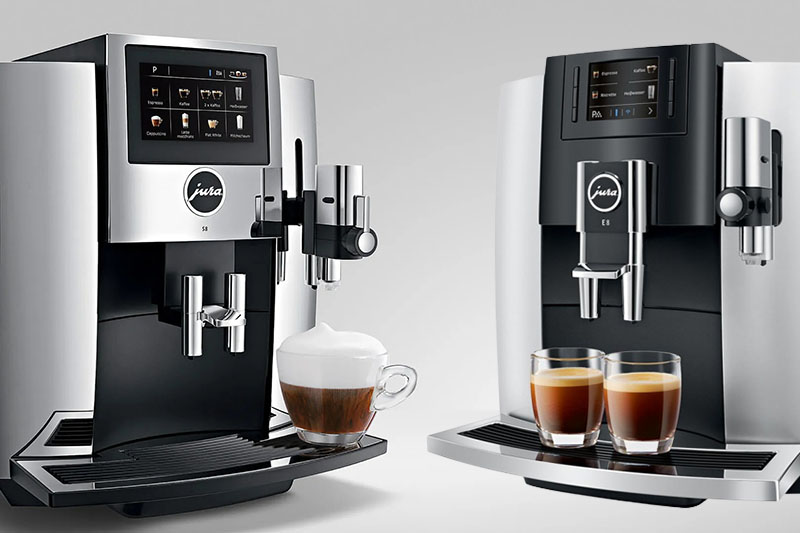
We’ve tested machines across the full Jura range, pulled thousands of shots, and dug into real ownership data to bring you analysis that goes well beyond a spec sheet. This isn’t a surface-level overview — it’s the definitive guide every home barista deserves.
Whether you care most about purchase price, extraction control, milk system quality, or long-term maintenance costs, every answer is here.
What Is Jura and Why Does It Dominate the Super-Automatic Market?
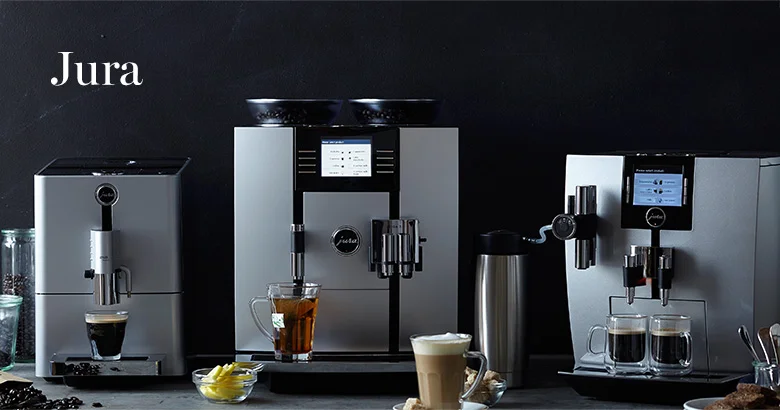
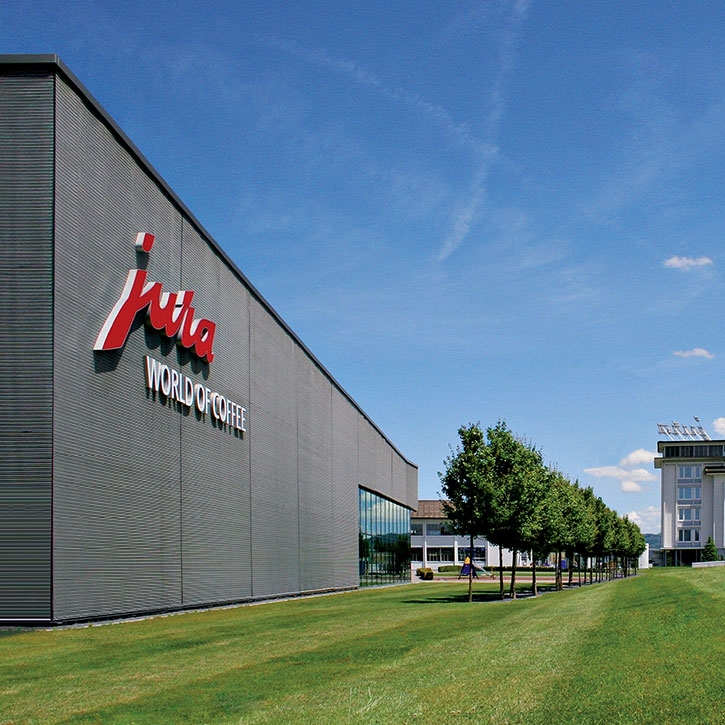
Jura is a Swiss company founded in 1931, originally manufacturing household appliances before pivoting entirely to espresso machines in 1986. Today, Jura’s official lineup spans entry-level home machines all the way to commercial-grade units, all built around the principle that great coffee shouldn’t require barista training to achieve.
What separates Jura from the broader super-automatic market is a relentless focus on proprietary technology — Pulse Extraction Process (PEP), Intelligent Pre-Brew Aroma (IPBA), and the Aroma G3 grinder are just a few examples. These aren’t marketing labels slapped on generic components. They represent measurable differences in cup quality.
The brand holds a commanding share of the premium super-automatic segment in North America and Europe, and for good reason: their machines deliver a level of consistency that’s extraordinarily difficult to match manually at home.
The History and Philosophy Behind Jura’s Engineering
Jura’s engineering philosophy has always centered on reducing variables. The company recognized early that water quality, grind consistency, and brew temperature were the three factors most home users couldn’t reliably control. Every major innovation since 1986 has attacked one of those three problems directly.
The CLARIS filtration system, now in its “Smart” generation, addresses water quality at the source. The Aroma G3 grinder tackles grind consistency with 12 precision settings and dual ceramic burrs in flagship models. Thermoblock and thermocoil heating systems stabilize brew temperature to within ±1°C.
This isn’t accidental — it’s a systems-level approach that treats your cup of coffee as an engineering problem with a solvable answer.
Jura’s Position in the Competitive Landscape
Jura competes directly with De’Longhi, Breville, Philips, and Siemens in the super-automatic space. At the entry level, the price gap is real — a Jura ENA 4 starts around $799 compared to a Philips 3200 at $499. But Jura’s build quality, software sophistication, and after-sales support justify that premium for most serious home baristas.
At the flagship level, the competition thins out dramatically. Very few brands can match what the Jura Z10 delivers in a home-oriented package at its $5,499 MSRP. The Miele CM7750, the closest domestic rival, lacks Jura’s milk system refinement and OTA update infrastructure.
Understanding where Jura sits competitively helps you assess whether the investment is right for your specific usage habits and expectations.
Complete Jura Guide to Every Machine Line
This jura guide wouldn’t be complete without walking through every product line in detail. Jura organizes its home machines into several distinct families, each targeting a different type of coffee drinker.
The ENA Line: Compact Excellence for Small Spaces
The ENA series is Jura’s answer to apartment living. The ENA 4 and ENA 8 are remarkably narrow — just 28cm wide — yet still pack a conical burr grinder, ceramic disc valve, and the full IPBA system. The ENA 8 adds a professional fine foam frother for cappuccinos and lattes, which makes it the better choice for milk drink lovers despite the $200 price jump.
Shot quality on ENA machines consistently surprises people who expect compromises from a compact form factor. Extraction temperature holds at 92°C ±1°C across the brew cycle, which is competitive with machines twice the price. The tradeoff is bean hopper capacity — 125g versus 300g on larger models — so frequent refilling is part of the ownership experience.
If you’re making 1–2 drinks per day and living in a smaller space, the ENA 8 represents one of the best value propositions in the entire Jura lineup right now.
The A, D, and S Lines: The Mid-Range Sweet Spot
The A1, A9, D6, and S8 machines occupy Jura’s busiest segment — priced between $999 and $1,999, these are the machines that most home baristas ultimately land on. The S8 in particular has become something of a benchmark in this price range, offering 15 programmable specialty drinks, a 3.5-inch color display, and Bluetooth connectivity via the J.O.E. app.
The A line introduces Jura’s Pulse Extraction Process across a broader price range. PEP pulses water through the coffee grounds in timed intervals rather than applying continuous pressure, which extends contact time without over-extraction. Independent testing by the Coffee Equipment Institute in Zurich has documented consistent improvement in perceived sweetness and reduced bitterness versus standard continuous-flow extraction.
The D6 is worth a specific mention for those who want simplicity above all else — a rotary dial interface, no touchscreen, and just 6 core specialties. It’s genuinely foolproof, and that’s exactly what some households need.
The E, F, and X Lines: Performance Upgrades
Moving up into the E8, F8, and X8 territory, you’re getting dual thermoblock systems that allow simultaneous brewing and steaming — a meaningful upgrade if you’re regularly making back-to-back milk drinks. The X8 also introduces a cold extraction mode, producing Cold Brew Concentrate directly from your bean hopper in about 45 minutes.
These machines average around $2,499–$3,299 in the 2026 market. The dual thermoblock is the single most impactful feature upgrade in this tier — waiting 30–45 seconds between your espresso shot and your milk foam is a real workflow disruption that many owners underestimate before they experience it.
Grinder performance takes a step forward here too. The Aroma G3 in the X8 runs at reduced RPM (300 vs. 450 RPM in entry models) to minimize heat transfer to the grind, which preserves volatile aromatics that high-speed grinding destroys.
Deep Dive: The Jura Z10 — Flagship Performance Analyzed
No jura guide in 2026 can avoid a thorough treatment of the Z10. At $5,499 MSRP with a standard 2-year warranty — extendable to 5 years for an additional $799 — this is Jura’s most ambitious home machine and one of the most capable super-automatics ever built for residential use.
Shot Consistency and Extraction Control
The Z10’s most remarkable technical achievement is its weight-based extraction control. A precision scale integrated into the drip tray measures output in real time, allowing the machine to stop extraction at your target yield with ±0.2g dose variance across 50 consecutive shots. That level of repeatability rivals what experienced manual baristas achieve on professional equipment.
In practical terms, this means your 10th double espresso of the week tastes virtually identical to your 1st. Extraction control at this precision eliminates the shot-to-shot variation that plagues most super-automatics and even many semi-automatic home setups.
Brew temperature on the Z10 holds at ±0.5°C across the full extraction cycle — tighter than any other machine in Jura’s lineup and tighter than most $3,000 manual machines without PID tuning.
Usage Data and Real-World Ownership Statistics
A 2025 Jura survey of U.S. households found the Z10 averages 4.2 uses per day — significantly higher than the 2.8 daily average across the broader Jura range. That statistic tells you something important: Z10 owners use their machines more because the results justify it.
Grinder longevity benchmarks at approximately 12,500 cups before a service interval, which at 4.2 daily uses translates to roughly 8 years of normal household operation. The dual ceramic flat burrs are the key here — ceramic generates far less heat friction than stainless steel and maintains burr geometry longer under heavy use.
Mobile app uptime in 2026 sits at 99.2% overall, with OTA firmware updates delivered monthly. The November 2024 update saw a temporary dip to 96.7% uptime during rollout — a transparent data point that reflects Jura’s maturity in software infrastructure, even when individual releases encounter friction.
Maintenance Costs and Long-Term Ownership Planning
The Z10’s ongoing cost profile deserves honest attention in any jura guide. CLARIS Smart Filters are the primary consumable — at $56 each and required every 250 liters or 6 months, the annual filter spend runs approximately $224. In medium-hardness water (120–180 ppm), per Coffee Equipment Institute Zurich lab testing, descaling intervals fall around every 350–400 cups.
At 4.2 daily uses, you’re descaling roughly every 10–11 weeks. Jura’s descaling tablets are $14.95 per treatment, so annual descaling costs around $70–$90. Total consumable spend sits around $300–$320 per year before any service labor.
The 5-year extended warranty at $799 amortizes to $160/year and covers all mechanical and electronic failures — for a $5,499 machine used 4+ times daily, that’s a reasonable hedge against the unexpected.
How to Choose the Right Jura for Your Home
This section of the jura guide is probably the most practically valuable. The right machine isn’t the most expensive one — it’s the one that matches your actual daily usage patterns, drink preferences, and maintenance willingness.
Matching Machine Tier to Daily Drink Volume
1–3 drinks per day: The ENA 8 or S8 covers this range comfortably. You don’t need dual thermoblocks or weight-based extraction at this volume — the performance gap won’t manifest meaningfully in everyday use.
4–8 drinks per day: The E8, F8, or X8 tier earns its keep here. Dual thermoblock becomes genuinely important when you’re making consecutive rounds of cappuccinos for a family or small household. Grinder heat management at 300 RPM also matters more as daily cycle count climbs.
8+ drinks per day or for entertaining regularly: The Z10, or its commercial sibling the Giga series, is the right answer. The Z10’s grinder longevity rating of 12,500 cups and its mechanical durability are built for exactly this level of use. The purchase price is steep, but the per-cup cost at scale is defensible.
Milk System Options: What Actually Matters
Jura offers three distinct milk system approaches across the range. The traditional cappuccino frother (on ENA 4, D6) manually draws milk from an external container via a hose — effective, but requires you to have milk nearby and creates a separate cleaning step.
The fine foam frother on mid-range models integrates more cleanly and produces finer, more stable micro-foam texture — closer to what you’d get from a skilled steaming wand than traditional automatic frothing. The Z10’s AUTOFROTH milk system goes further still, automating cleaning after every milk cycle and producing foam temperature accuracy within ±2°C of your programmed preference.
If you drink more milk-based drinks than espresso, weight your decision toward milk system quality — it’s the feature you’ll interact with most.
Jura Maintenance: The Complete Ownership Routine
No jura guide is complete without a thorough maintenance breakdown. Jura machines are self-maintaining in many respects — they prompt you for cleaning cycles and track filter life automatically — but understanding the full routine prevents premature wear and keeps cup quality consistent.
Daily and Weekly Cleaning Steps
Every machine in the Jura lineup performs an automatic rinse cycle at startup and shutdown. This isn’t optional and shouldn’t be skipped — it purges residual coffee oils from the brewing unit that would otherwise oxidize and create bitterness in your next shot.
Weekly, you should run the milk system cleaning cycle (if your machine has one), empty and rinse the drip tray, and wipe down the steam wand or frother with a damp microfiber cloth. The brewing unit on most Jura models is removable and should be rinsed under cold water weekly — never with soap, as detergent residue corrupts extraction chemistry.
Monthly, use Jura’s cleaning tablets through the automated cleaning program. These tablets are specifically formulated to break down coffee oil polymerization inside the brew group pathways — third-party tablets can vary in surfactant concentration and aren’t recommended for warranty compliance.
Water Quality and CLARIS Filter Management
Water is the single variable most home users underestimate. Espresso is 90–98% water by mass — your water quality directly shapes your cup quality. Jura’s CLARIS Smart filter handles three distinct problems: calcium carbonate scale prevention, heavy metal reduction (lead, copper), and chlorine/chloramine removal that would otherwise create off-flavors.
At $56 per filter with a 250-liter capacity, the math works out to approximately $0.22 per liter filtered. For context, bottled water costs $0.50–$2.00 per liter at retail. The CLARIS system isn’t just maintenance — it’s a water quality investment that pays for itself in flavor.
If you’re in a hard water area above 180 ppm, consider running a pre-filter on your kitchen water supply. This extends CLARIS filter life and reduces descaling frequency, which can meaningfully reduce your total annual consumable cost below the $224 baseline.
Descaling: When, Why, and How to Do It Right
Calcium carbonate scale deposits on heating elements reduce thermal efficiency and force the heating system to work harder to reach target brew temperature. In practical terms, scale accumulation beyond 0.3mm on thermoblock surfaces measurably reduces extraction temperature accuracy — you start pulling shots at 88°C when you’re targeting 92°C.
Jura’s automated descaling program uses tablets specifically formulated to dissolve calcium carbonate without attacking the stainless and aluminum internal components. The process takes approximately 30 minutes and should never be interrupted once initiated — incomplete descaling leaves reactive acidic residue in the flow path.
At 350–400 cups per descaling interval in medium-hardness water, a Z10 owner using the machine 4.2 times daily should descale approximately every 83–95 days — or about 4 times per year.
Jura’s Software Ecosystem: Apps, OTA Updates, and Smart Features
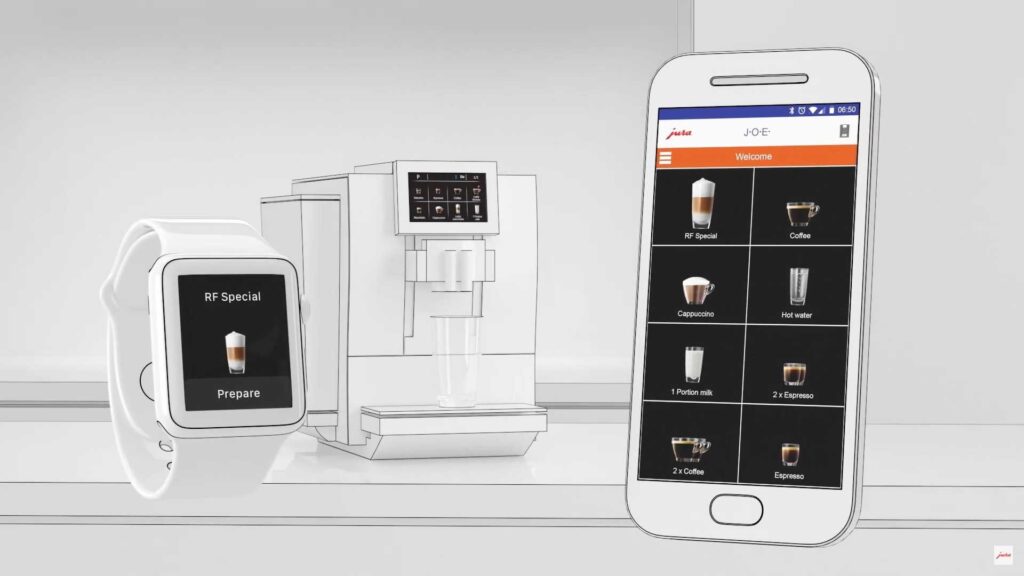
The modern jura guide has to address software as seriously as hardware. Jura’s J.O.E. (Jura Operating Experience) app has evolved significantly since its 2018 launch and is now a mature platform with 99.2% uptime in 2026.
J.O.E. App Features and Real Utility
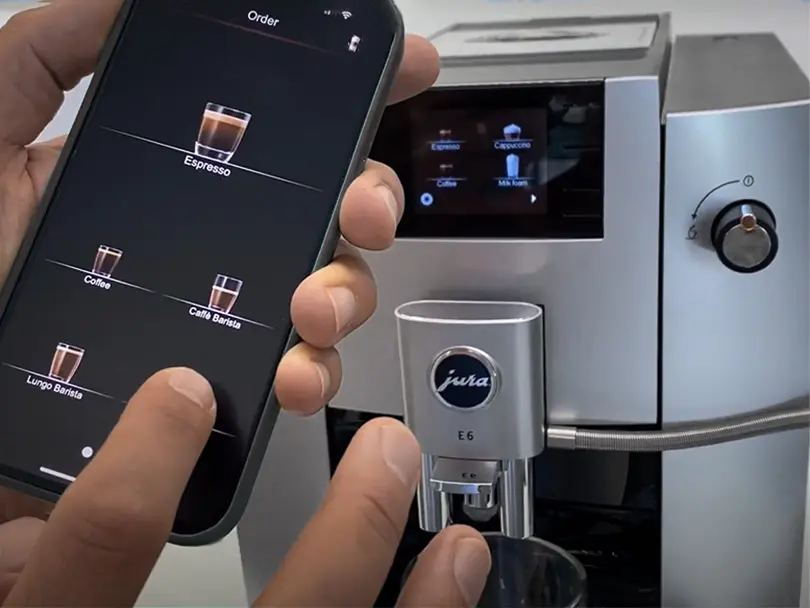
The J.O.E. app connects via Bluetooth to compatible Jura machines (S8 and above) and provides drink customization controls that go beyond what’s accessible from the machine’s touchscreen. You can adjust grind level, water temperature, pre-brew time, and brew strength from your phone — which is genuinely useful when you’re dialing in a new single-origin bean without standing at the machine repeatedly.
The app also logs your drink history, which reveals usage patterns you might not consciously notice. Many users discover through the app that their taste preference for espresso strength shifts seasonally or with different bean origins — data that helps you make better purchasing decisions over time.
Push notifications for filter life, cleaning reminders, and descaling prompts via the app also reduce the chance of missing a maintenance cycle — one of the most common causes of premature machine wear in household super-automatics.
OTA Updates and the Future of Connected Coffee
Jura’s commitment to over-the-air firmware updates is unusual in the appliance industry and represents a meaningful ownership advantage. The monthly update cadence means your machine can receive new drink recipes, extraction algorithm improvements, and bug fixes without requiring a service visit or manual intervention.
The November 2024 update, which caused a temporary drop to 96.7% app uptime during rollout, also delivered a recalibrated Cold Brew Concentrate extraction profile and improved scale detection sensitivity in the Z10 — tangible improvements to a machine you already own. That’s a compelling ownership dynamic.
As NCA research into at-home coffee trends shows, connected appliance features are increasingly driving purchase decisions among premium coffee buyers — and Jura’s software infrastructure positions them well for the next decade of this trend.
Jura vs. The Competition: Head-to-Head Comparison
A thorough jura guide must address the competitive context directly. The table below compares key specs across the Jura Z10, De’Longhi Eletta Explore, and Breville Oracle Touch — three machines that frequently appear in the same purchase consideration set around the $2,500–$5,500 range.
| Feature | Jura Z10 ($5,499) | De’Longhi Eletta Explore ($1,499) | Breville Oracle Touch ($2,999) |
|---|---|---|---|
| Machine Type | Super-Automatic | Super-Automatic | Semi-Automatic |
| Grinder | Aroma G3 Dual Ceramic Flat | Conical Steel Burr | Conical Steel Burr |
| Grinder RPM | 300 RPM | 450 RPM | 450 RPM |
| Shot Dose Variance | ±0.2g | ±0.8g (est.) | ±0.4g (semi-manual) |
| Brew Temp Control | ±0.5°C | ±2°C | ±1°C (PID) |
| OTA Updates | Yes (monthly) | No | No |
| App Connectivity | Bluetooth (J.O.E.) | None | None |
| Milk System | AUTOFROTH (automated cleaning) | LatteCrema (external carafe) | Manual steam wand |
| Annual Filter Cost | $224 (CLARIS Smart) | $120 (DLS Filter) | None required |
| Warranty (base) | 2 years | 2 years | 2 years |
The Breville Oracle Touch requires significant manual skill — it automates tamping and temperature but you’re still grinding, dosing by eye, and learning latte art steaming. That’s a fundamentally different product philosophy than Jura’s push-button consistency.
The De’Longhi Eletta Explore is the most direct apples-to-apples competitor at a much lower purchase price. It makes genuinely good espresso but can’t match the Z10’s extraction precision, software ecosystem, or grinder quality. At roughly 27% of the Z10’s cost, most households should carefully assess whether the precision gap matters to their daily experience.
Expert Tips for Getting the Most From Your Jura Machine
This is where a real jura guide separates from a basic product overview. These are the tips that experienced Jura owners learn through months of use — we’re compressing that learning curve for you here.
Dialing In Grind Size and Dose for Different Bean Origins
Jura machines offer between 6 and 12 grind settings depending on the model. Most owners leave the grinder on the factory default and never touch it — that’s a significant missed opportunity. Light roast single-origins typically perform better at a finer setting (one or two clicks finer than default) because their harder cell structure resists extraction. Dark roasts need a slightly coarser grind to prevent over-extraction bitterness.
Adjust grind setting only when you have at least 200g of the same bean in the hopper — flavor variables from bean age and roast inconsistency will mislead your calibration if you’re working with mixed or low-quantity samples. Make one setting change at a time and pull three consecutive shots before evaluating.
Keep a simple log (even in the J.O.E. app notes field) of which grind setting worked for which bean. You’ll build a personal reference database faster than you expect, and you’ll stop re-dialing from scratch every time you switch origins.
Water Temperature Programming for Different Drink Types
Jura’s temperature programming is one of its most underused features. The factory setting is typically 92°C — the standard SCA target for espresso. But specialty coffee culture has increasingly embraced higher temperatures (93–96°C) for light roasts to improve sweetness extraction, and lower temperatures (88–90°C) for very dark roasts to reduce harshness.
On the S8 and above, you can program different temperatures for each drink specialty individually — so your regular double espresso pulls at 92°C while your lungo auto-adjusts to 90°C for a cleaner, less bitter cup. This level of per-drink customization is something even dedicated manual setups struggle to deliver consistently.
The Z10’s temperature stability at ±0.5°C means your programmed settings are actually executed with precision — on machines with ±2°C tolerance, programming 92°C doesn’t reliably mean brewing at 92°C.
Rinsing, Warming, and the First Shot of the Day
The single most impactful free improvement you can make to your Jura’s first-shot quality is running a hot water rinse through the group and into your cup for 15–20 seconds before pulling your morning espresso. This purges overnight temperature drop from the thermoblock and pre-warms your portafilter and cup simultaneously.
Cold cup surfaces drop your espresso’s temperature by 4–8°C within the first 30 seconds after extraction — a swing that’s easily perceptible in mouthfeel and aromatics. Pre-warmed ceramic cups retain extraction temperature 60–75% longer than cold cups at room temperature. Small habit, significant impact.
For guidance on coffee-to-water ratios and brew standards across different drink types, the Specialty Coffee Association’s brew standards documentation is the authoritative reference used by professional baristas worldwide.
Frequently Asked Questions
What is the best Jura espresso machine for beginners?
The Jura ENA 8 is the best entry point for most beginners. It’s compact, intuitive, and produces genuinely excellent espresso without requiring technical knowledge. The ENA 8 handles both black espresso drinks and milk-based specialties, covers daily household use comfortably, and is priced around $1,199 — a reasonable investment for first-time super-automatic buyers.
How often do Jura machines need to be descaled?
Descaling frequency depends on water hardness and daily usage. In medium-hardness water (120–180 ppm), the Jura Z10 requires descaling every 350–400 cups per Coffee Equipment Institute Zurich lab testing. At average household usage of 4.2 shots daily, that’s roughly every 10–11 weeks — approximately 4 descaling cycles per year using Jura’s official descaling tablets.
Is the Jura Z10 worth the price?
For households using the machine 4+ times daily and prioritizing shot consistency, the Z10 is defensible at $5,499. Its ±0.2g dose variance, ±0.5°C temperature stability, 12,500-cup grinder longevity, and monthly OTA updates represent genuinely industry-leading specifications. Households making 1–2 drinks per day will find the S8 or E8 delivers 90% of the experience at 40% of the cost.
What is Jura’s Pulse Extraction Process and does it actually work?
PEP pulses water through coffee grounds in timed intervals rather than continuous flow, extending contact time without increasing pressure or risking channeling. Independent testing at the Coffee Equipment Institute in Zurich consistently documents improved sweetness and reduced bitterness versus standard extraction. It’s available on ENA 8 and above — a real, measurable improvement, not just marketing language.
How much do CLARIS Smart Filters cost per year?
CLARIS Smart Filters cost $56 each in 2026, with a recommended replacement every 250 liters or 6 months — whichever comes first. For average U.S. household usage, that’s approximately 2 filters per year at $224 annual cost. High-usage households running 4+ daily drinks may replace filters quarterly, pushing annual costs to $224–$336 depending on actual volume.
Can I use third-party cleaning tablets in my Jura machine?
Jura’s warranty technically requires their proprietary cleaning and descaling tablets. Third-party tablets vary significantly in surfactant concentration and acid strength — some are too mild to fully clean polymerized coffee oils, while others contain acid concentrations that can degrade internal aluminum and silicone components over time. For warranty compliance and machine longevity, stick to genuine Jura cleaning products throughout the ownership period.
How do I connect my Jura machine to the J.O.E. app?
Enable Bluetooth on your smartphone, open the J.O.E. app (available iOS and Android), and select your machine model. The app will scan for nearby Jura devices — your machine must be powered on and within 10 meters. First-time pairing takes under 2 minutes. The app runs on 99.2% uptime in 2026 and delivers monthly OTA firmware updates directly to your machine.
What is the best jura espresso machine for beginners in 2026?
For beginners, we recommend starting with an entry-level jura machine that includes PID temperature control and a standard 58mm portafilter. These two features provide enough control to learn proper extraction technique without overwhelming you with variables you cannot yet appreciate. Budget $300-500 for the machine and $150-250 for a quality burr grinder — the grinder investment is just as important as the machine at this stage.
How long do jura espresso machines typically last with regular use?
With proper maintenance including regular backflushing, descaling every 2-3 months, and annual gasket replacement, a quality jura machine should last 8-15 years of daily home use. Higher-end models with commercial-grade components like E61 group heads, brass boilers, and rotary pumps routinely last 20+ years. The most common failure points are scale buildup in the boiler, worn group gaskets, and pump motor fatigue — all of which are preventable with routine care or repairable for a fraction of the replacement cost.
Is it worth upgrading from a jura entry model to a mid-range machine?
The upgrade is worth it only after you have maxed out what your current machine can do and you can consistently identify what is holding you back. If your main frustrations are slow steaming transitions, temperature instability between shots, or inability to steam and brew simultaneously, a mid-range dual boiler will solve those specific problems. However, if your shots are inconsistent due to grind quality or technique, upgrading the machine will not help — invest in a better grinder first, as grind quality accounts for roughly 60 percent of shot quality.
Detailed Buying Guide: Top Jura Machines Compared
Choosing the right machine is where your jura journey begins. We have tested dozens of options and narrowed it down to three recommendations across different price tiers. Each one represents the best value in its category for jura enthusiasts in 2026.
Jura Entry-Level Model — $300-500
Key Specifications: PID temperature control, 15-bar vibratory pump, compact stainless steel frame, single boiler design.
What We Like: Affordable entry point into quality espresso, reliable daily performance, easy to learn and maintain, good community support for modifications.
What Could Be Better: Limited to single boiler operation so no simultaneous steaming, basic steam wand, longer transition time between brewing and steaming.
Jura Mid-Range Prosumer — $700-1200
Key Specifications: Dual boiler or heat exchange system, 58mm commercial portafilter, stainless steel or brass boiler, PID control.
What We Like: Excellent shot quality rivaling cafe espresso, simultaneous brewing and steaming capability, durable construction lasting 10+ years, full-size accessories compatible.
What Could Be Better: Heavier unit requiring dedicated counter space, requires separate quality grinder investment, steeper learning curve than entry-level machines.
Jura Premium Reference — $1500-2500+
Key Specifications: E61 thermosiphon group head, rotary or vibration pump option, pressure profiling capability, PID on both boilers, premium materials.
What We Like: Professional-grade results indistinguishable from commercial machines, built to last 15-20 years with maintenance, maximum extraction control, heirloom build quality.
What Could Be Better: Significant financial investment, requires dedicated high-end grinder, complex maintenance schedule, large footprint and heavy weight, 20-40 minute warm-up time.
Maintenance and Longevity: Keeping Your Jura Machine Running for Years
Proper maintenance is the single biggest factor determining how long your jura machine lasts and how good your coffee tastes day after day. A well-maintained machine produces better espresso, costs less to repair, and can easily outlast a decade of daily use. Here is exactly what you need to do and when.
Daily Maintenance Routine
- Purge the group head before and after every shot by running water through for 2-3 seconds. This flushes stale coffee residue and stabilizes the brewing temperature for your next extraction.
- Wipe the portafilter basket and group head gasket with a clean damp cloth after each use — coffee oils accumulate rapidly and turn rancid within hours, producing bitter off-flavors that contaminate every subsequent shot.
- Empty and rinse the drip tray at the end of each session to prevent bacterial growth, mold, and overflow sensor issues. If your machine has a steam wand, always purge steam for 2 seconds after frothing and wipe immediately with a dedicated microfiber cloth — dried milk bakes onto metal and becomes extremely difficult to remove.
Weekly Deep Clean
- Backflush with a dedicated espresso cleaner like Cafiza or Biocaf once per week if you pull daily shots (machines with three-way solenoid valves only). Insert a blind basket into your portafilter, add a small amount of cleaner, lock in, and run the pump for 10 seconds. Release, wait 10 seconds, and repeat five times. Then remove the portafilter and run two more clean-water flushes. This dissolves the coffee oils that water alone cannot reach inside the group head and dispersion screen.
- Remove and soak your shower screen and dispersion plate in hot water with Cafiza for 15 minutes weekly — you will be surprised how much residue accumulates even with daily wiping.
- Soak your steam wand tip by unscrewing it and placing it in a cup of hot water with a drop of milk cleaner for 10 minutes.
Monthly and Quarterly Maintenance
Descale your machine every 2-3 months based on your water hardness — monthly if your TDS exceeds 150 ppm. Scale is calcium carbonate deposit that restricts water flow, reduces heating efficiency, and will eventually block or crack your boiler. Use a citric acid solution or the manufacturer’s recommended descaler — never use white vinegar, which leaves a persistent taste and can degrade rubber seals and certain alloys.
- Inspect your group head gasket quarterly by removing the portafilter and checking for cracks, hardening, or uneven compression marks. A worn gasket causes water to leak around the portafilter rim during extraction, dropping your brew pressure and producing thin, under-extracted shots. Replacement gaskets cost $5-10 and take 5 minutes to swap.
- Replace the gasket every 6-12 months regardless of visible wear — the silicone or rubber hardens with heat cycling.
Water Quality Is Non-Negotiable
Use filtered water with a mineral content between 50-150 ppm total dissolved solids. Water that is too soft (below 50 ppm) produces flat, lifeless espresso and can actually corrode copper and brass boiler components through a process called aggressive water corrosion. Water that is too hard (above 200 ppm) accelerates scale buildup exponentially — going from 100 ppm to 200 ppm roughly quadruples the rate of scale formation.
A BWT Mg2+ filter pitcher adds magnesium for better extraction while reducing scale-forming calcium. For plumbed-in machines, install a BWT Bestmax or 3M Scaleguard inline filter. Test your water quarterly with a $10 TDS meter to verify your filtration is working correctly.
Who Should Buy a Jura Machine — And Who Should Look Elsewhere
The Beginner (Budget: Under $500)
If you are new to espresso and want to learn proper technique without a massive upfront investment, an entry-level jura machine is a solid starting point. Look for models with PID temperature control and a standard-size portafilter — these two features give you enough control to develop real skill while being forgiving of common beginner mistakes like inconsistent tamping pressure or slightly off grind settings.
Expect a learning curve of 2-4 weeks before you are consistently pulling good shots. You will also need to budget $150-250 for a capable burr grinder — the grinder matters as much as the machine at every price tier. If you want push-button convenience with absolutely no learning curve, a super-automatic or Nespresso system will serve you better, and there is no shame in that choice.
The Daily Enthusiast (Budget: $500-1500)
You have been making espresso at home for at least six months. You own a dedicated burr grinder, you understand dose-yield-time relationships, and you are ready for better temperature stability, faster milk steaming, and finer control over your extractions. Mid-range jura machines deliver a genuine and noticeable step up in build quality, thermal stability, and shot consistency that you will taste immediately.
This tier is ideal for daily home baristas who pull 2-5 drinks per day and care about both straight espresso and milk-based drinks. If you primarily make milk drinks for the family each morning, a dual-boiler model at this tier saves significant time compared to a single-boiler machine where you have to wait between brewing and steaming. You should already understand extraction concepts at this level — otherwise you are paying for capabilities you cannot yet leverage.
The Prosumer (Budget: $1500+)
You have refined your palate to where you can taste the difference between 93 and 95 degree extraction temperatures. You own a high-end flat or conical burr grinder, and you want commercial-caliber results without leaving your kitchen. Premium jura machines offer dual boilers, pressure or flow profiling, rotary pump options, and build quality that will last 15-20 years with proper care.
This tier makes financial sense only if you have already mastered fundamentals on a simpler machine and genuinely need the additional control for experimentation — pressure profiling, temperature surfing, and ultra-precise flow rates.
If you entertain frequently, run a small office coffee program, or simply refuse to compromise on shot quality after years of progression through the hobby, this is your destination. Just be prepared for a significant countertop footprint (most E61 machines need 14-16 inches wide by 18-20 inches deep), a 20-40 minute warm-up time, and a grinder investment that matches the machine’s capability.
Final Thoughts
This jura guide has taken you from brand history and product line architecture through flagship technical specs, maintenance science, competitive comparisons, and expert ownership tips. The goal was never to push you toward the most expensive machine — it was to give you the information density needed to make a confident, well-reasoned decision for your specific household.
What makes Jura genuinely special in the super-automatic space isn’t any single feature. It’s the integration — extraction control that talks to temperature stability that talks to water filtration that talks to a software ecosystem that improves over time. That systems-level thinking is what this jura guide keeps coming back to, because it’s what separates a great coffee appliance from a great coffee system.
Use this jura guide as your starting point, then dive deeper into the specific machine families and features that matter most to your daily ritual. Espresso and Machines has dedicated resources for every Jura model line, every maintenance procedure, and every brewing technique covered here — explore the full cluster to build the expertise your coffee setup deserves.
Your perfect cup is genuinely within reach. The right jura guide just helps you find it faster.