
If you’re shopping for a pod coffee machine, the choice usually comes down to one big question: Nespresso vs Keurig. They both promise a better morning routine and café vibes with zero barista training—but which system really fits your taste, budget, and caffeine personality?
Here’s the real story: Nespresso is built for those who crave espresso, lattes, and anything you’d order at a fancy café. Keurig? It’s the people’s champ for big mugs of drip coffee and a wild selection of flavors, brands, and seasonal oddities. Both brands dominate the single-serve game, but they’re not meant for the same kind of coffee drinker.
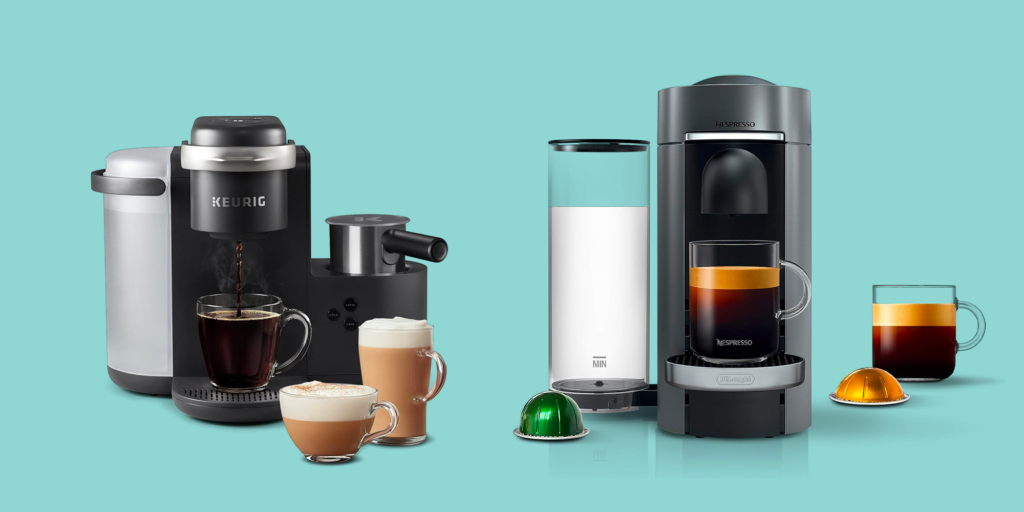
In this guide, we’ll break down Nespresso vs Keurig across design, brewing tech, pod selection, drink range, taste, price, convenience, and even sustainability—so you can figure out which pod machine will actually make you happy to wake up in the morning.
Quick Verdict
• Choose Nespresso if you want espresso, lattes, cappuccinos, and café-style quality.
• Choose Keurig if you want large mugs of coffee, the cheapest pods, and the widest variety of brands.
Both are excellent—but one is better for espresso drinkers, the other for coffee drinkers.
Side-by-Side Comparison Table
| Feature | Nespresso | Keurig |
|---|---|---|
| Focus | Espresso & lattes | Drip-style coffee |
| Pod Variety | 40+ Nespresso + 3rd-party (OriginalLine) | 400+ brands (K-Cups) |
| Cup Sizes | 1–18 oz (depending on model) | 4–12 oz standard (some up to 16 oz) |
| Brewing Tech | 19-bar pump (Original) / Centrifusion (Vertuo) | Pressure-less hot water system |
| Crema | Rich espresso crema | Minimal foam, drip-style |
| Milk Options | Aeroccino, Lattissima, Creatista steam wand | Only separate frother (no built-in) |
| Pod Price | $0.40–$1.50 | $0.30–$0.70 |
| Machine Price | $149–$849 | $79–$299 |
| Best For | Espresso & latte lovers | Coffee drinkers on a budget |
Nespresso Overview
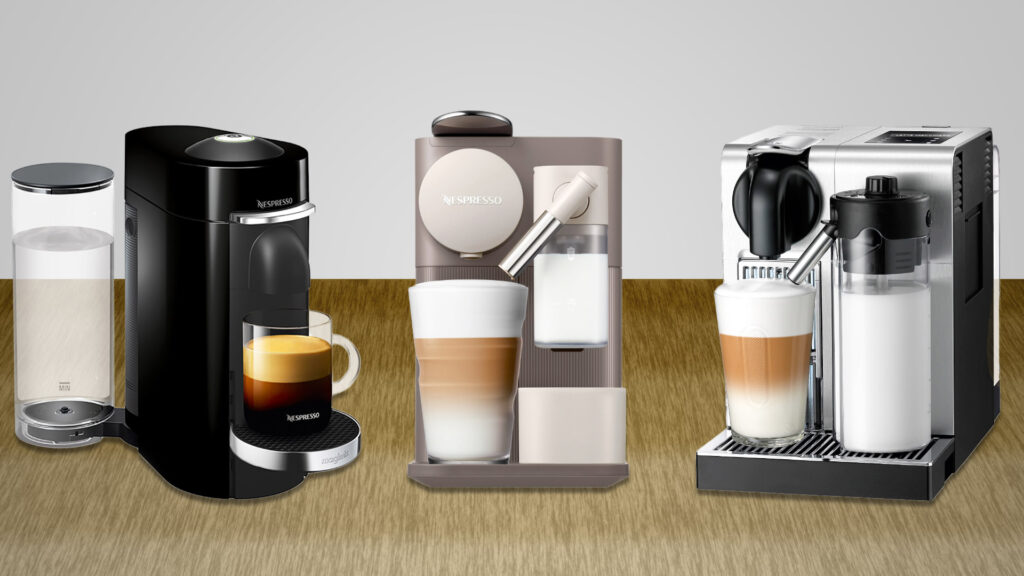
Brewing Technology
• OriginalLine → 19-bar pressure pump for authentic espresso.
• VertuoLine → Centrifusion (spinning pods with barcode tech) for espresso + large coffee up to 18 oz.
Drink Range
• True espresso, lungo, ristretto.
• Lattes, cappuccinos, flat whites (with frother or integrated milk system).
• Larger Vertuo pods for mug coffee & carafes.
Pros
• Best for espresso & milk drinks.
• Café-like crema and intensity.
• Premium build (Breville/De’Longhi machines).
• Wide OriginalLine pod competition (3rd party = cheaper).
Cons
• Pods cost more than K-Cups.
• Vertuo pods locked to Nespresso only.
• Machines are more expensive.
Explore Nespresso machines here
Keurig Overview
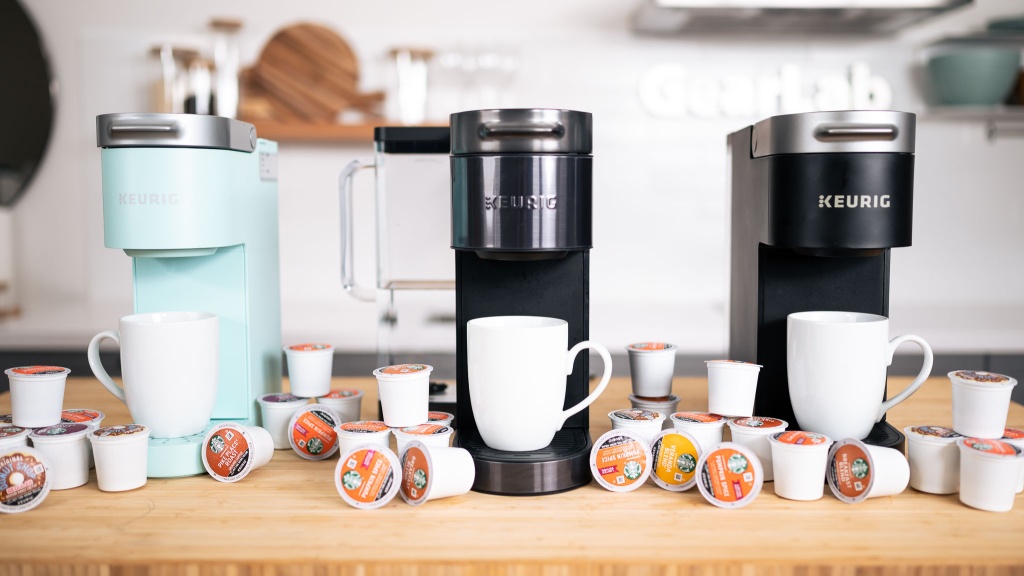
Brewing Technology
• Uses hot water through pods—no high-pressure extraction.
• Results in drip-style coffee (closer to an American cup than espresso).
Drink Range
• Coffee, tea, hot chocolate, cider.
• Some models brew carafes (K-Carafe pods).
• No true espresso—“latte” options are weaker, milk is frothed separately.
Pros
• Huge pod selection (Starbucks, Dunkin’, Peet’s, Green Mountain, etc.).
• Cheapest machines and pods.
• Fast, one-touch brewing.
• Widely available in US stores.
Cons
• No authentic espresso.
• Lattes/cappuccinos lack true microfoam.
• Build quality often cheaper plastic.
See Keurig machine reviews
Coffee Taste: Nespresso vs Keurig
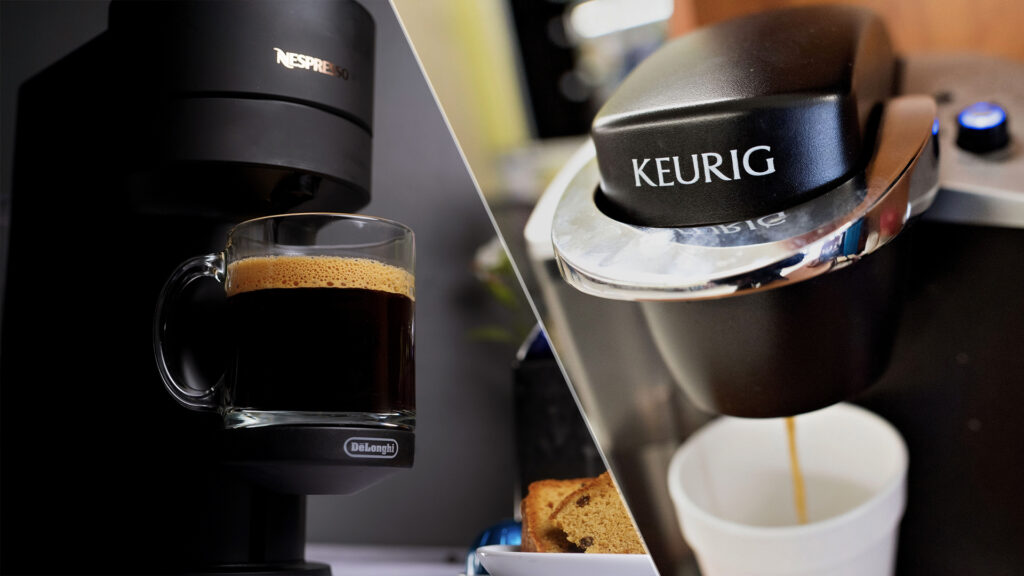
• Nespresso OriginalLine → Intense espresso flavor, closer to café.
• Nespresso VertuoLine → Smooth coffee with thick crema, not as strong as OriginalLine.
• Keurig → Weaker, drip-style coffee; no crema.
Verdict: If you want espresso flavor and texture, Nespresso wins. If you just want a big mug of coffee, Keurig is fine.
Cost Comparison: Nespresso vs Keurig
- Machine Price:
- Nespresso: $149–$849 (fancier features mean fancier prices).
- Keurig: $79–$299 (you can find a good model on almost any budget).
- Pod Price:
- Nespresso: $0.40–$0.80 for Original pods; $0.90–$1.50 for Vertuo.
- Keurig: $0.30–$0.70 for most K-Cups (especially on sale or in bulk).
- Pod Availability:
- Nespresso pods: order online, in Nespresso boutiques, or select retailers.
- Keurig pods: everywhere—grocery stores, Costco, Amazon, gas stations, you get the idea.
Keurig is cheaper across the board. But Nespresso delivers a taste and experience that’s closer to real café drinks, which might be worth the splurge if you love espresso.
Milk Frothing Options

- Nespresso: Options for everyone—Aeroccino frother (easy, automatic), Lattissima models (built-in milk carafe), Creatista (manual steam wand for latte art). You’ll get real foam, and lattes/cappuccinos are seriously good.
- Keurig: Select models offer a basic frother, but don’t expect silky microfoam or café-level latte art. Most milk is just heated and frothed, not steamed.
Verdict: If you’re serious about milk drinks (lattes, cappuccinos, flat whites), Nespresso is way ahead.
Sustainability
- Keurig: Most K-Cups are technically recyclable, but you’ll need to peel, empty, and rinse (and not all city recycling centers accept them). Most machines are plastic.
- Nespresso: Uses aluminum pods, fully recyclable through the Nespresso program. Newer machines (like Pop and Next) feature recycled plastics.
Who Should Buy Each?

Buy Nespresso if:
• You love espresso, lattes, or cappuccinos.
• You want café-style drinks at home.
• You’re willing to spend more for taste & build.
Buy Keurig if:
• You just want big cups of coffee—cheap and easy.
• You value variety (400+ brands).
• You’re on a tighter budget.
Final Verdict
The choice between Nespresso vs Keurig comes down to coffee style:
• Nespresso is for espresso drinkers and latte lovers.
• Keurig is for drip coffee drinkers who want maximum variety and minimum cost.
Our Recommendation:
• For café-style drinks at home → Nespresso (OriginalLine for espresso lovers, VertuoLine for coffee variety).
• For budget-friendly daily coffee → Keurig.
Pod Ecosystem: OriginalLine, Vertuo, and K-Cup Compared
Nespresso has two pod systems that don’t talk to each other. OriginalLine machines (CitiZ, Pixie, Essenza, Lattissima) take small aluminum espresso-format pods. Vertuo machines (Vertuo Plus, Vertuo Next, Vertuo Pop) take larger barcode-read aluminum capsules and brew everything from espresso to 14-ounce alto cups. The two pod formats are physically incompatible.
Keurig is one ecosystem: K-Cup. Plastic-bodied pods with a foil top, brewed at low pressure to produce 6- to 12-ounce drip-style coffee. K-Cup compatibility is broad — virtually every major North American coffee brand sells K-Cups, plus a deep catalogue of tea, hot chocolate, and apple cider pods.
The choice between Nespresso and Keurig isn’t just machine versus machine. It’s espresso-format ecosystem versus drip-format ecosystem. Once you choose, you’re locked in to the pod selection that ecosystem offers. That’s not a small decision.
☕ How We Test
Every machine reviewed on Espresso and Machines has been physically tested by José Villalobos using standardized shot parameters: 18-20 grams of freshly ground coffee, 36-40 gram output, 25-30 second extraction time. We test with at least 3 different bean origins across light, medium, and dark roasts over a minimum 30-day period. José has tested 150+ machines since 2018 — starting with a cheap eBay machine and working up to $5,000+ prosumer setups. No sponsored content. No manufacturer talking points. Just real testing.
Brewing Pressure: Why It Matters
Nespresso OriginalLine machines pump at 19 bar. That’s the standard pressure range for producing espresso with crema — the golden foam on top of a properly extracted shot. Vertuo machines use centrifusion: the pod spins fast enough to force water through the grounds, producing crema differently from traditional pressure brewing.
Keurig brews at roughly 1 to 2 bar. That’s not espresso pressure; it’s brewing pressure for drip-style coffee. The result is a thinner, larger drink without the concentrated body or crema of an espresso. Both styles have their place. They’re not competing for the same drink.
If you want espresso, latte, or cappuccino-style drinks, Nespresso is the format. If you want a 10-ounce cup of regular coffee in the morning, Keurig is the format. Mismatching the format to the drink is the most common buyer regret in the capsule space.
Sustainability and Recycling
Nespresso’s aluminum pods are recyclable through Nespresso’s free mail-back recycling program — the company provides postage-paid bags and collection points at boutiques. Aluminum recycles cleanly and efficiently when collected. The catch is that the user has to participate; pods that go in regular trash do not get recycled.
Keurig has shifted most K-Cups to “recyclable” plastic (#5 polypropylene), though municipal recycling acceptance varies, and the foil top must be removed and grounds emptied for the plastic to actually be recycled. In practice, most K-Cups end up in landfill regardless of label claims.
Neither system is environmentally neutral. Nespresso’s program is the more developed end-to-end loop, but only if you actually use it. Reusable steel pods exist for both ecosystems and dramatically reduce the per-cup waste, at the cost of convenience.
Daily Maintenance Compared
Both systems are low-maintenance compared to a real espresso machine. Daily care on either is roughly the same: empty the used-pod container, rinse the drip tray, refill the water reservoir. The pod containers on Nespresso machines hold around 9–14 used pods; Keurig models that have removable pod chambers vary by model.
Descaling is required on both. Hard water causes calcium scale on the heating element of any machine that boils water, and both manufacturers sell descaling solutions. Frequency depends on water hardness — every two to six months is the typical range. Both machines indicate when descaling is needed via lights or display alerts.
Keurig has more removable parts to clean (the K-Cup holder needle can clog with grounds; the drip tray is larger). Nespresso machines have fewer access points and clog less often, but require slightly more disciplined descaling because of the higher brewing pressure. Neither is hard to maintain.
Best Pick by User Profile
Choose Nespresso if you primarily drink espresso, latte, cappuccino, or other espresso-based drinks. The pressure system is built for that format, and the pod range — including the deep third-party OriginalLine market — gives you flavor variety at meaningful price points.
Choose Keurig if you primarily drink larger cups of regular coffee, especially if a household has varied taste in coffee brands and styles. The K-Cup catalogue is deeper for drip coffee, tea, and hot chocolate, and the larger drink size suits commuter mugs and morning routines.
Choose neither if you’re aiming for true café-quality espresso or single-origin third-wave coffee. Capsule machines optimize for convenience and consistency. The ceiling on quality is meaningful but bounded by the pod format itself. A modest semi-automatic plus a good grinder will outperform either capsule system on a flavor basis, at the cost of speed and learning curve.
Frequently Asked Questions
Can a Nespresso machine make regular coffee?
OriginalLine Nespresso machines top out at lungo (around 4 ounces). Vertuo machines can brew up to 14-ounce alto cups, which is closer to a regular coffee size. If you want a full mug, choose Vertuo or Keurig — not OriginalLine.
Are Nespresso pods more expensive than K-Cups?
On a per-cup basis, original Nespresso pods are typically $0.80–$1.10. K-Cups range from $0.50 to $1.00 depending on brand. Third-party Nespresso-compatible pods drop the cost to $0.30–$0.50, narrowing the gap. The cheaper-pod argument depends entirely on whether you stick with brand-original pods on either system.
Which is better for milk drinks?
Nespresso, by a wide margin. The 19-bar extraction produces the espresso base needed for cappuccinos and lattes. Some Nespresso models (Lattissima, Creatista) have integrated milk frothers. Keurig’s lower-pressure drip coffee doesn’t combine well with steamed or frothed milk.
How long do these machines last?
Both Nespresso OriginalLine and Keurig machines have a typical service life of 5 to 7 years under daily use with regular descaling. Neglected descaling cuts that lifespan dramatically — often in half.
Can I use both pod systems in one household?
Yes — they don’t share pods, but they don’t conflict either. Some households run both: Keurig for morning drip coffee for one person, Nespresso for the espresso drinker. The cost is counter space and two descaling routines.