
If you’ve ever found yourself watching espresso videos at midnight and wondering whether to drop a few hundred bucks on a manual setup, or just let a super-automatic machine like the Philips 5400 LatteGo handle it all, you’re not alone.
This decision often comes down to more than just coffee quality. It’s about lifestyle, habits, and yes, how many minutes you have before your first meeting of the day.
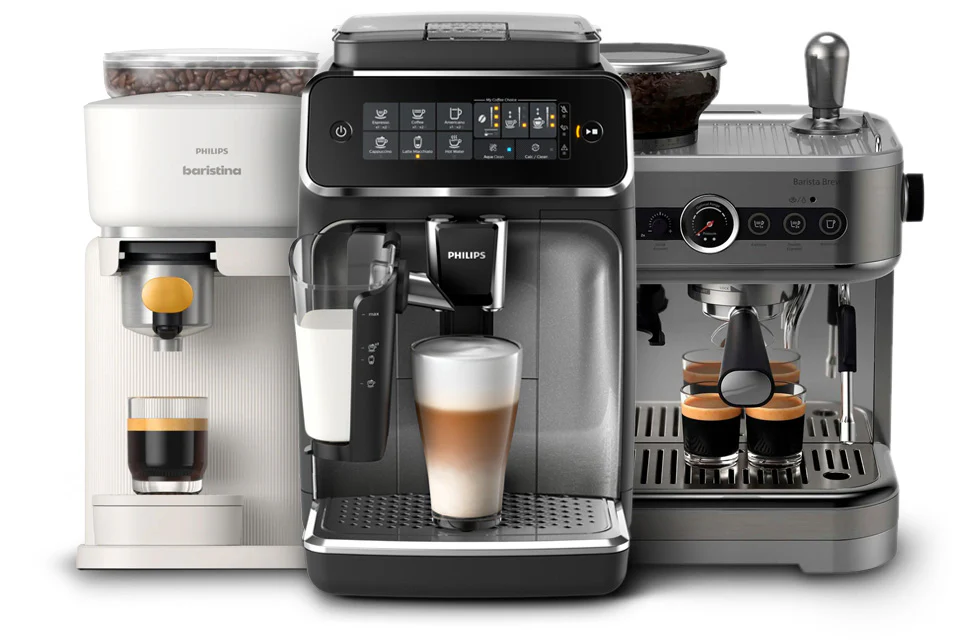
In this deep dive, we’ll pit the Philips 5400 vs Manual Espresso setup, looking at daily usability, learning curve, cleanup, customization, and overall coffee joy. Spoiler: there’s no one-size-fits-all. But by the end, you’ll know which setup fits your life better.
What’s Included in a Manual Espresso Setup?
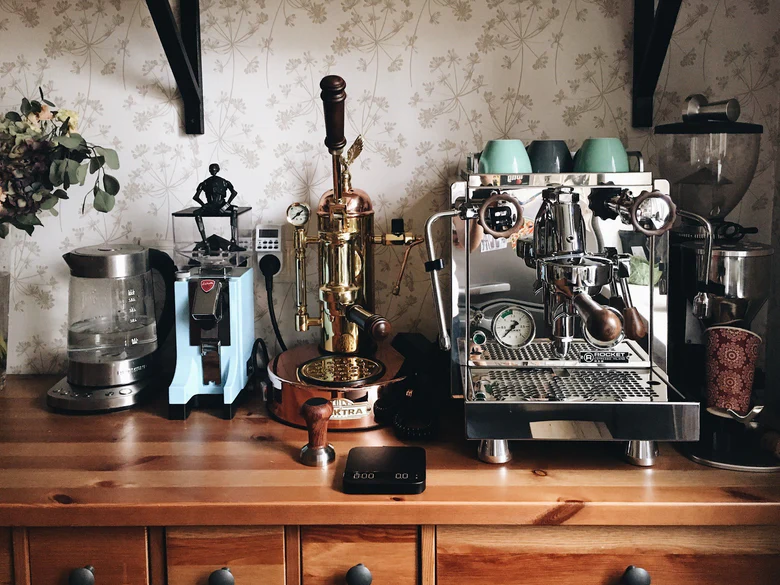
Before we compare, let’s lay out what a manual setup typically includes
• Espresso Machine (semi-auto or lever machine)
• Grinder (burr, ideally)
• Tamper
• Portafilter
• Milk frothing pitcher
• Knock box
• Scale and timer (for serious users)
• Steam wand for frothing milk
All these tools give you full control, from grind size to shot timing to milk temperature. But that power comes with a steep learning curve and a few extra steps.
Philips 5400 vs Manual: Head-to-Head Daily Use Comparison
Let’s break this down based on what most coffee drinkers actually care about.
1. Ease of Use
• Philips 5400: Push a button. That’s it. Latte, espresso, cappuccino, even flat whites—no barista degree required. You can set your favorite recipe and it’ll remember it.
• Manual Setup: You’re the barista. You grind, tamp, pull the shot, froth the milk, clean up. It’s hands-on, which can be fun… until you’re late for work.
Winner: Philips 5400 for everyday practicality.
2. Espresso Quality
• Philips 5400: Delivers a solid, crema-rich shot with consistency every day. It’s not third-wave artisan espresso, but it’s damn good—especially with fresh beans.
• Manual Setup: The ceiling is higher. You can dial in café-quality shots—if you have the skill, time, and patience.
Winner: Manual, but only if you’re committed to the craft.
3. Milk Frothing Experience
• Philips 5400: The LatteGo system is a dream for the milk-drinkers out there. No hoses, no tubes. Just creamy froth and a 10-second rinse.
• Manual Setup: Steam wands allow for true microfoam—the kind used in latte art. But it takes practice (and a pitcher you’ll be scrubbing daily).
Winner: LatteGo for convenience, Manual for perfectionists.
4. Customization and Control
• Philips 5400: You can adjust coffee strength, volume, milk amount, and temperature—but you’re working within the machine’s presets.
• Manual Setup: Total control. Every shot is yours to manipulate.
Winner: Manual setup if you love tweaking and experimenting.
5. Cleaning & Maintenance
• Philips 5400: Brew group pops out. Rinse it. Done. The machine handles self-cleaning for the milk system and internals. Very little work.
• Manual Setup: You’ll be cleaning group heads, wiping down the wand, purging steam, backflushing, and descaling—all manually.
Winner: Philips 5400, by a landslide.
6. Counter Space & Aesthetic
• Philips 5400: All-in-one, compact unit. Clean look, though very “appliance” in style.
• Manual Setup: Can look beautiful, especially if you go for chrome-heavy Italian builds like La Pavoni or Rocket. But takes up more space.
Winner: Subjective. Manual setups win on looks, Philips wins on footprint.
Philips 5400 vs Manual Espresso: Total Cost Breakdown
| Item | Philips 5400 | Manual Setup (Entry Level) |
|---|---|---|
| Machine Cost | $850–$999 | $500–$1500 (machine alone) |
| Grinder | Included | $200–$500 |
| Accessories | Included | $100+ |
| Maintenance Time | 5 min/week | 15–30 min/week |
| Learning Curve | None | Steep |
| Time to First Coffee | 1 minute | 6–10 minutes |
The manual route often costs more—both in gear and time. Worth it for hobbyists, not for everyone.
Which Type of Coffee Lover Are You?
Here’s a quick breakdown to help you decide.
Choose the Philips 5400 if you…

• Want one-touch convenience
• Share the machine with others (spouse, roommates)
• Have no interest in dialing in grind settings
• Want lattes and cappuccinos without fuss
• Drink 2+ cups a day and don’t want cleanup stress
• Need consistency more than barista bragging rights
Choose a Manual Setup if you…
• See espresso as a craft, not just caffeine
• Want to learn every variable in the brewing process
• Don’t mind a longer morning routine
• Enjoy experimenting with different beans and techniques
• Dream of pulling café-quality shots from your kitchen
Final Verdict – Which One Makes More Sense for Daily Use?
Here’s the honest truth:
• For 90% of people, the Philips 5400 is the better daily machine. It’s reliable, fast, easy to clean, and makes great drinks without effort.
• For the espresso obsessive, a manual setup offers unmatched control and satisfaction—but comes with more mess and stress.
Daily life is busy. If you want espresso without needing to think, tweak, or clean up a mini science lab, the Philips 5400 is where ease and quality meet.
But if espresso is your art form, go manual. Just know you’ll spend more mornings perfecting than sipping.
Written by José Luis Surjan
Coffee nerd. Gadget tester. Champion of machines that make mornings easier.
Learning Curve: What “Manual” Actually Costs in Time
The Philips 5400 has effectively no learning curve. Choose a drink on the touchscreen, the machine grinds, doses, tamps, brews, and steams milk for you. The first cup is the same as the thousandth.
A manual setup is a different commitment. Pulling a good shot on a semi-automatic machine requires dialing in the grind size, hitting a target dose (commonly 18 grams in for a double basket), tamping consistently, and pulling a shot in a target time window (typically 25–32 seconds for a 36-gram yield). Each variable affects the result. Each one needs practice.
Realistically, expect three to four weeks before manual shots become consistent. The first week is rough. The first month produces a lot of dumped shots and slightly tense mornings. After that, a manual setup becomes faster than people expect — under three minutes from cold espresso to drink in cup once the workflow is memorized.
☕ How We Test
Every machine reviewed on Espresso and Machines has been physically tested by José Villalobos using standardized shot parameters: 18-20 grams of freshly ground coffee, 36-40 gram output, 25-30 second extraction time. We test with at least 3 different bean origins across light, medium, and dark roasts over a minimum 30-day period. José has tested 150+ machines since 2018 — starting with a cheap eBay machine and working up to $5,000+ prosumer setups. No sponsored content. No manufacturer talking points. Just real testing.
Some people enjoy that learning process. Others want coffee, not a hobby. The Philips 5400 erases the learning curve entirely. That’s its biggest practical advantage and biggest creative limitation.
Maintenance Routines Compared
The 5400 handles most maintenance internally: rinse cycles, brew-group cleaning prompts, automatic descaling alerts. The user removes the brew group every week or two for a manual rinse, runs a descaling cycle every couple of months, and changes the AquaClean filter every two months or every 5,000 cups (whichever comes first). Total active maintenance time per week is 5–10 minutes.
A manual setup demands more attention. Daily: wipe down the steam wand immediately after each use to prevent dried milk, knock out the puck and rinse the portafilter, wipe the group head. Weekly: backflush with a blind basket and detergent, deep-clean the steam wand, clean the grinder hopper and burrs. Monthly: descale, replace gaskets if leaking, check the shower screen.
The maintenance time on a manual setup is real — 15–25 minutes per week — but it produces a machine that runs reliably for a decade or more if disciplined. The 5400’s internal complexity means more moving parts and more potential failure points; service life under daily use is typically 4–7 years.
Three-Year Cost of Ownership
The Philips 5400 lands around $800–$1,000 at typical street price. Add an AquaClean filter every two months at roughly $15 per filter — that’s about $90 per year. Descaling solution adds another $30 per year. Annual coffee bean cost depends on consumption, but at one daily cappuccino with 12 grams of beans, expect $100–$200 per year in beans. Three-year total: roughly $1,400–$2,000 fully loaded.
A solid manual entry setup runs $500–$800 for the machine (Breville Bambino Plus, Rancilio Silvia, Profitec Go) plus $300–$600 for a capable grinder (Baratza Encore ESP, Eureka Mignon entry models, DF54). Add $80–$150 for the basics: tamper, scale, knock box, milk pitcher. Total entry: $900–$1,500. Annual consumables: $40–$60 in cleaning and descaling supplies, plus the same bean cost. Three-year total: roughly $1,200–$1,800 fully loaded.
The cost difference between the two paths is smaller than it looks. The bigger differences are time, learning, and ceiling. A manual setup ages well — a Rancilio Silvia bought today can still be making espresso in 2040 with seal replacements. A super-automatic ages on a shorter timeline because integrated electronics fail before mechanical components do.
Sound, Footprint, and Kitchen Reality
The 5400 has a built-in grinder. Grinders are loud. The 5400’s grind cycle hits 65–70 decibels for about ten seconds before each shot. That’s loud enough to wake a partner sleeping in the next room. There’s no way around it on any machine with an integrated grinder.
A manual setup splits the noise: the standalone grinder runs once, then quiet pulling and steaming. The grind happens at a chosen moment; the rest of the workflow is near-silent. For households where someone sleeps later, the split is a real advantage.
Footprint cuts the other way. The 5400 is a single appliance — roughly 28 cm wide and 37 cm deep. A manual setup needs the espresso machine, a separate grinder, and counter space for accessories. Total footprint of a typical manual setup is closer to 60 cm wide. In a small kitchen, that’s the difference between fitting on the counter and not.
Frequently Asked Questions
Can the Philips 5400 make latte art?
No. The LatteGo system pours pre-textured milk directly into the cup automatically. There’s no manual steam wand for the user to texture milk and pour rosettas, hearts, or tulips. If latte art is part of why you want espresso, a manual setup with a real steam wand is the only option.
Is a Breville Bambino “manual” enough to count?
For comparison purposes, yes. Any semi-automatic that requires the user to grind separately, dose into a portafilter, tamp, and operate the steam wand manually qualifies as a “manual setup” in this comparison — versus a super-automatic that does all of those steps internally.
How does shot quality compare between the two?
The ceiling is higher on a manual setup, but only if dialed in well. A poorly dialed manual shot can be worse than the 5400’s consistent automatic output. Once a manual user is past the learning curve, the gap favors manual — better extraction control, fresher grind, and the ability to use specialty single-origin beans the 5400 may struggle with.
Which is faster in actual daily use?
The 5400 wins on cold-start: button to drink in under a minute. A manual setup needs warm-up time (5–15 minutes for most semi-automatics) plus workflow time per shot. For a household with one or two morning drinks, the 5400 is faster start to finish. For a household making four or five drinks in a row, the manual setup catches up because the warm-up is amortized.
Can both make decaf and specialty drinks?
Both work with decaf beans. A manual setup is more flexible for specialty drinks — cortados, flat whites, custom ratios — because the user controls every variable. The 5400’s drink menu is fixed to its programmed options, though some can be customized for length and strength.