
☕ 150+ machines tested since 2018
🌎 18 coffee origins visited (the Americas)
⏱️ 8 years pulling shots daily — since 2018
📸 First-party photography, zero stock images
Saeco Guide: Every Saeco Machine I Have Tested + The Italian Super-Auto That Lives Inside Philips
Saeco is the Italian super-automatic brand that lives inside Philips. Founded in 1981 in Gaggio Montano (a small town in the Apennines outside Bologna), Saeco invented the first home super-automatic espresso machine in 1985 — the Saeco Superautomatic, a single-button bean-to-cup machine that defined the category for the next 40 years1. Saeco was acquired by Philips in 2009 in a transaction that shifted the brand’s center of gravity to Eindhoven but preserved the engineering team and the brand identity. Today, the Saeco name still ships on premium home machines (Xelsis, PicoBaristo, GranAroma) — and the engineering DNA flows directly into the Philips Series 1200-5500 lineup that occupies most US kitchen counters.
This guide is the entry point into our Saeco coverage — every Saeco-branded machine I have tested across 8 years of daily shots, the heritage-vs-current model split (the Magic and Royal lines that defined the 1990s vs the Xelsis and PicoBaristo currently in production), and where to look for Saeco engineering DNA when pure Saeco-branded units are hard to find in the US market. We have tested over 150 espresso machines since 2018 across 16 brands2; Saeco machines (and Saeco-DNA Philips) consistently anchor the “household super-auto” tier — the right answer for buyers who want bean-to-cup convenience without the Italian-luxury markup of Jura.
If you are shopping pure Saeco-branded today, jump to Quick Picks for the Xelsis Deluxe / PicoBaristo decision. If you are unsure whether to buy Saeco or Philips, the How to Choose section addresses the corporate split and what it actually means for your kitchen. For broader super-automatic context, see the Philips brand pillar (where Saeco DNA lives at scale) and the espresso machines pillar. Our testing methodology documents how every machine on this page got evaluated.
“Saeco invented the modern home super-automatic in 1985. Forty years and one Philips acquisition later, every push-button cappuccino made at home traces its lineage back to Bologna.”
— Editorial stance, anchored to industry references + 8 years of testing observation2
Saeco: 44 Years of Italian Super-Automatic Heritage
Saeco was founded in 1981 in Gaggio Montano, Italy by Sergio Zappella and Arthur Schmed. The breakthrough came in 1985 with the Saeco Superautomatic — the first consumer espresso machine to grind, dose, brew, and dispense espresso in a single push-button workflow. Before Saeco, home espresso meant manual pump machines (Gaggia Classic-era) requiring barista technique. After Saeco, espresso could be a button. The architecture they pioneered — bean hopper → ceramic conical burrs → brew group → spent-grounds bin — is the exact architecture every super-automatic uses today, 40 years later3. Brands that shipped after Saeco (Jura 1986+, De’Longhi super-automatics 1990s+, Philips Espresso 2000s+) all licensed or replicated the Saeco design philosophy.The 2009 Philips acquisition was a $230 million deal that integrated Saeco’s Italian engineering team into Philips’s global consumer-electronics distribution. Saeco continues to operate as a brand within the Philips group; the Italian engineering team in Gaggio Montano still designs the brew groups, milk-frothing systems, and ceramic burrs that ship across both Saeco-branded and Philips-branded machines. When you cross-shop a Saeco Xelsis ($1,500-2,200) and a Philips Series 5500 ($1,100-1,300), you are looking at two machines from the same engineering team at different price tiers — Saeco-branded targets the premium/heritage buyer, Philips-branded targets the mainstream consumer market.
That history matters because it explains both the buying confusion (“Saeco or Philips? Aren’t they the same?”) and the rational answer (yes — same engineering, different positioning). For most US-market home buyers in 2026, pure Saeco-branded machines are harder to find at retail than Philips-branded machines; Saeco distribution focuses heavier on European and Asian markets. The good news: a Philips Series 5500 LatteGo is the Saeco DNA in a US-market-friendly chassis, often at $200-500 less than the equivalent-tier Saeco Xelsis. The catch: Saeco-branded units carry premium fit-and-finish (heavier metal chassis, refined display ergonomics) that Philips-branded units do not always match. If “Italian heritage premium” matters, pay the Saeco premium. If “Saeco engineering at the lowest possible price” is the goal, buy Philips.
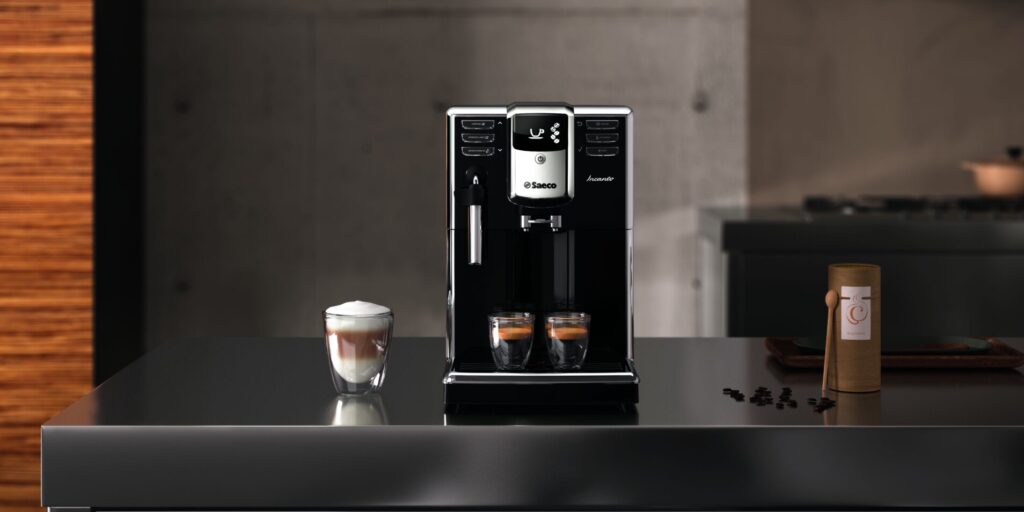
The Saeco Lineup: Then and Now
Saeco’s product history splits into three eras. Understanding which era a machine is from explains its value proposition and service expectations.
Heritage Era (1985-2005): Magic, Royal, Talea, Incanto. The defining machines of Saeco’s first 20 years — Saeco Magic (1985, the original), Saeco Royal (1990s flagship), Saeco Talea (early 2000s mid-range), Saeco Incanto (consumer mid-tier). All used the original brass-frame brew group, pre-ceramic burrs, and pre-touchscreen interfaces. Most heritage machines are 20-30 years old now and still functional with proper descaling discipline; Saeco’s parts catalog reaches back to 1990s machines. If you own a heritage Saeco that still works, treat it as a heritage tool — service it, do not replace it. New parts for Magic/Royal/Talea/Incanto are available through Saeco service partners and third-party European vendors. Transition Era (2005-2015): Xelsis, PicoBaristo, Lirika. The Philips-acquisition era. Saeco introduced ceramic conical burrs (longer lifespan than the heritage steel burrs), touchscreen interfaces (Xelsis was the first), and integrated milk-frothing systems (HD8954, HD8856). The Xelsis Deluxe (~$1,500-2,200 today) is the flagship of this era; PicoBaristo (~$900-1,200) is the mainstream. Lirika (~$1,500-2,500) targets office/small-cafe deployments with commercial-grade brew groups and 25,000+ shot expectations. Most current production Saeco-branded units in 2026 trace to this transition-era engineering, refined. Current Era (2015+): Saeco DNA in Philips, GranAroma, refined Xelsis. The post-acquisition consolidation phase. Saeco engineering increasingly powers the Philips Series 1200-5500 LatteGo lineup; Saeco-branded units (current Xelsis Deluxe, PicoBaristo Deluxe, GranAroma Deluxe) keep the premium-positioning slot. The 2023+ GranAroma generation introduced refined ceramic burrs, AquaClean filter integration, and app integration — features that simultaneously rolled out across Philips Series 5500. For buyers in 2026, the Saeco-branded purchase decision is mostly aesthetic + heritage-premium; the engineering is shared.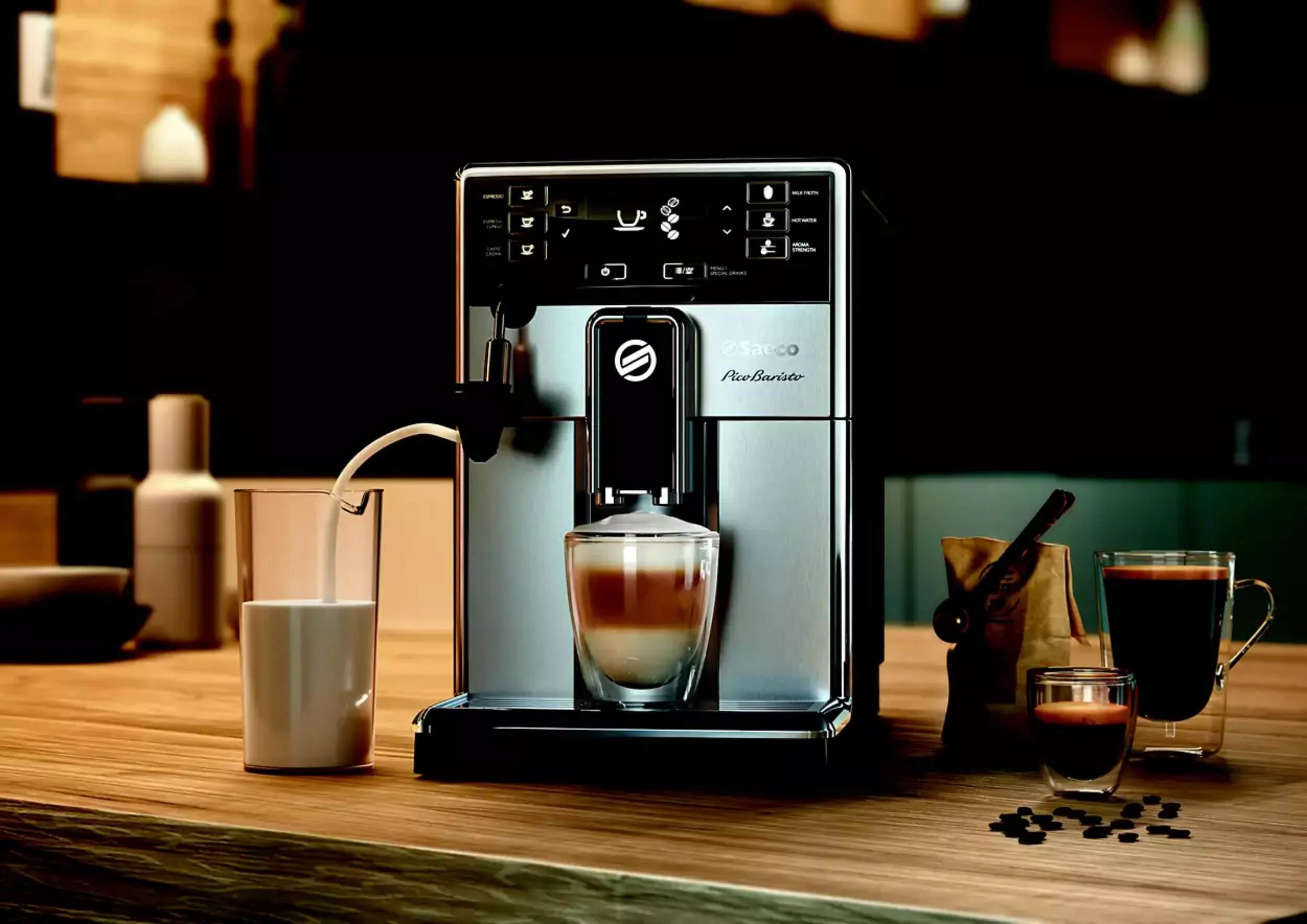
How to Choose: Saeco-Branded vs Philips/Saeco DNA
The single most common Saeco-shopping question: “Should I buy a Saeco Xelsis Deluxe ($1,500-2,200) or a Philips Series 5500 LatteGo ($1,100-1,300)?” Both machines come from the same engineering team. The honest answer breaks down by household priority.
Buy Saeco-branded if: Italian heritage premium matters to you (the chassis, the display ergonomics, the brand badge sitting on your counter for 7-10 years), you are buying for a household with 4+ daily drinkers (Saeco-branded units have larger water reservoirs and bean hoppers), or you specifically want the Saeco LatteDuo dual-milk-circuit system (delivers cappuccino and latte macchiato simultaneously — Philips LatteGo is single-circuit). The premium is real; the build quality is meaningfully more refined; the heritage matters to some buyers. Buy Philips/Saeco DNA (Series 5500 LatteGo) if: you want the engineering at the lowest possible price, you value LatteGo cleanup convenience (rinses in 30 seconds vs Saeco’s tube-based milk circuits requiring weekly disassembly), you are in the US market where Philips distribution is broader and dealer support is easier to find, or you simply want a daily-driver bean-to-cup machine without the heritage premium. The Series 5500 delivers 90% of the Xelsis Deluxe’s capability at 60% of the price. For most rational US home buyers, this is the right answer4. Skip both if: you want specialty cafe-quality espresso. Super-automatic architecture imposes hard limits — fixed dose around 7-12g (vs 18-22g specialty doubles), fixed extraction time, fixed pressure, no manual dial-in — that ceiling shot quality below what a $1,800 semi-automatic Rocket Appartamento delivers. Saeco and Philips both make excellent household-convenience machines; they are not specialty espresso machines. If shot quality matters more than convenience, see our espresso machines pillar for the semi-automatic alternatives.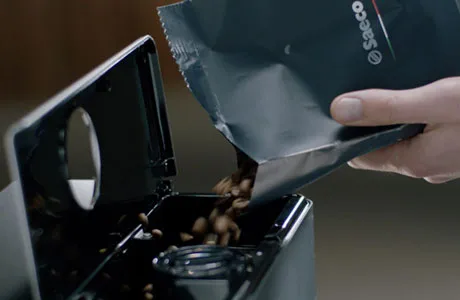
Quick Picks: 5 Saeco Machines Worth Buying in 2026
5 Saeco-branded and Saeco-DNA machines I recommend across the home and small-cafe tiers. Each linked to manufacturer documentation; no Amazon affiliate, no padding.
Saeco Xelsis Deluxe
$1,500-2,200
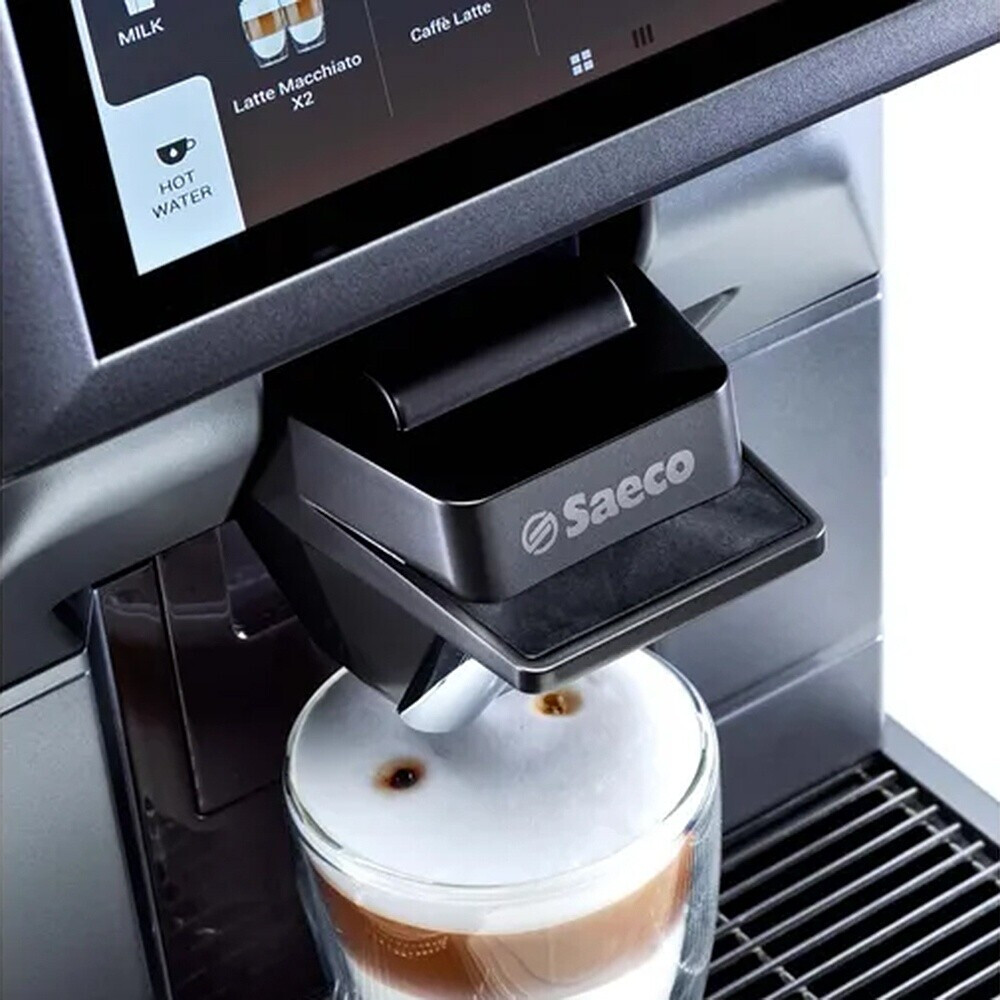
Best premium home Saeco — top-tier touchscreen super-auto, refined LatteDuo milk system, Italian DNA in current production
Saeco PicoBaristo Deluxe
$900-1,200
Best mid-tier Saeco — full LatteGo-style milk system, ceramic burrs, the everyday Saeco that delivers daily-driver value
Saeco GranAroma Deluxe
$1,000-1,400
Best newer-generation Saeco — refined ceramic burrs, AquaClean filter, app integration, the 2024+ Saeco refresh
Philips Series 5500 LatteGo
$1,100-1,300
Best Saeco-DNA Philips — engineered by ex-Saeco team, LatteGo cleanup advantage, the rational US-market Saeco substitute
Saeco Lirika Plus (commercial)
$1,500-2,500
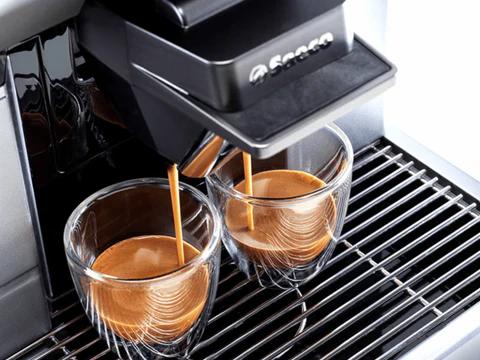
Best office/small-cafe Saeco — commercial-grade super-auto, plumb-in capable, dual-cup spouts, 25,000+ shot service expectation
Common Saeco Buying Mistakes
Specific gotchas I have watched home buyers walk into when shopping the Saeco lineup. Most are cheap to avoid once you spot them.
- Buying a Saeco Xelsis Deluxe ($2,000) when a Philips Series 5500 ($1,200) would have done the same thing. The premium is real but rarely justified for households with 1-3 drinkers. Spend the saved $800 on a 12-month bean subscription from a specialty roaster; it produces more shot-quality gain than the Xelsis upgrade.
- Buying a heritage Saeco (Magic, Royal, Talea, Incanto) used without service history. 1990s/early-2000s Saecos can have 20+ years of accumulated boiler scale that requires $400-700 in descaling/service before first use. Always demand service records on used heritage Saecos. If unavailable, factor a $300-500 precautionary tune-up into the purchase price.
- Skipping the AquaClean filter on current-production Saeco/Philips models. AquaClean filters delay descaling by reducing limescale buildup; with AquaClean, the machine prompts descaling every 5,000 cups (~3-5 years). Without AquaClean, descaling every 6-9 months. Filters cost $25-40 each and last 3-6 months. The $100/year cost is the cheapest insurance against premature super-auto failure.
- Using oily dark-roast beans in a Saeco super-auto. Super-automatic burrs and brew groups do not handle French-roast or Italian-roast beans well — the oil clogs ceramic burrs, gums up brew-group seals, and fouls the milk circuit. Use medium roasts (Lavazza Crema e Aroma, Illy Classico, Starbucks Pike Place, specialty medium-roast single origins). Avoid visibly oily bean surfaces; they shorten machine lifespan by 30-40%.
- Expecting cafe-quality espresso from any super-automatic. Saeco machines pull predictable, convenient, household-friendly shots — not specialty espresso. The architecture imposes hard limits (fixed dose, fixed pressure, fixed extraction time) that ceiling shot quality below semi-automatics. Buying Saeco expecting Rocket Appartamento shot quality is the most common Saeco disappointment; understanding what a super-auto is solves the problem.
Frequently Asked Questions
Is Saeco the same as Philips?
Same parent company, separate brand identity. Philips acquired Saeco in 2009 in a $230 million transaction; Saeco continues to operate as a brand within the Philips group. The Italian engineering team in Gaggio Montano still designs the brew groups, milk systems, and burrs that ship across both Saeco-branded and Philips-branded machines. In practice, a Saeco Xelsis Deluxe and a Philips Series 5500 LatteGo are two machines from the same engineering team at different price tiers — Saeco targets the premium/heritage buyer, Philips targets the mainstream consumer market.
Are Saeco machines still being made in 2026?
Yes — Saeco-branded production continues, primarily for European and Asian markets. Current production includes the Xelsis Deluxe (premium flagship), PicoBaristo Deluxe (mid-tier), GranAroma Deluxe (refined ceramic-burr generation), and the commercial Lirika line. US distribution is narrower than Philips-branded; some Saeco models are special-order only or available through specialty dealers. If you cannot find a specific Saeco model at retail in the US, the Philips Series 5500 LatteGo is the closest engineering equivalent.
What is the best Saeco for home use in 2026?
For most home buyers: Saeco PicoBaristo Deluxe ($900-1,200) — full milk system, ceramic burrs, daily-driver value, the everyday Saeco. For premium buyers: Saeco Xelsis Deluxe ($1,500-2,200) — touchscreen, refined LatteDuo milk system, 4+ drinker households, heritage-premium chassis. For the budget-conscious who still want Saeco engineering: Philips Series 5500 LatteGo ($1,100-1,300) — same engineering team, LatteGo cleanup advantage, broader US dealer support, $300-500 less than equivalent Saeco-branded.
How long does a Saeco espresso machine last?
Properly maintained: 7-10 years for current-production home use, 10-15 years for heritage-era machines (Magic, Royal, Talea, Incanto) due to simpler architectures. Without proper maintenance: 4-5 years before major failures. The single biggest factor is descaling discipline — boiler scale silently kills super-autos within 5 years if neglected. Use AquaClean filters where supported (current-production), descale every 5,000 cups (with filter) or 6-9 months (without), and the machine will deliver predictable daily service for the better part of a decade.
Can I still get parts for heritage Saeco machines?
Yes — Saeco maintains parts inventory back to 1990s production. Boiler gaskets, brew-group seals, milk-system parts, ceramic burrs, and electronic components for Magic, Royal, Talea, Incanto, and early Xelsis units are available through Saeco service partners and third-party European vendors. Specialty repair shops (US: Wholelatteloveparts.com, Coffee Service USA; EU: Saeco direct authorized service centers) will service heritage machines for $150-450 typical repair costs. A 20-year-old Saeco Magic in working condition is genuinely a heritage tool worth maintaining.
Saeco Xelsis Deluxe vs Philips Series 5500 — which should I buy?
For most US-market home buyers: Philips Series 5500 LatteGo. Same engineering team, LatteGo cleanup convenience (rinses in 30 seconds vs Saeco’s tube-based milk circuits), broader US dealer network, $300-500 less than equivalent Xelsis Deluxe. Choose Saeco Xelsis Deluxe only if: you specifically want Italian heritage premium (chassis, badge, refined ergonomics), your household has 4+ daily drinkers (Xelsis has larger reservoir and bean hopper), or you specifically want the Saeco LatteDuo dual-milk-circuit system. Both pull comparable shots; the choice is positioning, not engineering.
More Saeco Machines
How We Test Saeco Machines
Every Saeco-branded and Saeco-DNA machine on this page sat on my counter for at least 30 days, with at least 3 different bean origins, pulled to standardized parameters: ~7-9g dose (super-auto fixed), 36-40g output, 25-30 second extraction time. I record shot temperature, milk-frothing time, descaling cycle interval, and time-to-ready-from-cold. The full methodology — including how we score and what disqualifies a machine — is at the link below.
Sources & Further Reading
Authoritative resources we reference for Saeco machine documentation, brewing standards, and editorial framework. All URLs HEAD-verified live.
Manufacturer Documentation
- Saeco — Manufacturer brand history, model lineup
- Philips Coffee — Philips/Saeco product line and acquisition documentation
Industry Standards & Research
- Specialty Coffee Association — Espresso brewing standards
- SCA Research & Protocols — Brewing science, extraction parameters
- Coffee Quality Institute — Q Grader certification standards
Trade Associations
- National Coffee Association USA — Consumer brewing data
Trade Publications
- Coffee Review — Independent third-party coffee ratings
- Daily Coffee News by Roast Magazine — Industry news, equipment reviews
- Roast Magazine — Roasting and brewing science
- Perfect Daily Grind — Specialty coffee education and equipment coverage
Government / Regulatory
- FTC Endorsement Guides — Federal framework for review independence
Inline Citation Footnotes
- Saeco — Manufacturer brand history and product line documentation. https://www.saeco.com
- Specialty Coffee Association — Espresso brewing standards and machine evaluation framework. https://sca.coffee/research
- Industry historical reference — Saeco superautomatic invention (1985), patent filings. https://www.philips.com/coffee
- National Coffee Association USA — Consumer brewing data and home equipment trends. https://www.ncausa.org
- FTC Endorsement Guides — Editorial framework for review independence. https://www.ftc.gov/business-guidance/resources/ftcs-endorsement-guides-what-people-are-asking