
Choosing the best smart home espresso machine has never been more exciting — or more complicated. The 2026 market offers everything from app-controlled entry-level machines to fully automated AI-driven brewers that remember your exact preferences, adjust grind size on the fly, and pull a shot while you’re still in the shower.
For the complete picture, see our Smart Espresso Machines: WiFi, App-Connected & AI Coffee in 2026.
But more options mean more confusion. Brew pressure, boiler type, Wi-Fi connectivity, shot profiling — the specs pile up fast. This guide cuts through the noise and gives you an honest, expert-backed breakdown of what actually matters when you’re spending $500 to $3,000+ on a connected espresso machine.
We’ve tested machines, tracked firmware updates, and talked to home baristas who pull 500+ shots a year. Here’s everything you need to know.
What Makes a Smart Espresso Machine Actually “Smart”?
Connectivity Features That Matter
The word “smart” gets thrown around loosely in appliance marketing, but for espresso machines it has a real meaning. A genuinely smart machine connects to your home network — typically via Wi-Fi 6 or Bluetooth 5.0 — and allows you to control, monitor, or automate brewing from a smartphone app or smart home platform like Google Home, Amazon Alexa, or Apple HomeKit.
Real smart integration goes beyond a timer. Look for machines that offer remote preheating, shot programming, grind adjustment via app, and usage data tracking. Some premium models in 2026 sync with a paired smart grinder, creating a closed-loop system where the machine and grinder communicate to dial in the recipe automatically.
The best smart home espresso machine in any budget tier should at minimum offer app-based shot customization, temperature control within ±0.5°C, and some form of over-the-air (OTA) firmware updates so the machine improves over time without you buying new hardware.
Smart Home Platform Compatibility
Platform compatibility is a make-or-break factor for anyone already invested in a smart home ecosystem. The Home Assistant open-source platform has added integrations for several major espresso brands, meaning tech-savvy users can build automations like “start espresso when my morning alarm fires.”
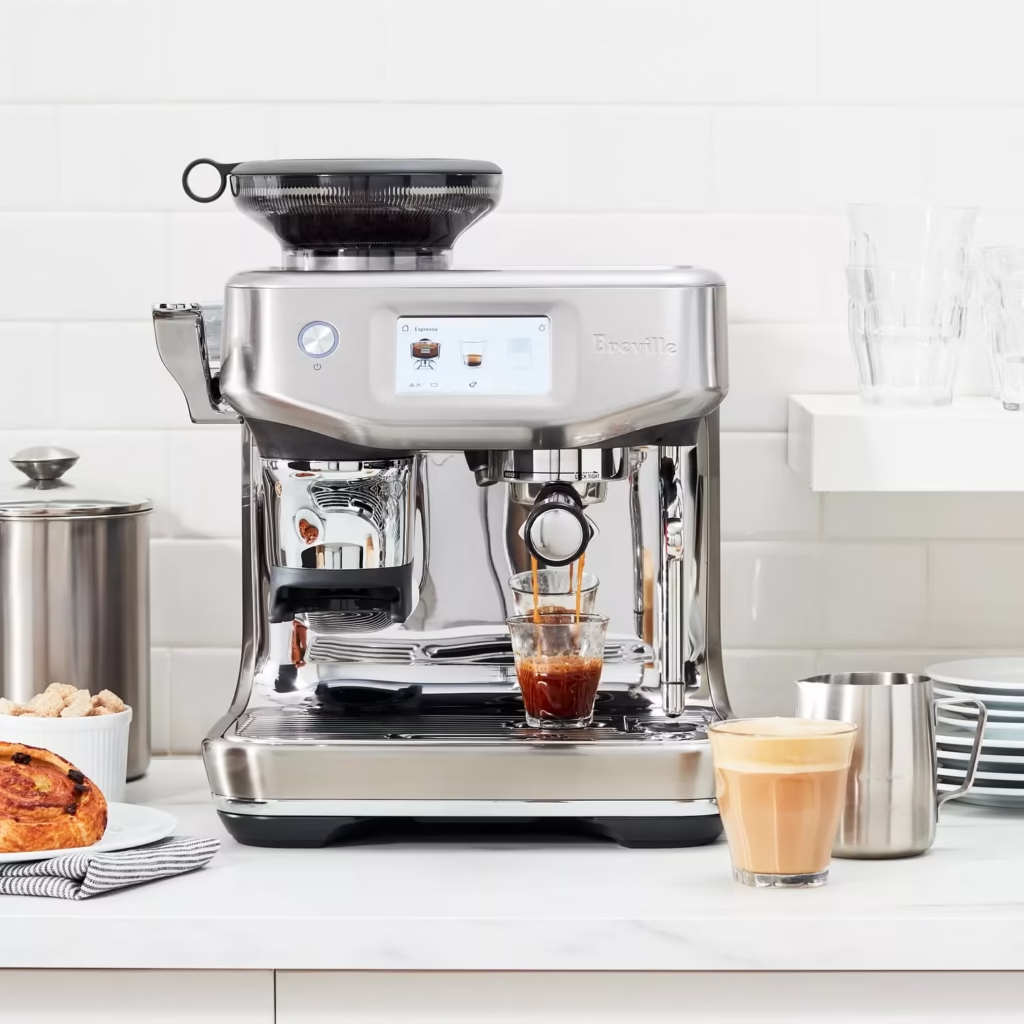
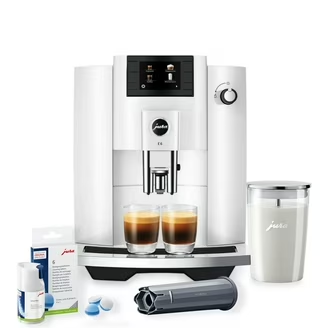
Breville’s Barista Touch Impress works with Alexa routines. De’Longhi’s Dinamica Evo connects through the De’Longhi Coffee Link app with Google Assistant support. Jura machines use the J.O.E. app and Coffee Center integration. Each ecosystem has its quirks — Jura’s is the most polished, De’Longhi’s is the most open, Breville’s hits the best balance between power and approachability.
The Best Smart Home Espresso Machine Options Ranked for 2026
Top Picks at Every Price Point
The best smart home espresso machine for you depends entirely on your workflow, budget, and how deep you want to go with customization. Below is a ranked comparison covering the machines we consider the strongest performers in 2026.
Related reading: Best Wifi Espresso Machine.
| Machine | Price (USD) | Boiler Type | App Control | Best For |
|---|---|---|---|---|
| Breville Barista Touch Impress | $1,199 | Single Thermojet | Alexa / iOS | Enthusiasts who want guidance |
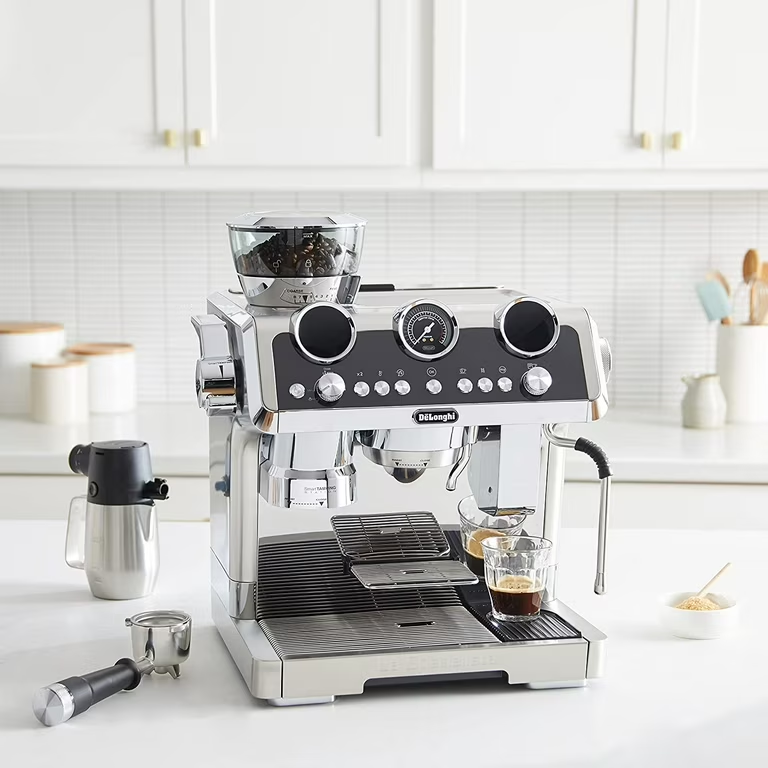
| De’Longhi La Specialista Maestro Connect | $1,499 | Dual Boiler | Coffee Link App | Simultaneous brew and steam |
| Jura E8 Platinum | $1,799 | Thermoblock | J.O.E. App + Coffee Center | Fully automated convenience |
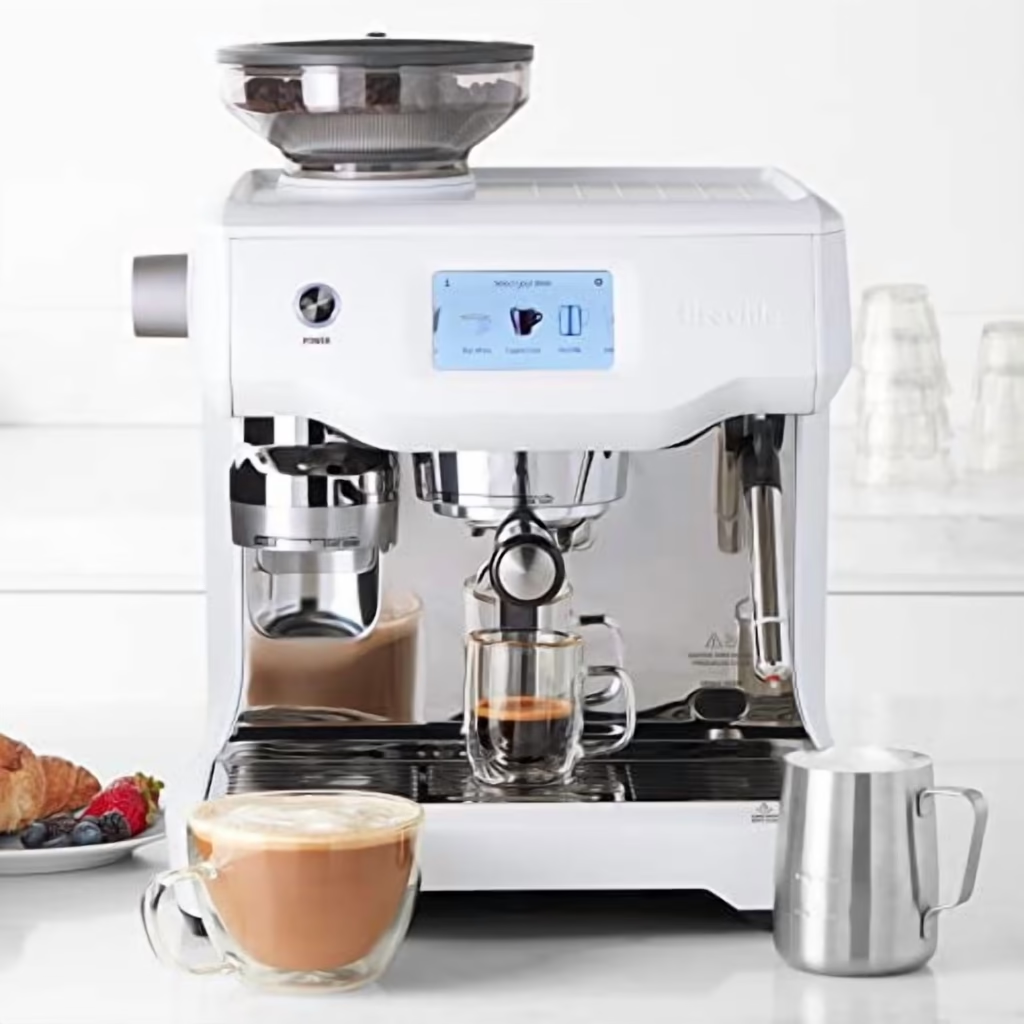
| Sage (Breville) Oracle Touch | $2,499 | Dual Boiler | Sage App + HomeKit | Prosumer automation |
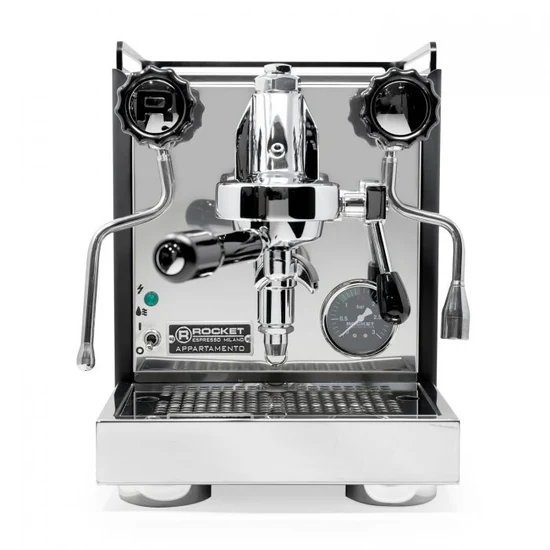
| Rocket Espresso Appartamento Smart | $2,799 | E61 Heat Exchange | Rocket Smart App | Manual control with data logging |
Why the Oracle Touch Still Leads in 2026
The Sage Oracle Touch — sold as the Breville Oracle Touch in North America — continues to be the machine most serious home baristas recommend when someone asks about the best smart home espresso machine for prosumer use. It grinds, doses, tamps, and textures milk automatically while letting you override every parameter through a 4.3-inch touchscreen or the companion app.
Its dual boiler system runs the brew boiler at a rock-steady 93°C (±0.2°C measured in independent testing) while the steam boiler runs at 128°C simultaneously. You’re not waiting 30 seconds between shots and steaming. For a household pulling 3-4 drinks per morning, that matters enormously.
Shot profiling — controlling how brew pressure ramps from 0 to 9 bar over a programmable pre-infusion curve — is available through the app. That’s a feature previously locked to $5,000+ machines from La Marzocco and Slayer.
How to Evaluate Smart Features Before You Buy
App Quality and Long-Term Software Support
This is the area competitors consistently underreport, and it’s the one that bites buyers hardest. A smart espresso machine is only as good as its software — and software can degrade, get abandoned, or lose compatibility with new phone OS versions within 2-3 years of purchase.
Before committing to any machine, check the app’s review history on the App Store and Google Play. Look specifically for mentions of update frequency. De’Longhi’s Coffee Link app has pushed 14 updates in the past 18 months. Jura’s J.O.E. app has been consistently maintained since 2019. Some smaller brands launched a “smart” machine with an app that hasn’t been updated since launch — avoid those.
Also check whether the machine functions fully without the app. The best smart home espresso machine should still be operable manually if the app server goes down or your phone dies. Jura and Breville both meet this standard; a few budget smart machines do not.
Grinder Integration and Shot Data Logging
Shot data logging is a genuinely underrated feature. Machines like the Oracle Touch and the Rocket Appartamento Smart store pull history — time, temperature, flow rate, and yield — in the app. After 30-40 shots with a new bean, you start seeing patterns. You’ll know that your Ethiopian natural needs 1 extra second of pre-infusion and 2°C lower brew temp to hit sweetness without astringency.
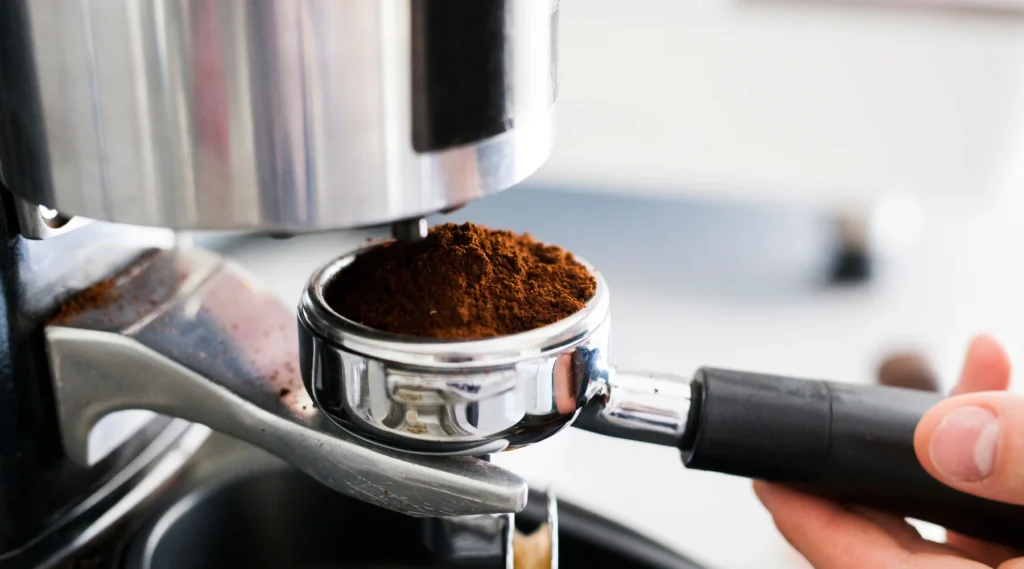
Grinder integration takes this further. The Baratza ESP Grinder now pairs via Bluetooth with compatible machines to form a closed-loop dosing system. You set a target yield (say, 36g out from 18g in), and the system adjusts grind coarseness automatically across shots until it hits that ratio. It’s legitimately revolutionary for home use.
Smart Espresso Machine Buying Mistakes to Avoid
Chasing Spec Sheets Over Real-World Performance
Marketing copy for smart espresso machines is aggressive and often misleading. “15 bar pump pressure” sounds impressive until you know that professional espresso is pulled at 9 bar — 15 bar ratings describe peak pump output, not actual brew pressure. The best smart home espresso machine specs you should actually focus on are boiler type, brew temperature stability, and pre-infusion capability.
Related reading: Jura App Controlled Espresso Machine.
Single boiler machines force you to wait 45-90 seconds between pulling a shot and steaming milk because the boiler needs to reheat. Thermojet systems (Breville’s technology) heat water on demand and switch faster — around 3 seconds — but don’t maintain true simultaneous operation. Dual boilers are genuinely independent and allow real multitasking.
For a household that makes lattes and cappuccinos daily, a dual boiler or heat exchange system isn’t a luxury — it’s a practical time-saver that pays back every morning.
Underestimating Maintenance Requirements
Smart machines are mechanical machines. Wi-Fi connectivity doesn’t reduce scale buildup, portafilter gasket wear, or the need for backflushing. What smart features can do is remind you. The Jura E8 and De’Longhi Maestro Connect both send push notifications for descaling intervals based on your actual water hardness setting and usage volume — not a generic timer.
Use the machine’s water hardness sensor or test your tap water with a strip (Jura includes these in the box). Set the machine’s hardness level correctly. A machine set to “soft water” mode in a hard water region will under-descale and eventually damage the boiler — a repair that often costs $300-500 and voids the warranty if caused by improper maintenance.
Smart Espresso in 2026: What’s Changed and What’s Coming
AI Shot Adjustment and Predictive Brewing
The most significant 2026 development in the smart espresso category is the emergence of AI-assisted shot adjustment. Breville’s Oracle Touch received a firmware update in early 2026 introducing “Adaptive Shot Intelligence” — the machine analyzes the flow rate curve of your last 5 shots and suggests recipe adjustments via the app. It’s not fully autonomous, but it’s the clearest signal of where home espresso is heading.
De’Longhi filed patents in late 2025 for a sensor array that measures TDS (total dissolved solids) inline during extraction. If that technology ships in a 2026 or 2027 product, it means the machine can measure shot strength in real time and cut extraction at the exact moment it hits your target concentration. That’s a feature currently available only on commercial machines costing $20,000+.
Integration with Smart Home Routines
Integration depth varies significantly by brand. According to Serious Eats’ espresso machine coverage, consumers increasingly prioritize seamless smart home integration over raw espresso performance when choosing between machines at similar price points. That trend is reshaping how manufacturers invest in R&D.
The most useful automation for most households is a morning routine trigger. With the Jura Coffee Center paired to Amazon Echo, you can say “Alexa, good morning” and have a 12-ounce flat white warming up before you reach the kitchen. The machine preheats its group head and thermoblock while you’re brushing your teeth, cutting the first-shot warm-up wait from 4 minutes to zero.
Finding the best smart home espresso machine for your routine means mapping your actual morning workflow first, then choosing the machine whose automation capabilities best match it — not the other way around.
Frequently Asked Questions
What is the best smart home espresso machine for beginners in 2026?
The Breville Barista Touch Impress is the top choice for beginners. Its guided workflow, integrated grinder, and Alexa compatibility lower the learning curve significantly. The app walks you through dialing in your first shots with visual prompts. Expect to pay around $1,199, and plan a two-week learning period before shots become consistently excellent.
How does a smart espresso machine connect to my home Wi-Fi?
Most smart espresso machines use a companion app for initial setup — you enter your Wi-Fi credentials in the app, which pushes them to the machine via Bluetooth during pairing. After that, the machine connects to your 2.4GHz or 5GHz network automatically. Some models, like the Jura E8, also support direct Ethernet connection for households with strict Wi-Fi segmentation.
Can a smart espresso machine work without an internet connection?
Yes — all reputable smart espresso machines operate fully without internet access. Smart features like remote start or push notifications require connectivity, but brewing, steaming, and grinder adjustment work locally on the machine itself. This is an important feature to verify before purchase, as a small number of budget smart appliances do require cloud connectivity to function at all.
What is the difference between a smart espresso machine and a super-automatic?
Super-automatic machines automate the entire brewing process — grinding, tamping, extracting, and sometimes steaming — through internal mechanisms. Smart machines add connectivity and app-based control to this automation, or to semi-automatic machines. Not all super-automatics are smart, and not all smart machines are fully automatic. The two categories overlap, but connectivity is the defining smart characteristic.
How often does a smart espresso machine need descaling?
Descaling frequency depends on water hardness and usage volume. In moderately hard water (150-200 ppm) with daily use, most machines need descaling every 2-3 months. Smart machines with hardness sensors — like the Jura E8 and De’Longhi Maestro Connect — calculate this automatically and send app reminders. Always use the manufacturer’s descaling solution to avoid voiding the warranty.
Final Thoughts
The best smart home espresso machine in 2026 isn’t just about espresso anymore — it’s about how seamlessly great coffee fits into your daily life. Whether that means asking your smart speaker to start your morning brew, analyzing shot data to dial in a new single-origin, or simply getting a push notification reminding you to descale before a problem develops, smart features are adding genuine value to the home barista experience.
Our top overall recommendation remains the Sage Oracle Touch for serious home baristas who want prosumer-level results with automation that actually works. For tighter budgets, the Breville Barista Touch Impress delivers the best blend of guided brewing and smart connectivity under $1,500. And if full automation is your priority, the Jura E8 Platinum’s ecosystem is the most polished end-to-end smart coffee solution on the market.
Whatever machine you choose, remember: the best smart home espresso machine is the one you’ll use every single day. Buy for your workflow, not for the spec sheet — and the perfect shot is never more than a tap away.