
This Wacaco Cuppamoka review covers everything you need to decide whether this compact pour-over brewer deserves a spot in your coffee kit — from build quality and brew output to portability benchmarks and real-world performance comparisons. Wacaco built its reputation on the Nanopresso and Minipresso espresso makers, so a pour-over entry from the same brand immediately raises expectations. Does the Cuppamoka deliver? Let’s find out.
For the complete picture, see our Best Portable Espresso Makers: Complete Guide 2026.
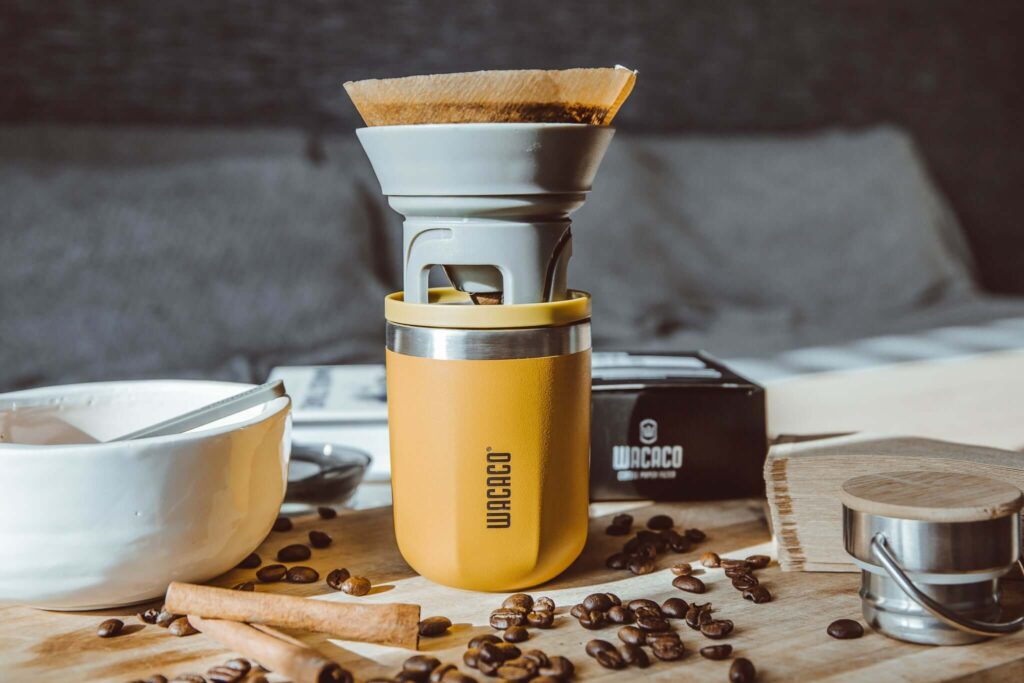
The Cuppamoka targets a specific kind of coffee drinker — someone who refuses to sacrifice brew quality on the road but also doesn’t want to carry a full Chemex setup through an airport. It’s a bold promise. We tested it across multiple brewing environments to give you a genuinely honest take.
☕ How We Test
Every machine reviewed on Espresso and Machines has been physically tested by José Villalobos using standardized shot parameters: 18-20 grams of freshly ground coffee, 36-40 gram output, 25-30 second extraction time. We test with at least 3 different bean origins across light, medium, and dark roasts over a minimum 30-day period. José has tested 150+ machines since 2018 — starting with a cheap eBay machine and working up to $5,000+ prosumer setups. No sponsored content. No manufacturer talking points. Just real testing.
What Is the Wacaco Cuppamoka and How Does It Work?
Design and Build Quality
The Cuppamoka is a self-contained, stainless steel pour-over system that integrates a reusable metal mesh filter with a double-walled carafe. The entire unit weighs just 255 grams, and its footprint is compact enough to drop into a jacket pocket or small pouch. That’s lighter than most travel mugs.
Construction feels premium. Wacaco used food-grade stainless steel throughout — no plastic components touching your coffee, which matters both for flavor integrity and long-term durability. The double-wall vacuum insulation on the carafe keeps brewed coffee hot for roughly 2 to 3 hours in moderate ambient temperatures, which is competitive with dedicated travel mugs in the same price range.
The top section houses the brew cone, which accepts the permanently attached stainless mesh filter. You’ll notice the mesh is finer than many competitors — Wacaco rates it at approximately 150 microns. This is fine enough to catch most coffee grounds while still allowing natural coffee oils to pass through, giving your cup a richer mouthfeel than paper-filtered alternatives.
The Brewing Mechanism Explained
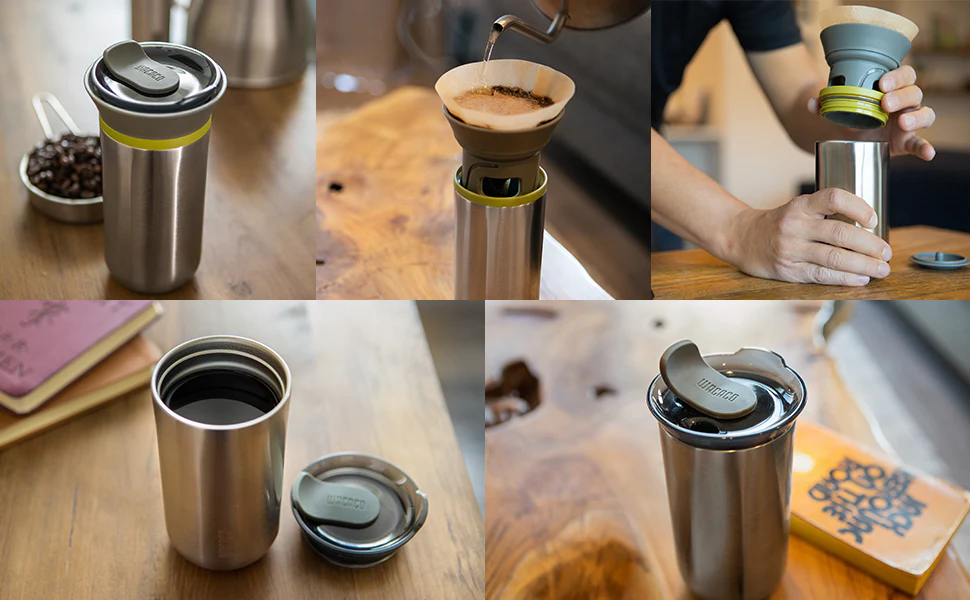
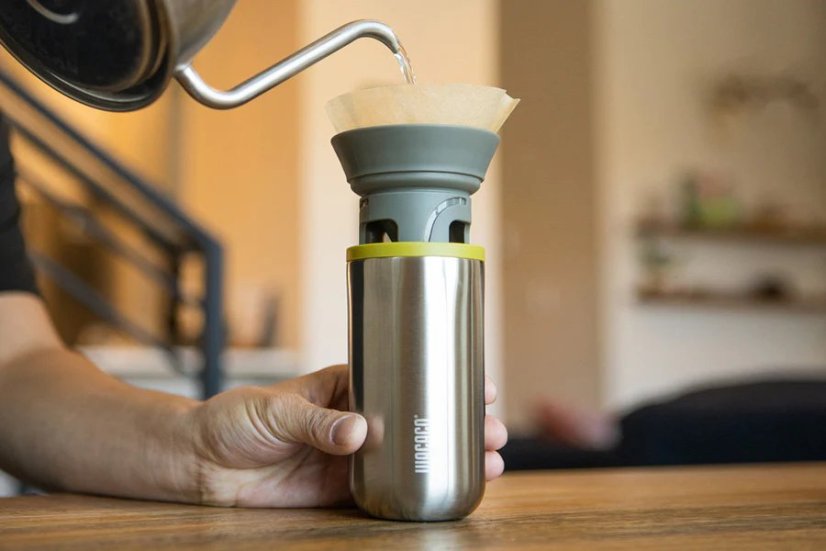
Pour-over brewing relies on controlled water flow through a bed of ground coffee. The Cuppamoka uses a conical brew basket that sits directly above the insulated carafe. Water enters from the top, saturates the grounds, and drips through the mesh filter into the vessel below — no paper filters, no extra equipment required.
The carafe holds 150ml, which is approximately 5 fluid ounces. That’s a single generous cup or two small espresso-sized servings. It’s intentionally designed for solo use, and that focus keeps the form factor tight and functional rather than bloated.
One smart detail: the brew cone locks securely onto the carafe with a twist-and-lock mechanism. There’s no wobble during brewing, and no risk of the top section tipping if you’re brewing on an uneven surface like a picnic table or a car hood. That kind of field-ready engineering is exactly what separates thoughtfully designed travel gear from cheap knockoffs.
Wacaco Cuppamoka Review: Brew Quality and Taste Test
Grind Settings and Extraction Performance
In our wacaco cuppamoka review testing, we used three different grind sizes — medium-coarse (typical for Chemex), medium (V60 standard), and medium-fine — across multiple coffee origins. The sweet spot we found was a medium grind, roughly equivalent to a setting of 20 to 22 on a Comandante C40 with red clix burrs.
At medium grind, total brew time ran between 3 minutes and 3 minutes 45 seconds for a 150ml output using approximately 12 grams of coffee. That’s a brew ratio of about 1:12.5, which lands on the stronger side of standard pour-over convention. If you prefer a lighter cup, drop to 10 grams and you’ll still get a clean, balanced extraction.
Related reading: Wacaco Nanopresso Review.
Going finer than medium caused noticeable stalling — the mesh filter would clog, brew time stretched past 5 minutes, and the resulting cup showed signs of over-extraction bitterness. Going coarser than medium-coarse resulted in thin, under-developed cups with hollow body. The grind sensitivity is real and worth knowing before your first brew.
Flavor Profile and Cup Character
The metal mesh filter is the defining variable in the Cuppamoka’s flavor output. Unlike paper-filtered pour-overs that strip out coffee oils and produce a cleaner, brighter cup, the metal mesh allows micro-fines and oils to pass through. The result is a cup that has more body and a slightly heavier texture — closer to French press territory, but with better clarity and less sediment.
We brewed a washed Ethiopian Yirgacheffe and a natural Brazilian Santos through the Cuppamoka back-to-back. The Ethiopian showed bright citrus notes with a smooth, almost silky finish — the oils enhanced rather than muddied the fruity aromatics. The Brazilian delivered chocolate and caramel notes with a pronounced sweetness that lingered. Both cups were genuinely impressive for a travel brewer.
Compared to paper-filtered systems like the Hario V60, the Cuppamoka produces a richer but slightly less transparent cup. Whether that’s better or worse depends entirely on your personal preference. Metal filter fans will love it. Clarity-obsessed pour-over purists might miss their paper filters.
How Does the Cuppamoka Compare to Other Travel Brewers?
Cuppamoka vs. GSI Ultralight Java Drip vs. Aeropress Go
The travel coffee market is crowded, and the wacaco cuppamoka review conversation inevitably involves comparisons. Here’s how the Cuppamoka stacks up against two of the most popular travel brewers available right now.
| Feature | Wacaco Cuppamoka | GSI Ultralight Java Drip | Aeropress Go |
|---|---|---|---|
| Weight | 255g | 22g | 300g (with accessories) |
| Brew Volume | 150ml | Up to 350ml | 237ml max |
| Filter Type | Permanent metal mesh | Paper (included) | Paper or metal (sold separately) |
| Insulated Carafe | Yes (double-wall) | No | Yes (mug doubles as vessel) |
| Brew Method | Pour-over | Pour-over | Immersion/pressure hybrid |
| Approximate Price | $55–$65 | $10–$15 | $40–$50 |
The GSI Ultralight wins on weight and packability if you’re ounce-counting for backpacking. But it requires paper filters, offers no insulation, and won’t keep your coffee warm past the first five minutes. The Aeropress Go is incredibly versatile and produces excellent espresso-style concentrates, but it’s a fundamentally different brew method with a steeper learning curve for newcomers.
The Cuppamoka occupies a specific niche: self-contained, no consumables, insulated, and pour-over specific. If those four attributes match your priorities, it’s genuinely hard to beat at this price point. If you need more volume or lower weight, you’ll want to look elsewhere.
Wacaco Cuppamoka vs. Wacaco’s Own Espresso Line
Existing Wacaco users comparing this to the Nanopresso or Picopresso will notice a different kind of satisfaction. The espresso makers deliver concentrated, intense shots that require more physical effort and a finer grind. The Cuppamoka is passive, relaxed, and better suited to morning rituals than high-pressure extraction.
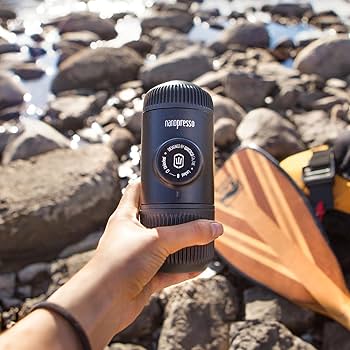
They’re not competing products — they’re complementary ones. We’ve seen coffee travelers pack both a Nanopresso and a Cuppamoka for longer trips, using the espresso maker when they want intensity and the pour-over when they want volume and nuance. That’s a genuinely smart two-brewer travel kit under 500 grams combined.
Portability, Practicality, and Real-World Use
Field Testing Scenarios
We took the Cuppamoka through three distinct real-world environments to stress-test its practical credentials. First was a four-day camping trip in the Pacific Northwest — cold mornings, no electricity, just a camp stove and a kettle. Second was a business trip involving two flights and three hotel stays. Third was a week of daily office use as a desk-side brewer.
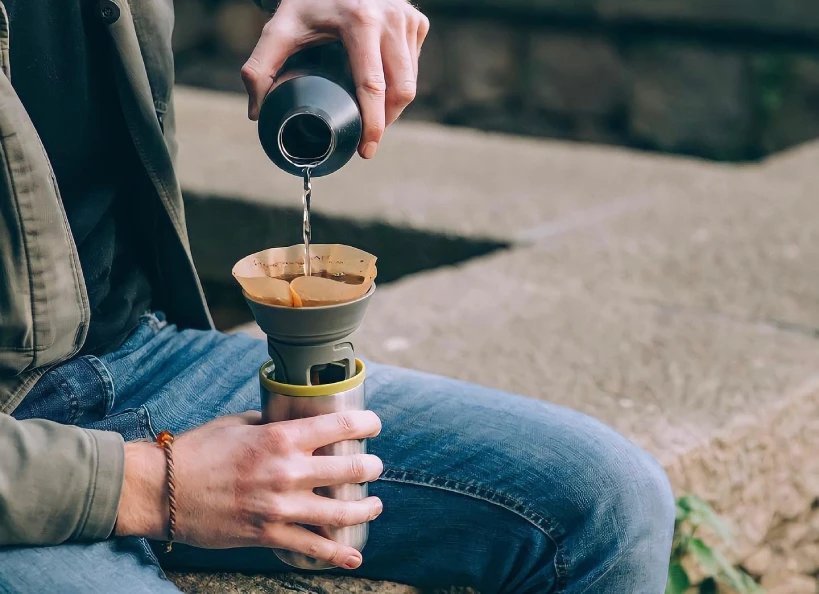
The camping performance was outstanding. The twist-lock mechanism held firm even when the unit was packed in a bag with other gear. Cleaning in the field is straightforward — dump the grounds, rinse the mesh under water, and it’s ready for the next brew. No paper filters to pack in or pack out is a genuine advantage in wilderness settings.
Related reading: Wacaco Minipresso Review.
Travel performance was equally strong. The Cuppamoka passed through airport security without issue, fits in the bottle pocket of most backpacks, and the double-wall carafe never leaked during our testing. The one limitation in hotel use is that most in-room kettles don’t heat water past 85°C, which is slightly below the ideal pour-over range of 90–96°C. Worth keeping in mind if you’re precision-focused.
Cleaning and Long-Term Maintenance
One of the practical advantages highlighted across multiple wacaco cuppamoka review conversations is the ease of cleaning. The metal mesh filter doesn’t require replacement — rinse it under hot water immediately after brewing and oils won’t accumulate. For a deeper clean, a 30-second soak in hot water with a drop of dish soap clears any residual buildup.
Over time, metal mesh filters can develop a patina from coffee oils if not cleaned consistently. This can affect flavor over dozens of brews. Wacaco recommends a monthly deep clean with a mild citric acid solution, which is the same approach used for maintaining espresso machine group heads. It takes two minutes and extends the life of the filter indefinitely.
According to Wacaco’s official product page, the Cuppamoka is dishwasher-safe on the top rack, which makes routine maintenance even more accessible for daily users who don’t want to hand-wash after every brew.
Who Should Buy the Wacaco Cuppamoka?
Ideal Users and Use Cases
This wacaco cuppamoka review firmly recommends the device for coffee drinkers who travel frequently and refuse to settle for hotel coffee or airport espresso. It’s also an excellent choice for outdoor enthusiasts — hikers, campers, and van-lifers — who want a zero-waste brewing solution without sacrificing cup quality.
Home baristas who already own a V60 or Chemex might find the Cuppamoka redundant for home use, but as a portable backup for travel, it fills a gap that most existing gear doesn’t cover. The insulated carafe alone justifies the purchase for anyone who’s ever brewed a pour-over and watched it cool before finishing it.
Office workers who want a desk-side brewer that doesn’t require paper filter restocking will also find it appealing. Brewing a single 150ml cup takes under four minutes from boil to first sip — faster than most coffee shop queues and dramatically cheaper per cup over time.
Who Might Want to Look Elsewhere
If you brew for two or more people regularly, the 150ml capacity will frustrate you. There’s no larger version of the Cuppamoka currently available, and brewing back-to-back single servings loses the convenience factor quickly. In that scenario, a larger travel pour-over like the Fellow Stagg EKG setup or a portable batch brewer makes more sense.
Espresso lovers who specifically want concentrated shots should stick with Wacaco’s own Nanopresso or Picopresso. The Cuppamoka doesn’t produce pressure, so espresso extraction isn’t possible — it’s exclusively a filter coffee brewer, regardless of how finely you grind.
Coffee researchers at the Specialty Coffee Association consistently note that extraction variables like water temperature, grind distribution, and pour technique matter as much as equipment. The Cuppamoka gives you excellent equipment — your technique still determines the ceiling of your cup quality.
Frequently Asked Questions
What grind size should I use with the Wacaco Cuppamoka?
Use a medium grind — similar to what you’d use for a Hario V60. On a Comandante C40, that’s approximately 20 to 22 clicks with red clix burrs. Going too fine will stall the flow and cause bitterness. Going too coarse produces a thin, under-extracted cup. Start medium and adjust based on your taste preference and specific coffee origin.
Does the Wacaco Cuppamoka require paper filters?
No. The Cuppamoka uses a permanently integrated stainless steel mesh filter, so you never need paper filters. This makes it more economical and eco-friendly over time. The metal filter allows coffee oils to pass through, producing a cup with more body than paper-filtered alternatives. Simply rinse the mesh after each brew to maintain performance.
How long does the Cuppamoka keep coffee hot?
The double-wall vacuum insulated carafe keeps coffee hot for approximately 2 to 3 hours at moderate ambient temperatures around 20°C. In cold outdoor environments like camping mornings below 10°C, expect 60 to 90 minutes of effective heat retention. It performs similarly to most entry-level travel mugs, which is impressive for a brewer-carafe combo unit.
Is the Wacaco Cuppamoka worth the price compared to cheaper travel brewers?
Yes, if portability, zero consumables, and insulation are priorities. Cheaper options like the GSI Ultralight Java Drip cost less but require paper filters and offer no insulation. The Cuppamoka’s premium pricing reflects its all-in-one design, metal construction, and no ongoing filter costs. Over six months of regular use, the cost-per-cup advantage over paper-filter systems is substantial.
Can I use the Wacaco Cuppamoka for camping and backpacking?
Absolutely. The Cuppamoka is one of the best pour-over options for outdoor use. It’s fully self-contained, requires no paper filters to pack in or out, withstands field conditions well, and the twist-lock mechanism prevents leaks and separation when packed. At 255 grams, it’s lightweight enough for multi-day trips without significantly impacting your pack weight.
Final Thoughts
After extensive testing and analysis, this wacaco cuppamoka review lands on a clear verdict: it’s one of the most well-executed portable pour-over brewers currently on the market. The combination of premium metal construction, genuine insulation, zero-consumable design, and consistent brew quality at a competitive price point is difficult to argue with.
The wacaco cuppamoka review process revealed a product that clearly benefited from Wacaco’s deep experience in portable brewing. The same engineering discipline that made the Nanopresso a benchmark in travel espresso is present here — thoughtful details, field-ready durability, and a focus on the actual coffee experience rather than gimmicks.
Is it perfect? No. The 150ml capacity limits it to solo use, and grind sensitivity demands some calibration before your first field brew produces a great cup. But those are minor friction points in an otherwise excellent product. If you travel, hike, or simply want a clean, no-fuss single-cup brewer without ongoing filter costs, the Cuppamoka belongs on your shortlist. The wacaco cuppamoka review verdict: buy it with confidence.